EN


UV-Resistant Safety Barriers for Outdoor Industrial Applications
Outdoor loading yards, transfer lanes, plant entrances, and service areas create a different barrier-selection problem from an indoor aisle. Sunlight, rain, temperature changes, vehicle movement, and changing access needs all act on the same installation. UV resistant safety barriers can be a useful part of that control plan, but only when the material choice, route layout, and expected contact are considered together.
From a facility-safety planning perspective, begin with the operating area rather than a preferred rail profile. Map where forklifts, delivery vehicles, pedestrians, and mobile equipment travel; then identify where a physical separation could reduce exposure. OSHA’s pedestrian-traffic guidance similarly advises separating lift-truck traffic from pedestrians where possible, with walkways, permanent railings, and other protective barriers among the options to consider. A barrier supports a wider traffic-management plan; it does not replace training, visibility, speed control, or site rules.
Why outdoor exposure changes the selection process
Industrial safety barriers outdoors must remain understandable and serviceable over time, not simply look suitable on installation day. UV radiation can contribute to fading and surface degradation in polymer-based materials, while moisture, dirt, salt, chemicals, and repeated temperature cycles may introduce additional demands. The relevant question is how those conditions affect the intended protective function, not whether a product carries a broad outdoor label.
Ask suppliers for documentation that relates to the proposed barrier material, finish, and intended environment. The documentation should be reviewed alongside the expected service period, maintenance access, exposure intensity, and local conditions. For example, a covered dispatch area and a fully exposed vehicle apron can create very different conditions even when both are outdoors.
- Sun exposure: Note orientation, daily shade, reflected light from paving or walls, and whether the location is exposed throughout the year.
- Weather and drainage: Check whether water pools around posts or anchors and whether routine cleaning can reach the installation.
- Contamination: Identify oils, fuels, salt, washdown chemicals, or process residues that could affect the surface or mounting area.
- Visibility: Confirm that the barrier remains easy to recognize against outdoor backgrounds, signage, vehicle lighting, and seasonal conditions.
Start with the traffic conflict, not the barrier style
It is tempting to compare colors, rail heights, or visual appearance first. A more useful first question is where forklifts and pedestrians actually cross paths. In an outdoor industrial setting, the likely conflict may occur at a gate, between a loading bay and a walkway, beside stored materials, or near a blind corner. That conflict determines what the barrier needs to separate and what it must leave accessible.
For forklift collision protection, document the direction of travel, turning radius, reversing activity, load overhang, and sightlines. Also record how pedestrians enter the area. A straight run alongside a walkway may call for a different configuration from a corner near a gate or a zone with frequent pallet handling. Put simply, the barrier choice follows the route problem rather than the other way around.
Questions to answer before comparing configurations
- Which vehicle types use the area, and how often does traffic change by shift or season?
- Where do people walk, wait, open gates, inspect loads, or cross vehicle paths?
- What impact direction is credible at each location: side contact, a turning movement, reversing, or a corner strike?
- What clearance must remain for emergency access, maintenance, drainage, and equipment operation?
- What is the mounting substrate, and should a qualified reviewer assess its condition before installation?
Match UV durability with the intended protective role
UV resistant safety barriers are not one universal category. A light visual boundary, a pedestrian separation rail, and a control intended to manage vehicle contact serve different roles. Assess the installation according to the role it must perform, then ask whether the selected system’s documented material behavior and installation guidance fit the exposure.
| Site need | What to verify | Why it matters outdoors |
|---|---|---|
| Pedestrian route separation | Route continuity, gates, crossings, and visibility | People should not be directed into an unprotected gap when access patterns change. |
| Vehicle edge definition | Travel path, turning space, and clearance from stored goods or equipment | Sun glare, rain, and changing yard activity can alter how drivers perceive the route. |
| Localized impact control | Likely contact direction, mounting context, and supplier documentation | Outdoor surfaces and anchors need assessment as part of the complete installation. |
| Restricted-access boundary | Gate operation, emergency egress, and inspection responsibilities | Weather and operational changes should not make access controls difficult to use or maintain. |
Do not translate a generic UV-resistance statement into a promised service life or impact rating. Verify the actual product documentation, installation method, and applicable site requirements. If the route changes by shift, review traffic during more than one operating period before finalizing a layout.
Plan the installation as a system
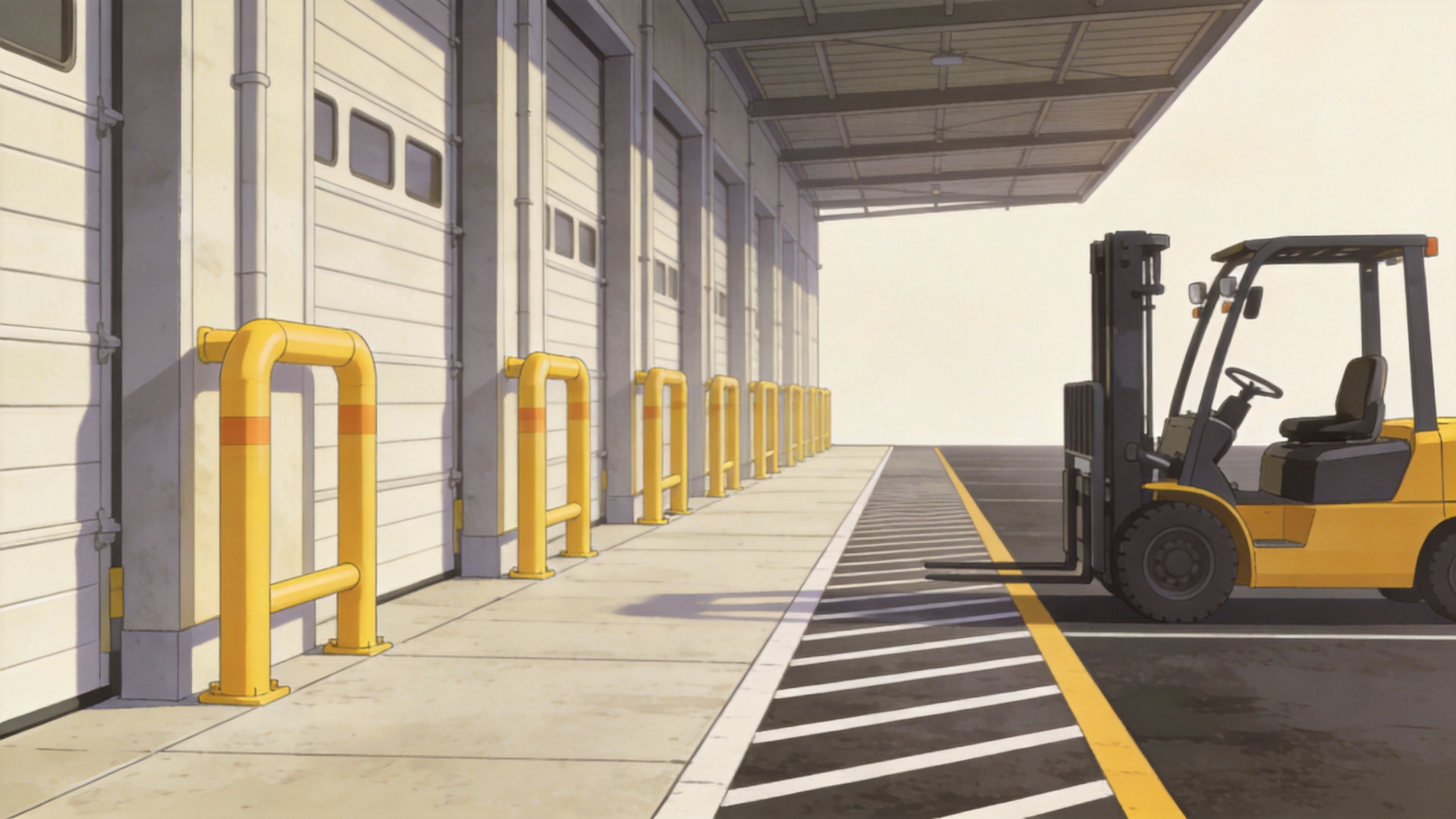
Effective industrial safety barriers work with markings, signs, crossings, lighting, and operating procedures. Physical separation can make a planned route more legible, yet it should not conceal a poor traffic arrangement. Keep crossings deliberate and visible, avoid forcing pedestrians into vehicle aisles, and maintain clear sightlines near corners and doorways.
Before installation, mark the proposed line on the ground and walk it with the people who use the area. Consider a forklift with a typical load, a pedestrian carrying materials, a delivery driver entering the gate, and a maintenance worker needing access. This practical review can reveal a clearance problem before hardware is committed. A neat-looking layout is useful, yet the likely impact path should be checked before appearance drives the decision.
Build inspection into the outdoor barrier plan
Outdoor conditions make periodic inspection especially valuable. Assign a responsible person and define what should be observed: cracks, unusual discoloration, loose fixings, damage after contact, standing water, obstructed visibility, and changes to vehicle routes. Inspection records help a facility decide when to seek a supplier review or adjust the layout.
After any significant contact, do not assume that a barrier is fit for continued use based on appearance alone. Follow the manufacturer’s inspection and replacement guidance, document the event, and examine the route condition that led to it. The goal is not just to restore the barrier, but to learn whether marking, traffic flow, access control, or supervision also needs attention.
Use a two-part review for UV resistant safety barriers
A practical review keeps material exposure and traffic exposure visible at the same time. For UV resistant safety barriers, ask first whether the documented material and finish suit the actual sun, weather, and cleaning conditions. Then ask whether the location, run length, and mounting plan suit the specific route conflict. A positive answer to only one question is not enough.
This distinction also helps prevent a common procurement error: treating a visually durable boundary as automatic forklift collision protection. Where contact with a forklift is foreseeable, the proposed industrial safety barriers should be assessed for that use by reference to the supplier’s applicable documentation and the installation context. When the intended role is only to guide movement, make that role clear rather than implying impact-control capability.
For forklift collision protection near a crossing, gate, doorway, or outside staging area, check approach angles, blind spots, operating speeds, and the way loads affect the driver’s view. UV resistant safety barriers should also be positioned so they do not create a new pinch point, obscure a pedestrian, or force equipment into a restricted turning path. A site review can distinguish a useful physical separation from an installation that merely transfers the hazard.
A practical procurement checklist
- Define the outdoor zone, its users, and the traffic conflict the barrier is intended to address.
- Record UV, weather, chemical, drainage, and temperature exposure rather than relying on a generic outdoor description.
- Request relevant material, installation, inspection, and performance documentation from the supplier.
- Check mounting surfaces, clearances, egress, gates, and maintenance access before approving a layout.
- Coordinate the physical barrier with pedestrian routes, vehicle rules, signs, lighting, and training.
- Set an inspection process and review the layout after operational changes or vehicle-contact events.
Choose with evidence, not assumptions
Well-selected UV resistant safety barriers can help facilities make outdoor routes easier to understand and help reduce exposure where vehicles and people share a site. The suitable option depends on traffic patterns, environmental conditions, mounting context, and the protective role required—not on a single headline feature. Start with a site review, request evidence for the intended conditions, and use the result to create a barrier plan that remains practical as the operation changes.
 Hot News