EN


Loading Dock Safety Solutions for Warehouses and Distribution Centers
A loading dock is where vehicle movement, pallet handling, people, open edges, and changing schedules meet. That combination makes the dock more than a doorway: it is a transition zone that needs a deliberate safety plan. Effective loading dock safety solutions combine physical separation, trailer-control procedures, clear traffic rules, and regular review. The objective is not to make a dock look protected. It is to reduce foreseeable exposure while keeping receiving and shipping work practical.
As a facility safety consultant, I start with workflow rather than a catalog. Watch where drivers reverse, where forklift operators turn, where pedestrians take shortcuts, and what happens when a door is open but no trailer is present. That walkthrough usually reveals which controls belong together and where loading dock barriers can add a useful layer of protection.
Start With a Dock-Zone Risk Map
Before selecting equipment, divide the area into operating zones. A useful map normally includes the trailer approach, dock face, open dock door, staging area, forklift travel lane, pedestrian crossing, and any door or control-panel access route. Mark the direction of travel and note whether traffic changes by shift, season, or carrier schedule.
This exercise helps a team distinguish three different exposures that are often grouped together:
- Fall exposure: an open dock door or unprotected edge when a trailer is absent.
- Vehicle exposure: forklifts, pallet jacks, and trucks moving near people, doors, racks, or building structure.
- Trailer movement exposure: a truck pulling away, creeping, or shifting while a powered industrial truck is entering or leaving the trailer.
These are related, but they do not call for one identical product. Good dock safety solutions assign a suitable physical control, operating rule, and visual cue to each exposure.
Control the Open Dock Door
An open doorway without a trailer can create a drop hazard and a route for an inattentive forklift or pedestrian. OSHA’s forklift guidance for loading docks advises operators to slow down, maintain a safe distance from the dock edge, and check for pedestrians and obstacles when exiting trailers. Those habits are essential, but they are stronger when the physical environment supports them.
Consider a combination of fixed guardrails where access is not required, and movable or retractable loading dock barriers where employees need to open the path for loading. The right option depends on the width of the opening, required clearance, the frequency of access, nearby traffic, mounting conditions, and how operators will verify that the barrier is restored. A barrier should not block emergency egress, service access, or a required circulation route.
For every door, define a simple operating state: trailer present and secured; door open with dock attended; or door open with no trailer. Pair each state with a visible control. This makes a barrier part of a repeatable process instead of an item people must remember to use only when conditions feel risky.
Separate Forklift and Pedestrian Movement
Forklifts need maneuvering room near dock staging areas, while pedestrians may need access to offices, controls, packing stations, or adjacent aisles. The problem is often not a lack of floor markings; it is that the marked route crosses the practical route people use during peak activity.
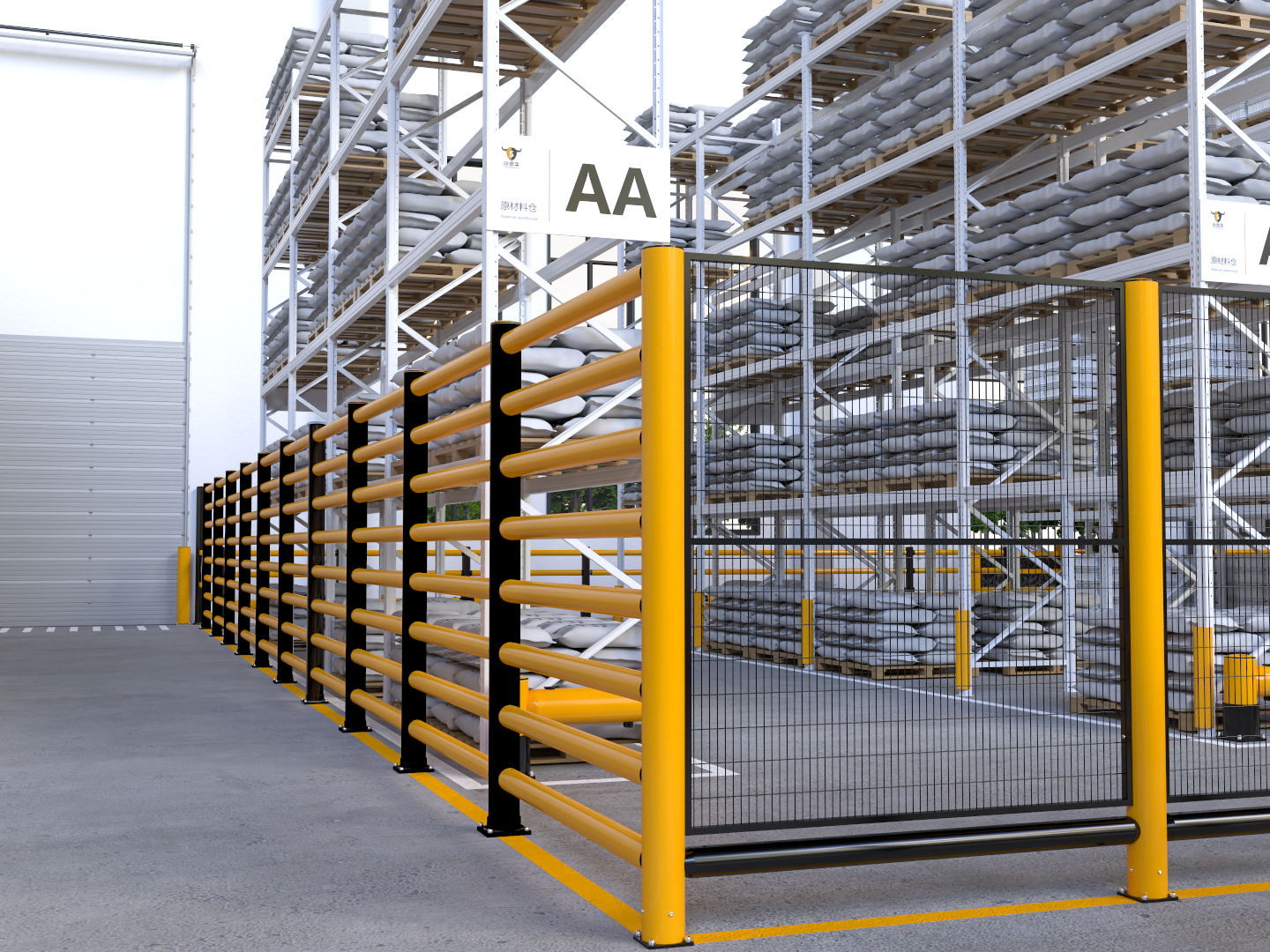
Use the risk map to identify crossings, blind corners, and staging creep. In higher-exposure locations, a physical separation system can define the boundary more reliably than paint alone. Flexible or rigid barrier approaches should be compared against the likely approach direction, available turning radius, mounting surface, expected contact conditions, and the need to keep the route visible. Protective hardware is not a substitute for speed limits, training, supervision, or housekeeping. It can, however, make the intended separation clearer and help protect vulnerable areas from incidental contact.
For a busy distribution center, a practical sequence is to establish dedicated walking routes first, protect the points where those routes meet vehicle flow, then review whether temporary pallets or overflow staging are pushing people back into the travel lane. This approach turns loading dock safety solutions into a layout decision rather than a last-minute add-on.

Secure the Trailer Before Loading Begins
Trailer movement is an operational-control issue with serious consequences. OSHA guidance in 29 CFR 1910.178(k)(1) addresses setting highway-truck brakes and placing wheel chocks under the rear wheels to prevent movement while powered industrial trucks enter or exit. A site’s procedure may also include communication indicators, restraint devices, or verification steps appropriate to the equipment and local requirements.
The important point is sequence. The trailer must be confirmed as secure before a forklift enters; the confirmation must be visible to the people doing the work; and the release procedure must prevent a driver from leaving before loading is complete. Consider documenting the handoff between driver, dock operator, and warehouse team so that a change of shift does not break the process.
Physical dock-edge protection and trailer-control equipment address different hazards. Use both where the risk assessment indicates they are needed. Treating one as a replacement for the other can leave a gap in the control plan.
Choose Barriers by Application, Not by Appearance
When evaluating loading dock barriers, ask application questions before comparing material or color:
- What is the protected boundary: an open edge, pedestrian route, building corner, dock door, or equipment access point?
- Which vehicles approach it, from what direction, and at what operating conditions?
- Must the barrier open, retract, be removed, or remain fixed during normal work?
- What clearance is needed for forklifts, pallets, dock levelers, doors, cleaning, and emergency access?
- What mounting information and verified product documentation are needed before final selection?
This comparison method also helps procurement, EHS, engineering, and operations discuss the same decision. It avoids assuming that an attractive barrier will automatically fit the actual traffic pattern or impact exposure.
Build a Layered Dock Safety Plan
The most durable loading dock safety solutions are layered. A basic plan can combine:
- Engineering controls: edge guarding, traffic separation, dock-door barriers, protective rails, lighting, and layout improvements.
- Administrative controls: trailer-securing procedures, right-of-way rules, speed expectations, staging limits, and shift handoff checks.
- Communication controls: signs, floor markings, door-state indicators, and clear visual signals for drivers and operators.
- Verification: route measurements, mounting review, product documentation review, installation inspection, and post-change observation.
Layering matters because no single control resolves every route conflict. For example, a barrier can discourage a shortcut but cannot ensure that a trailer is secured. A communication light can support a release procedure but cannot prevent a forklift from approaching an unprotected edge. The plan should connect each control to a specific exposure.
Commission, Inspect, and Revisit the Layout
Installation is not the end of the project. Before returning the dock to full activity, walk the route with operators and verify that doors, equipment, maintenance access, and emergency paths remain usable. Confirm that the barrier state is obvious, that signage matches the actual workflow, and that the procedure makes sense during a busy shift rather than only during a quiet demonstration.
Add dock safety to routine inspections and revisit the layout after changes in racking, carrier mix, trailer type, pallet flow, or staffing. Capture near-miss observations as inputs to improvement, not as reasons to make unsupported conclusions about a product’s performance.
Move From a General Idea to a Site-Specific Scope
For warehouses and distribution centers, a practical next step is a short site brief: door count, dock heights, travel paths, pedestrian crossings, vehicle types, approach directions, obstructions, access needs, and photographs or drawings of mounting areas. With those inputs, a supplier discussion can focus on configuration and evidence rather than generic claims.
Thoughtful dock safety solutions protect people and assets while respecting the work that must happen at the dock. Begin with the workflow, apply controls by zone, and verify the layout after implementation. That process makes it easier to choose practical loading dock safety solutions as the facility evolves.

 Hot News