EN


Safety Barrier Solutions for Battery Manufacturing and New Energy Facilities
Battery plants are built for precision, yet daily movement can be anything but static. Forklifts deliver material, technicians cross between stations, maintenance teams need access, and production layouts evolve. Battery manufacturing safety barriers help turn that moving environment into clearly understood zones. The goal is not to promise that one product eliminates risk. It is to create physical separation that supports a broader traffic-management plan, site rules, training, markings, and inspection.
As an EHS coordinator reviewing a new-energy facility, start with the route before choosing the barrier. OSHA’s battery-manufacturing resources identify hazards and controls relevant to facilities that manufacture, use, and recycle lithium-ion batteries. Its powered-industrial-truck guidance also says traffic should be separated from pedestrians where possible and identifies permanent railings or other protective barriers as one possible control. For battery manufacturing safety barriers, that means matching protection to real travel paths, turning points, access needs, and foreseeable changes—not selecting from a catalog in isolation.
Why battery facilities need a zone-based approach
Battery production and energy-storage operations often contain different risk environments within one building: receiving, dry rooms, mixing, coating, cell assembly, formation, aging, testing, packing, utilities, and dispatch. Each area may have a different mix of people, vehicles, carts, pallets, sensitive equipment, or emergency-access requirements. A line that looks clear on a layout drawing can become ambiguous when temporary material, shift changes, or maintenance activity alter the route.
That is why battery manufacturing safety barriers should be planned as part of a zone map. In a high-traffic area, the priority may be factory collision protection between forklifts and people. Near a doorway or a machine corner, the priority may be preserving access while making a boundary visible. Around an equipment island, the question may be whether the barrier needs to define a no-go area, protect an asset, or guide traffic away from a crossing. The same barrier type is not automatically appropriate for every one of those jobs.
Start with exposure, not with appearance
A practical review begins by observing what actually moves through the facility. Ask where a forklift approaches at an angle, where a loaded vehicle needs extra turning space, where a pedestrian shortcut is likely, and where a door, control panel, eyewash station, or emergency exit must stay accessible. Battery manufacturing safety barriers are more useful when they respond to these conditions rather than simply following walls or painted lines.
- People-vehicle interfaces: Identify crossings, blind corners, entrances, and shared aisles where factory collision protection is most important.
- Asset-exposure points: Review rack ends, machine corners, charging areas, cable routes, and vulnerable utilities without assuming that asset protection alone protects people.
- Workflow constraints: Confirm forklift maneuvering space, pallet staging, cleaning routes, maintenance access, and emergency egress before fixing a layout.
- Change triggers: Treat line moves, new automation, altered pallet flow, or changed shift patterns as reasons to reassess industrial guardrails and markings.
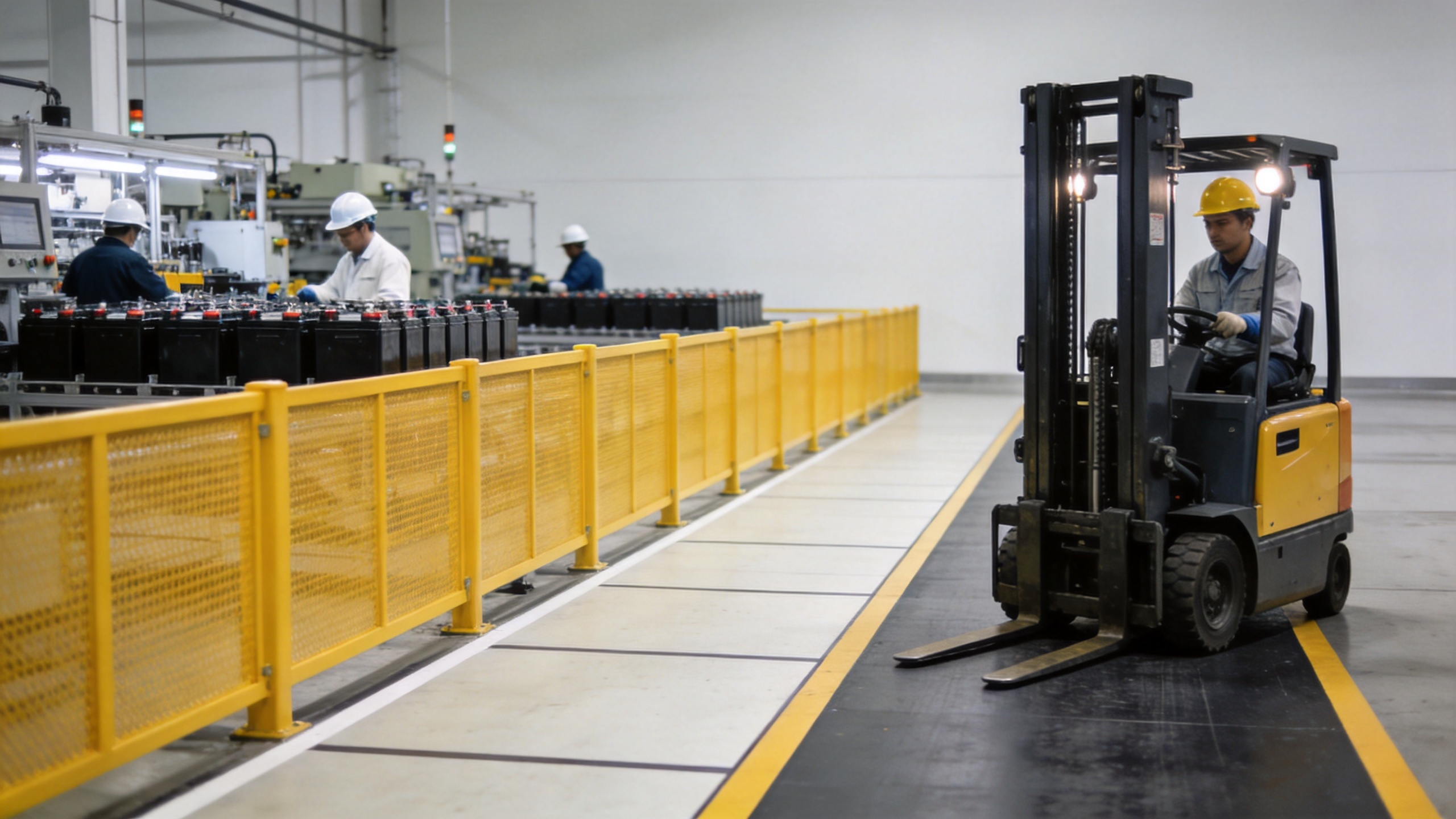
OSHA guidance on mechanical-handling areas also notes that permanent aisles and passageways should be kept clear and appropriately marked. That is a useful design prompt, but local requirements and the facility’s own hazard assessment should be verified before a final specification is issued.
Match the barrier solution to the application
Battery manufacturing safety barriers can support several protection strategies. The important distinction is what the installation is meant to control. In forklift travel lanes, industrial guardrails or flexible protection systems may help establish a visible boundary between vehicles and walking routes. At ends of aisles and exposed corners, factory collision protection may focus on preventing contact with infrastructure or equipment. Around work cells, a perimeter may define where routine traffic should not enter while allowing operators and maintenance teams planned access.
| Facility area | Primary review question | Barrier-planning focus |
|---|---|---|
| Receiving and dispatch | Where do pedestrians and powered vehicles cross? | Battery manufacturing safety barriers that reinforce segregated travel paths and maintain turning clearance. |
| Production circulation routes | Can traffic remain predictable during peak material movement? | Industrial guardrails, markings, crossings, and visibility measures used as coordinated controls. |
| Machine and utility edges | What can be struck, and who needs access? | Factory collision protection placed around the exposure without obstructing controls or service space. |
| Changing work cells | Will the boundary still fit after a line change? | Modular, reviewable layouts with documented assumptions and inspection points. |
This application-led method keeps battery manufacturing safety barriers connected to operational reality. It also helps procurement, engineering, operations, and EHS teams discuss the same installation using the same questions.
Flexible systems, rigid systems, and industrial guardrails
There is no universal answer to whether a flexible or rigid approach is more suitable. The right comparison begins with the exposure, expected vehicle movement, mounting conditions, clearance, and evidence available for the proposed configuration. Flexible systems may be considered where controlled energy management and a more forgiving physical boundary are relevant. Rigid industrial guardrails may be considered where a defined, fixed boundary is appropriate. In either case, battery manufacturing safety barriers should be evaluated against the conditions of use rather than broad marketing claims.
Request documentation that is specific to the proposed arrangement. A responsible review can include the vehicle type, travel direction, operating conditions, mounting surface, post spacing, nearby equipment, and intended access routes. It should also state what the barrier is not intended to do. This prevents an installation from being treated as the only control when signs, operating rules, speed management, training, maintenance, and supervision are also necessary.
A specification checklist for battery manufacturing safety barriers
- Map pedestrian, forklift, tugger, pallet-jack, and maintenance routes by shift and task.
- Rank conflict points by exposure, not only by how visually prominent they are.
- Measure clearance at turns, doors, intersections, rack ends, and machine-service areas.
- Decide whether each location needs separation, asset protection, guidance, visibility support, or a combination.
- Compare factory collision protection options using verified configuration information and mounting conditions.
- Check that industrial guardrails do not block emergency equipment, egress, cleaning, or maintenance access.
- Document assumptions, owners, inspection intervals, and triggers for a layout review.
For a new energy facility, this checklist makes battery manufacturing safety barriers part of the project’s operational design—not a late-stage add-on. It also gives each stakeholder a practical way to challenge assumptions before installation.
Plan for inspection and change
Once installed, battery manufacturing safety barriers need a simple review process. Inspectors can look for impact evidence, loose anchors, shifted modules, worn markings, blocked walkways, or traffic patterns that no longer match the original layout. A near miss, new piece of equipment, or seasonal change in throughput can be enough to reopen the discussion.
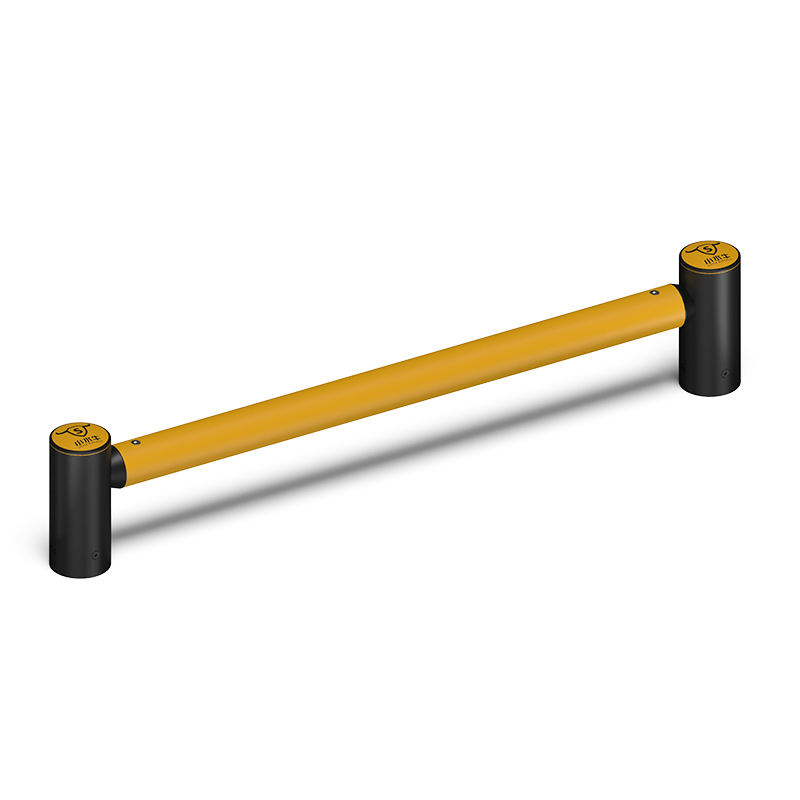
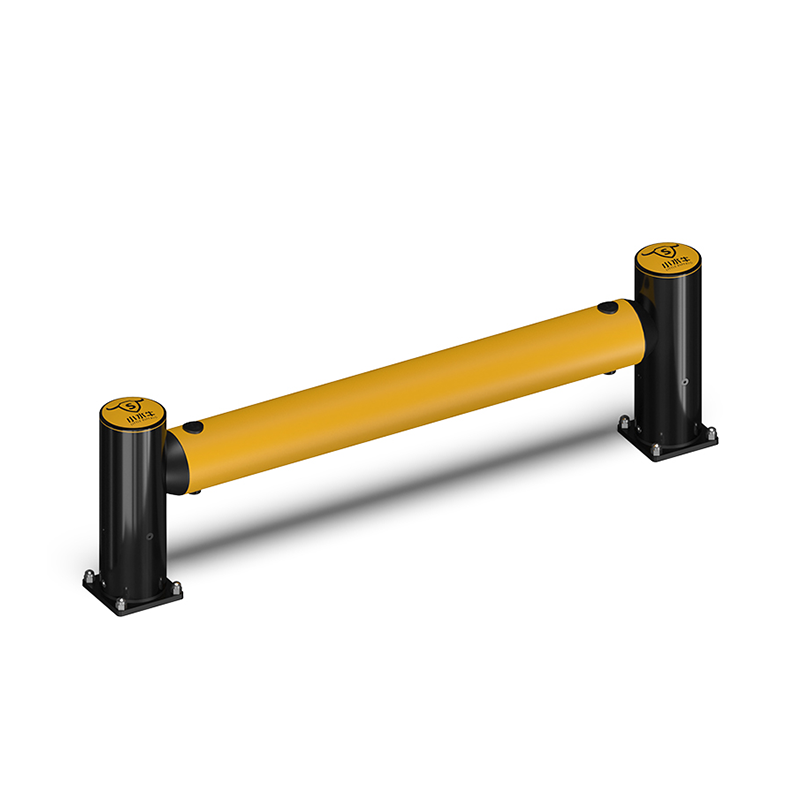
Little Buffalo Technology can support an application-focused discussion of flexible safety barriers, guard fencing, bollards, and end protection for industrial facilities. A useful consultation starts with route information, photos, dimensions, vehicle details, and access requirements. That evidence-first approach helps teams consider factory collision protection and industrial guardrails in the context of their own site, while leaving final compliance and engineering decisions to qualified local professionals.
Conclusion
Effective battery manufacturing safety barriers are built on a clear understanding of movement, exposure, and access. By separating people and vehicles where appropriate, protecting high-exposure edges, and reviewing layouts when operations change, battery facilities can make everyday movement easier to understand. The most durable solution is a coordinated one: physical barriers, clear routes, operating controls, and periodic review working together.

 Hot News