 EN


Impact Resistance in Industrial Guardrails: What Buyers Need to Know
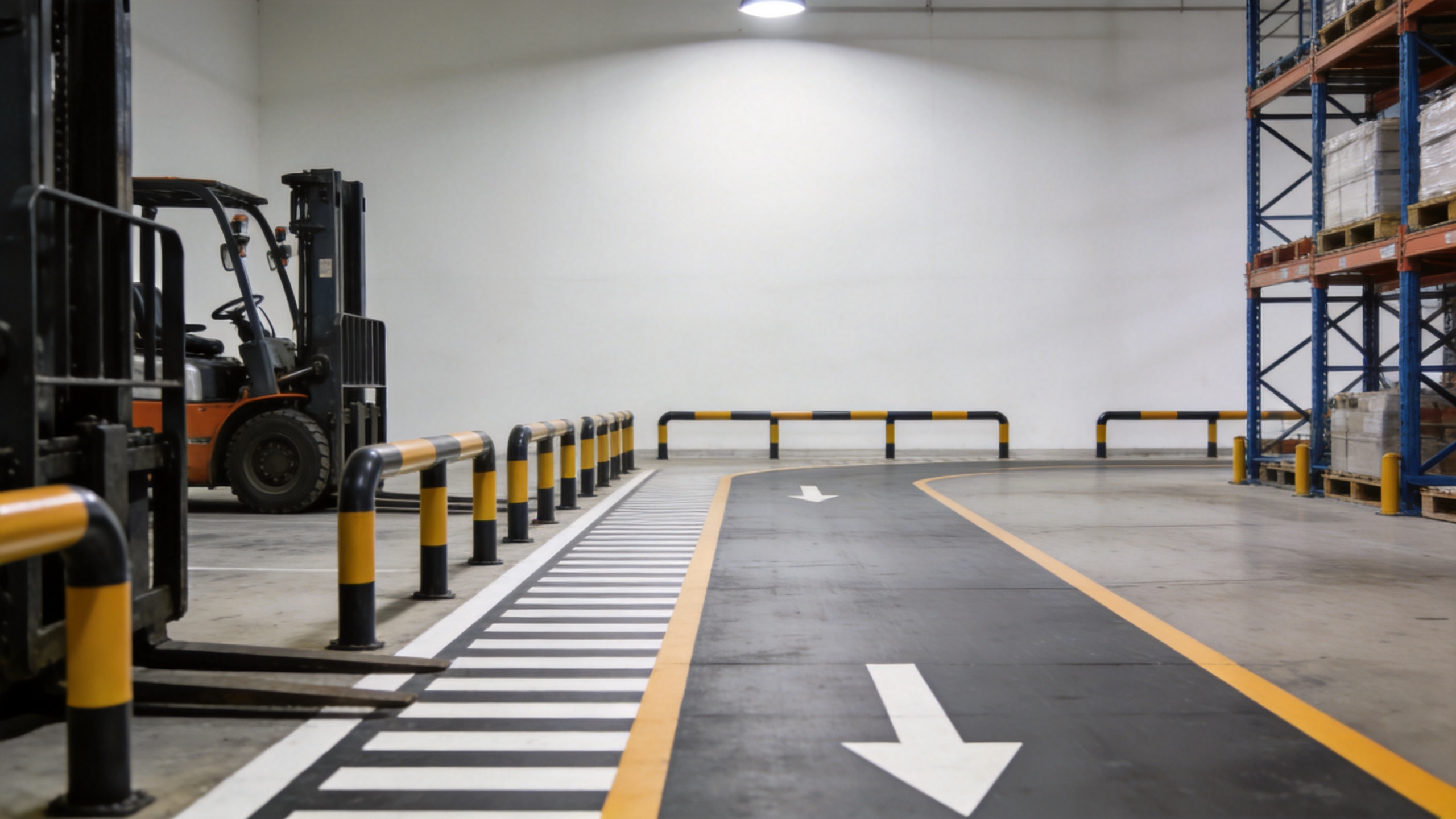
When a forklift lane runs beside a work area, a rack end, or a pedestrian crossing, the rail is not simply a visual boundary. It is part of a control system that has to fit the vehicle route, the likely contact direction, the floor condition, and the way people actually work. That is why buyers should evaluate impact resistant guardrails as a site-specific protective measure rather than a commodity defined by rail height alone.
From a warehouse-buying perspective, the useful comparison starts with disruption that needs to be prevented and the constraints of fitting a barrier into an active facility. OSHA guidance on powered industrial trucks recommends separating forklift traffic from workers and pedestrians where possible, with permanent railings or other protective barriers among the measures to consider. A guardrail can support that separation, but it does not replace speed control, marked routes, training, visibility, or safe operating practices.
Start With the Exposure, Not the Rail
Buyers often begin by asking how strong a guardrail is. A more productive first question is: what could hit it, from which direction, at what point in the route, and under what operating conditions? Impact resistant guardrails should be selected after a brief route review, not before it. Map forklift types, typical travel paths, turning movements, reversing areas, carried loads, crossing points, gradients, and blind corners.
A neat layout can look reassuring, yet the likely impact path should be checked before appearance drives the decision. A straight run alongside a travel lane may see a different kind of contact from a rail protecting a rack end at a turn. Doorways, staging zones, and intersections can introduce angled impacts or poor sightlines. If traffic changes by shift, review more than one operating period before choosing a configuration.
OSHA also requires permanent aisles and passageways used with mechanical handling equipment to be kept clear and appropriately marked. In practical terms, the protection plan should preserve the clearance that drivers and pedestrians need; a barrier that creates a new pinch point or obstructs a sightline may solve one problem while creating another.
What “Impact Resistant” Should Mean in a Buying Brief
The phrase impact resistant guardrails is useful only when the intended duty is stated. It should lead to questions about the system, not an assumption that every rail is interchangeable:
- Vehicle and load: Which trucks operate in the zone, and what loads, attachments, or operating limitations affect their movement?
- Travel condition: Are floors wet, uneven, congested, or subject to reversing and tight turns?
- Impact geometry: Is the expected contact side-on, end-on, glancing, or concentrated at a post or corner?
- Protected asset: Is the rail separating people, shielding racking, protecting a machine, or marking a route boundary?
- Installation context: What is known about the slab, fixings, column clearance, drainage, and access for inspection?
Truck speed matters, but it is not the only variable. Federal powered-industrial-truck rules require operation at a speed that permits safe stopping and call for slower travel on wet or slippery floors. Those requirements reinforce why a product number by itself is not a site assessment. A supplier’s stated performance may be relevant, but buyers should ask for the test setup, impact direction, vehicle or mass used, speed, anchorage arrangement, and the definition of acceptable post-impact condition before comparing it with another offer.
Rigid Rails and Flexible Barrier Systems: Compare Behavior, Not Labels
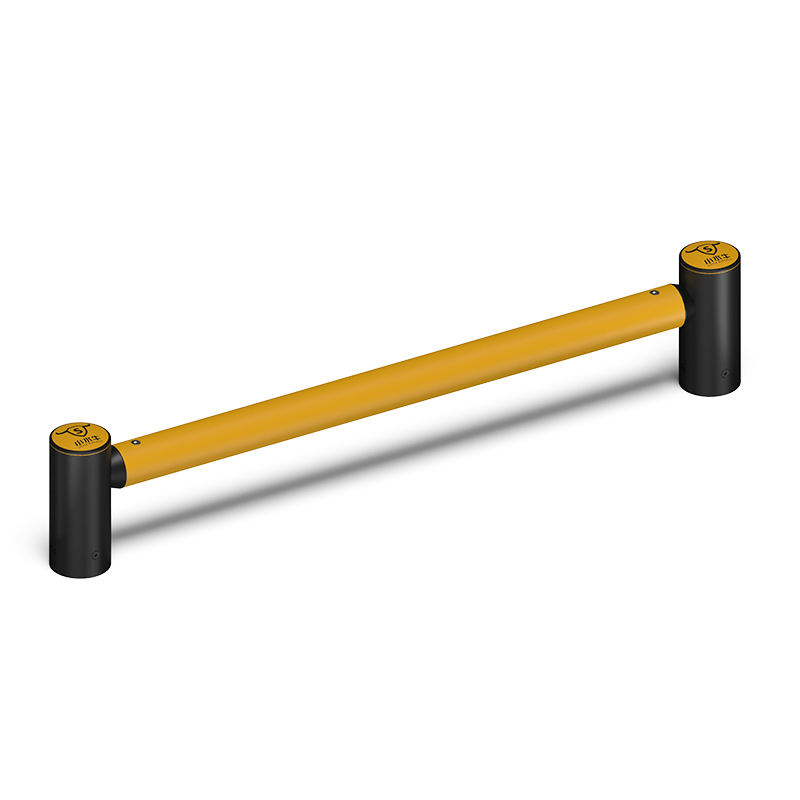
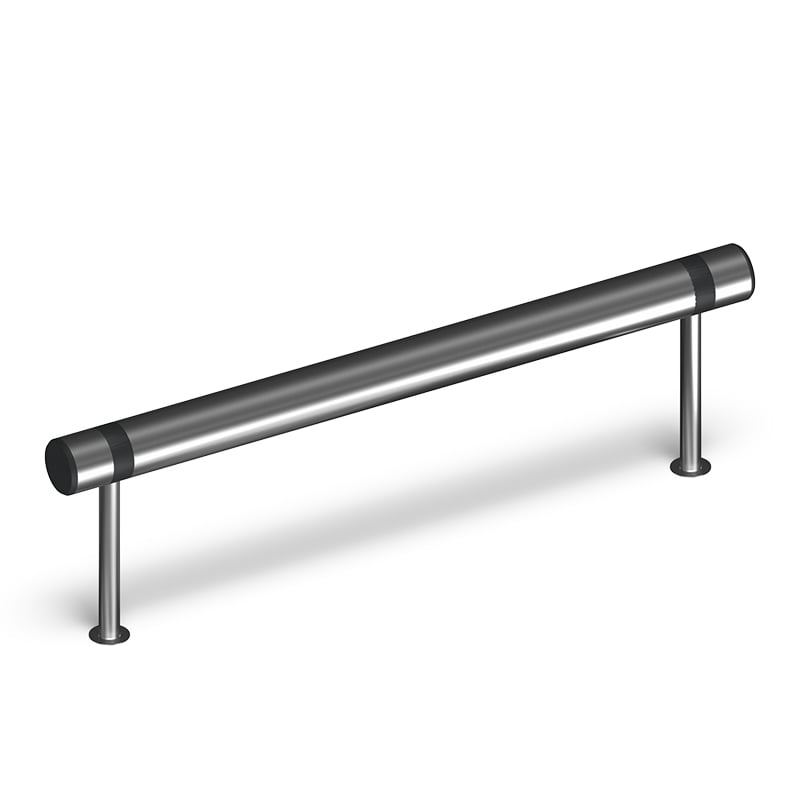
A rigid steel rail and a flexible polymer-based system can serve different route and asset-protection needs. Neither is automatically the better choice. The comparison should address how the system behaves under the expected event, how it transfers force to the floor or structure, the space it occupies, and the inspection or replacement process after contact.
For example, a buyer considering impact resistant guardrails near a rack end should document whether the likely contact is concentrated at a corner and whether the configuration includes end protection. Along a pedestrian walkway, the key concern may be a continuous separation line, gates, crossings, and enough walking space. Rather than evaluating one rail alone, map how it works with markings, gates, warning devices, and the adjacent travel route.
It is also sensible to involve the right people early. Operations can explain actual traffic patterns; EHS can identify pedestrian exposure; engineering or facilities can review mounting conditions; procurement can make sure proposed systems are compared against the same brief. This avoids a common mistake: collecting several quotes that use different assumptions and then comparing only the headline price.
Questions to Ask a Flexible Safety Barrier Manufacturer
A flexible safety barrier manufacturer should be able to discuss the specific configuration, not just a general product family. Ask what information is needed to recommend a layout and how the system’s intended application is documented. If a stated rating is offered, request the test conditions and clarify whether the proposed installation matches them.
- What vehicle class, travel pattern, and impact direction does the proposed arrangement address?
- Which posts, rails, corners, ends, gates, and fixings are included in the stated configuration?
- What site information about the slab and clearances is needed before installation?
- What inspection is recommended after a strike, and which components may require review or replacement?
- What exclusions, assumptions, or operating limits apply to the recommendation?
These questions do not require a buyer to perform an engineering calculation. They make the scope visible so the supplier response can be checked against the actual route problem.
How to Compare an Industrial Safety Barrier Supplier
When comparing an industrial safety barrier supplier, use one site brief for every bidder. Include a sketch or photographs, route dimensions, known vehicle types, direction of travel, observed conflict points, desired clearance, protected assets, and any installation constraints. The suitable option depends on these conditions, not on a single headline feature.
For impact resistant guardrails, ask each supplier to identify what is verified, what still requires site confirmation, and what is outside the proposed scope. A clear answer is often more useful than a broad claim of protection. The initial purchase price is only one input; teams may also review installation disruption, access for cleaning and maintenance, visibility, recovery after contact, and the practicality of changing the layout later.
A Practical Pre-Purchase Checklist
- Walk the route and identify the people, assets, and crossings that need separation.
- Record vehicle types, typical movements, loads, speed controls, floor conditions, and blind spots.
- Define the likely impact direction at each proposed barrier run, end, and corner.
- Confirm clearances, mounting conditions, access requirements, and interactions with doors or emergency routes.
- Send the same brief to each supplier and request configuration-specific evidence, assumptions, and limitations.
- Plan marking, operating rules, inspection, and post-impact response alongside the hardware.
Make the Purchase Decision Easier to Defend
A sound purchase process for impact resistant guardrails is evidence-led: define the exposure, compare like-for-like configurations, and document what the system is expected to do in that location. Put simply, the barrier choice follows the route problem rather than the other way around. When the operating context is clear, a buyer can have a more useful conversation with a flexible safety barrier manufacturer or industrial safety barrier supplier—and can choose a solution that supports the wider traffic-management plan.
 Hot News

