EN


How to Protect Freight Elevators and Loading Areas in Industrial Buildings
A freight elevator is rarely an isolated piece of equipment. It sits where pallets, forklifts, hand trucks, pedestrians, doors, and changing schedules meet. Effective freight elevator protection therefore starts with the route around the lift, not with a single protective item. An EHS coordinator or facilities team should look at the landing, the approach lane, the loading edge, and the access points as one working zone.
The goal of freight elevator protection is practical risk reduction: limit avoidable contact with doors and structure, keep people out of vehicle paths, preserve required access, and make safe behavior easier to follow. The right solution will depend on traffic patterns, floor conditions, elevator operation, and local requirements, so a site review should precede final specification.
Begin Freight Elevator Protection With a Zone Review
Start by mapping how the area actually works during busy periods, not just how it appears on a layout drawing. Observe where a forklift turns, where a pallet waits, where doors open, and where people naturally cross. This gives freight elevator protection a clear boundary and exposes conflicts that floor markings alone may not solve.
- Mark the elevator threshold, landing edge, door travel area, and any recessed controls.
- Trace loaded and unloaded forklift approaches, including reversing and turning movements.
- Identify pedestrian shortcuts, inspection routes, and maintenance access.
- Note temporary storage, staging positions, and shift-specific changes in traffic.
- Confirm that emergency egress and required elevator access remain unobstructed.
This review prevents a common mistake: adding a barrier where it looks tidy but where it narrows a maneuvering path or blocks a door. Good freight elevator protection separates exposure areas while leaving operators enough room to work predictably.
Separate Forklifts and Pedestrians at the Landing
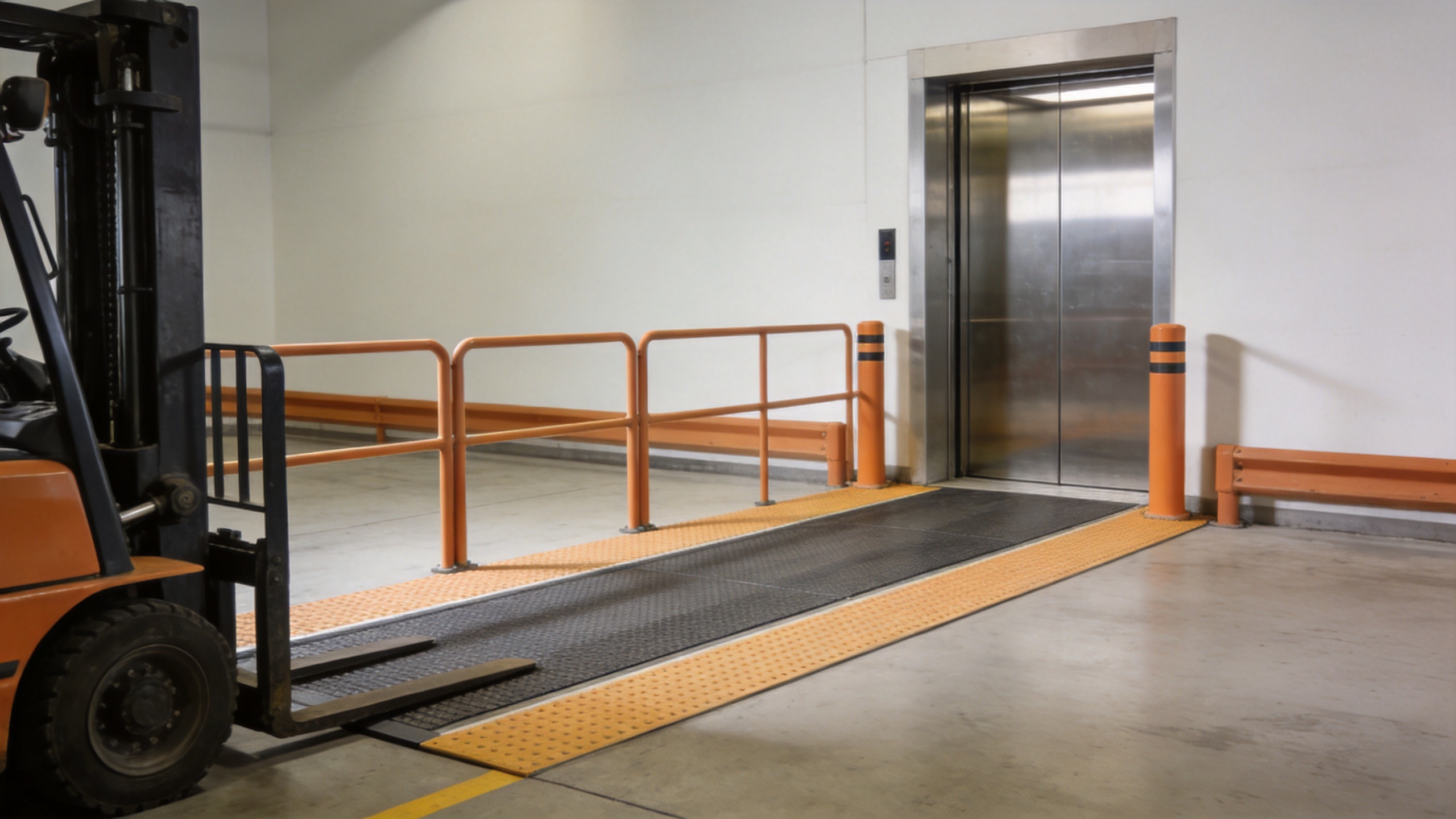
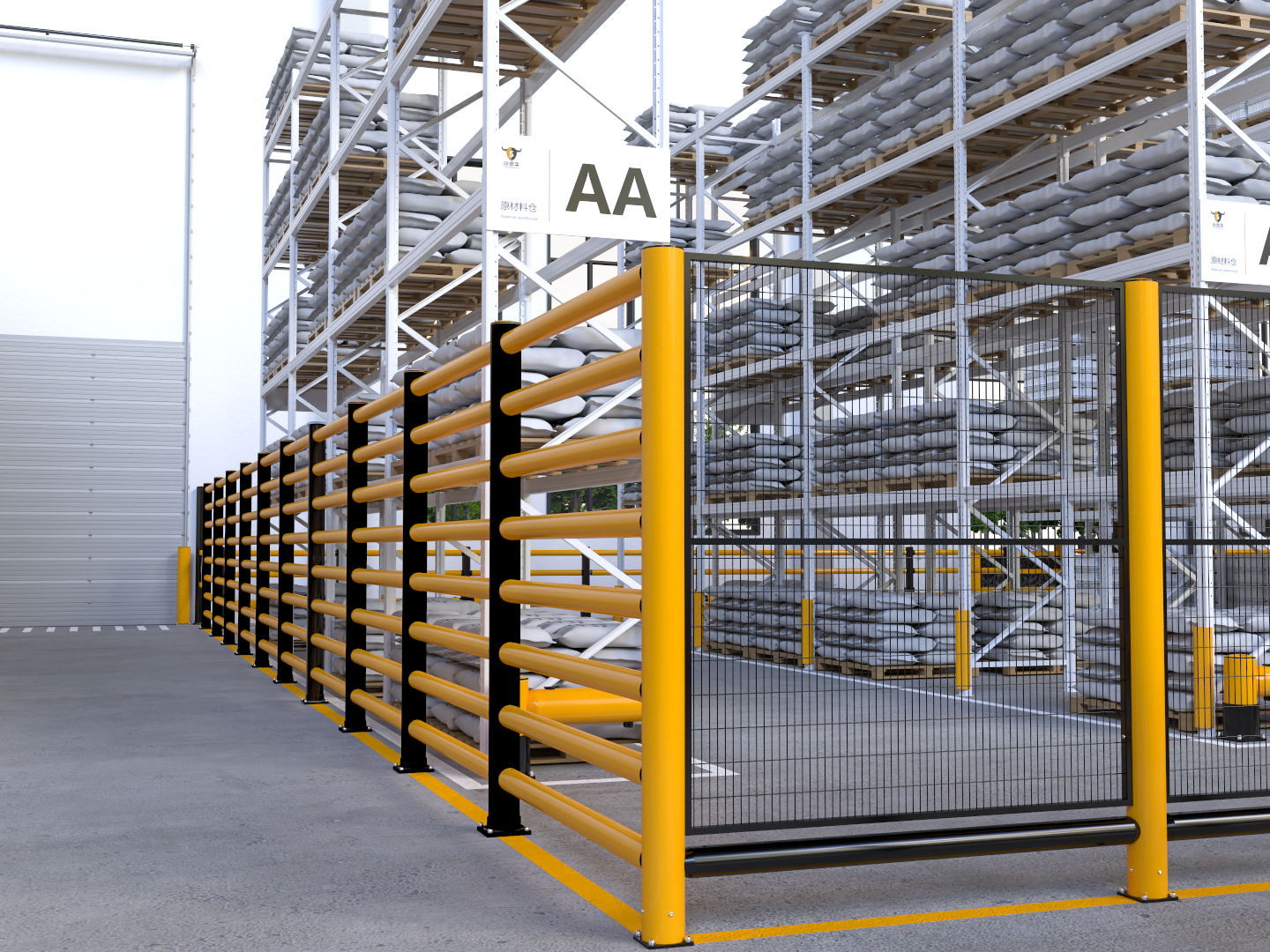
Elevator landings often become shared space because workers wait for a car, prepare loads, or cross between departments. That makes route separation central to freight elevator protection. OSHA’s powered industrial truck guidance recommends separating pedestrians from lift trucks with permanent railings or other protective barriers where possible. In a site-specific plan, physical separation can be supported by marked walkways, controlled crossing points, visibility measures, and operating rules.
Elevator safety barriers can help define where people should stand while a lift truck approaches or exits the car. Their purpose is not to guarantee safety by themselves. They should work with sightlines, speed controls, horn use where appropriate, training, and a rule that pedestrians do not enter a vehicle path without clear communication.
For freight elevator protection, place pedestrian controls far enough from the landing that a person is not standing in the swing path of a load, a door, or a reversing truck. Keep openings purposeful. A crossing or access opening should be obvious, controlled, and sized for the activity it serves rather than being an accidental gap between protective elements.
Protect Doors, Jambs, and Nearby Building Structure
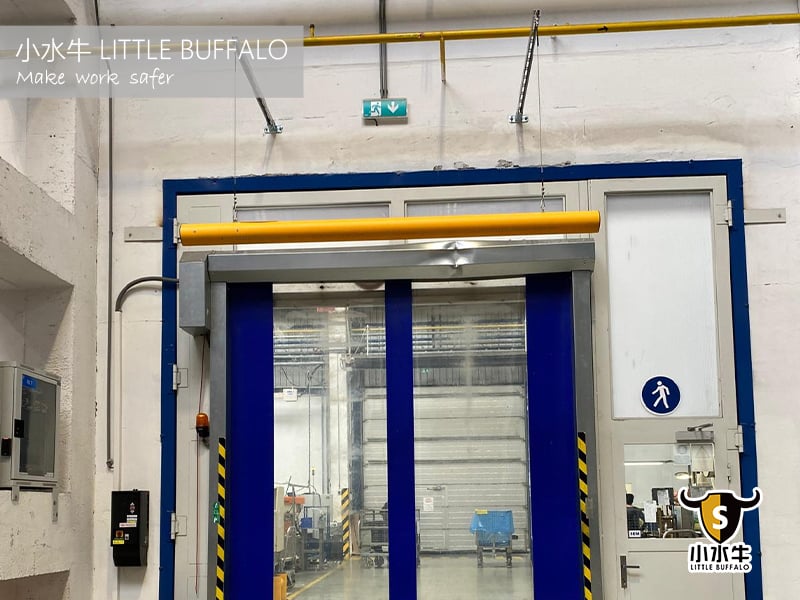
Cab interiors, door frames, jambs, wall corners, and controls can all be exposed when loads are moved quickly or when the load footprint is wider than expected. Freight lift protection should distinguish between surface protection inside the car and impact management outside the car. Pads or surface-protection systems may be appropriate for interior finishes during certain activities, while the landing area may need a separate strategy for vehicle approach and structural exposure.
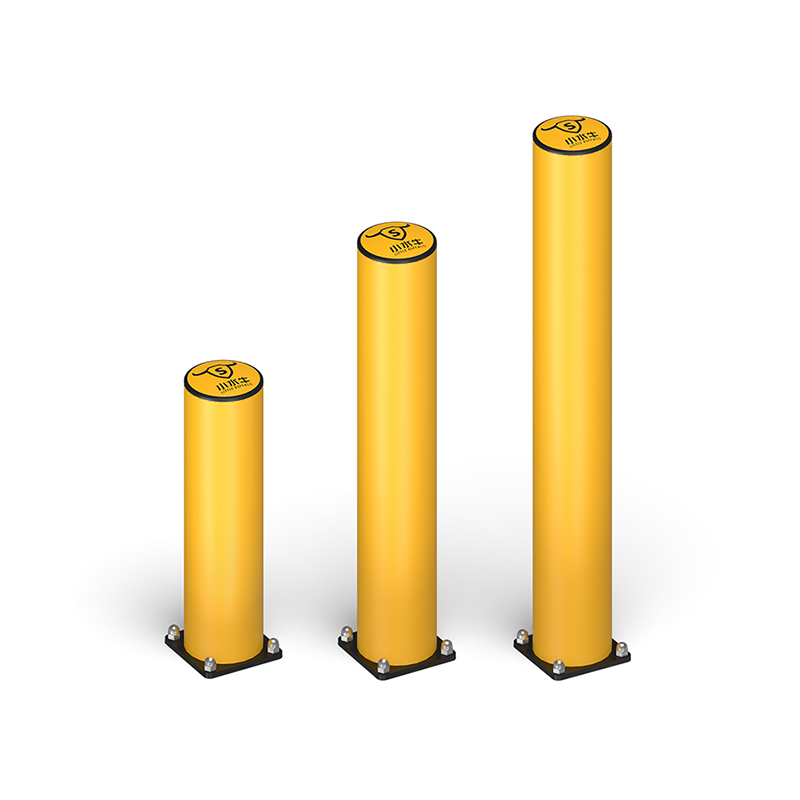
Review each location by asking what could make contact, from which direction, and at what height. Then evaluate whether the most appropriate response is route adjustment, a protected waiting area, a corner or jamb guard, a bollard-type control, a rail, or another application-specific measure. This approach makes freight elevator protection more durable than adding the same barrier type everywhere.
Do not assume a protective element is suitable for a particular impact exposure without verified product documentation and a review of mounting conditions. Flooring, slab condition, anchoring, clearances, and door operation all affect whether elevator safety barriers fit the location.
Manage the Loading Area as Part of the Same System
The loading area can create hazards before a load ever reaches the elevator. Forklifts may travel near dock edges, trailers, staging lanes, and pedestrian routes, then carry that congestion toward the lift. OSHA notes that loading docks can be dangerous for forklifts and advises operators to slow down, watch for others, and stay aware of the dock edge. The same discipline supports freight elevator protection at interior loading zones and elevator approaches.
Use a simple hierarchy when planning the area:
- Eliminate unnecessary movement. Place staging areas so loads do not wait in a crossing or door zone.
- Separate routes. Use physical controls where feasible and clear floor guidance where a barrier is not practical.
- Control access. Define who may enter the landing or loading zone during load transfer.
- Maintain visibility. Keep signs, mirrors, lighting, and sightlines relevant to actual travel directions.
- Review behavior. Inspect the area after layout changes, near misses, or changes in equipment.
This is where freight lift protection becomes an operational practice rather than a one-time installation. A loading area that changes every shift needs controls that are understood, inspected, and adjusted when the workflow changes.
Choose Barrier Types by Function, Not by Appearance
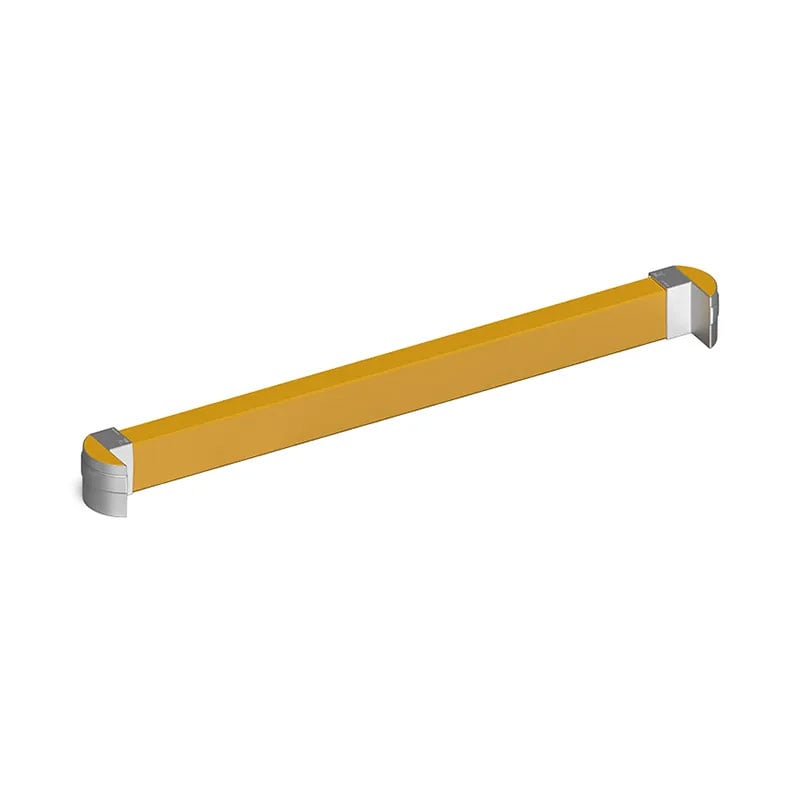
A consistent-looking installation is not necessarily an effective one. For freight elevator protection, evaluate the function of every proposed control. Rails may guide pedestrian movement. Bollard-style protection may help define an exposed corner or asset boundary. Flexible barrier options may be considered for designated vehicle-pedestrian separation applications. Guard fencing may suit a larger defined work zone. Each option needs to be evaluated against the actual approach direction, clearance, access requirement, and verified capability.
| Zone | Primary question | Planning focus |
|---|---|---|
| Elevator threshold | Can vehicles and people arrive at the same time? | Approach lane, waiting position, and access control |
| Door jamb or wall corner | What can strike the structure? | Load geometry, turning path, and suitable protective detail |
| Loading/staging area | Does temporary storage reduce clearance? | Staging limits, route marking, and inspection |
| Pedestrian crossing | Can a person see and be seen? | Separation, visibility, and communication rules |
By using this function-led method, elevator safety barriers become part of a clear control plan instead of a generic visual treatment.
Build Inspection and Change Review Into Freight Elevator Protection
A protected area can lose its value when a new rack, parked pallet, worn floor marking, or changed delivery schedule alters the route. Include freight elevator protection in routine inspections. Check for loose or damaged protective components, blocked access, new pinch points, reduced visibility, and behavior that differs from the intended traffic plan.
Also ask operators and maintenance staff what happens during peak activity. Their answers can reveal whether freight lift protection still fits the task or whether a staging position, opening, or access rule needs adjustment. Record assumptions and verify any product-specific, regulatory, or engineering requirement before making a final decision.
A Practical Next Step
The strongest freight elevator protection plan begins with a measured review of the lift, the loading route, traffic types, and access needs. Bring EHS, operations, maintenance, and procurement into the same conversation. Then prioritize the highest-exposure points, select controls that fit the real layout, and review the zone after implementation. That process helps protect people, elevator components, and building structure without treating a physical barrier as the only control.
 Hot News