EN


Forklift Safety Solutions for Modern Warehouses and Manufacturing Plants
In a busy warehouse, risk is rarely confined to a single aisle. A forklift leaving a rack lane, a picker crossing toward a packing bench, and a pallet staged near a doorway can create a conflict point in seconds. Effective forklift safety solutions begin with that operating reality: they are not one product or one rule, but a coordinated way to reduce exposure where people, trucks, loads, and fixed assets share space.
From an EHS planning perspective, effective forklift safety solutions match traffic routes, impact exposure, and everyday work practices before a barrier type is selected. Put simply, the barrier choice follows the route problem rather than the other way around. This guide explains how warehouse and manufacturing teams can use physical separation, operating controls, training, and review routines together.
Start with the hazard, not the catalog
A useful review starts with how forklifts and pedestrians move today, not how the drawing assumes they move. Map normal travel, reverse movements, blind corners, loading-door approaches, battery-charging areas, production-line crossings, and temporary pallet locations. In active facilities, the most revealing places are often where forklifts and pedestrians converge.
That map gives forklift safety solutions a purpose. A guardrail beside a pedestrian walkway addresses a different exposure from a rack-end protector, a corner barrier, or a controlled crossing. A common planning miss is checking forklift turning clearance only after the proposed barrier location is fixed. Record truck dimensions, likely approach directions, load-related visibility limits, traffic volume by shift, and the people who need access to each zone.
OSHA’s powered industrial truck guidance says forklift traffic should be separated from workers and pedestrians where possible. It identifies pedestrian walkways, permanent railings or other protective barriers, adequate walking space, and floor striping where barriers cannot be used as possible measures. This is a useful direction for forklift safety solutions, but it is not a substitute for examining the specific layout and operating conditions of a site.
Build a layered forklift safety plan
Reliable forklift safety solutions work as layers. Physical protection may make a route boundary more legible and help control exposure, while markings, signs, procedures, operator behavior, and supervision support the same boundary. The goal is to reduce exposure in a route, not to imply zero risk.
- Separate routes: Define dedicated pedestrian paths and truck travel areas wherever the layout allows. Consider gates or controlled crossings where routes must meet.
- Control conflict points: Review intersections, corners, dock doors, rack ends, machine perimeters, and office entrances individually. These are typical locations for targeted forklift collision protection.
- Use visible boundaries: Combine floor markings, signs, lighting, and physical separation so the intended movement pattern is easier to understand during a normal shift.
- Support safe operation: Set expectations for speed, horns at obstructed intersections, yielding, load handling, and reporting changed conditions.
- Train and evaluate: OSHA’s 29 CFR 1910.178 framework includes formal instruction, practical training, workplace performance evaluation, and periodic evaluation. Training should reflect the trucks and hazards actually present.
A physical separation should not be written as a substitute for traffic rules and training. Conversely, procedures alone can be difficult to sustain where a layout repeatedly puts people beside turning or reversing equipment. The practical value of forklift safety solutions comes from connecting both kinds of control.

Choose industrial forklift barriers by application
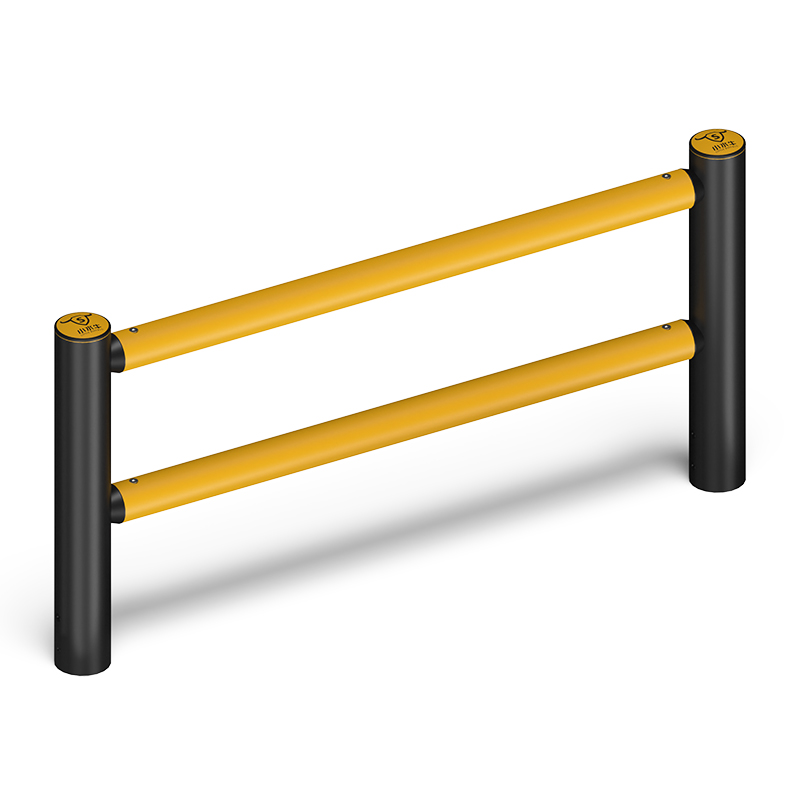
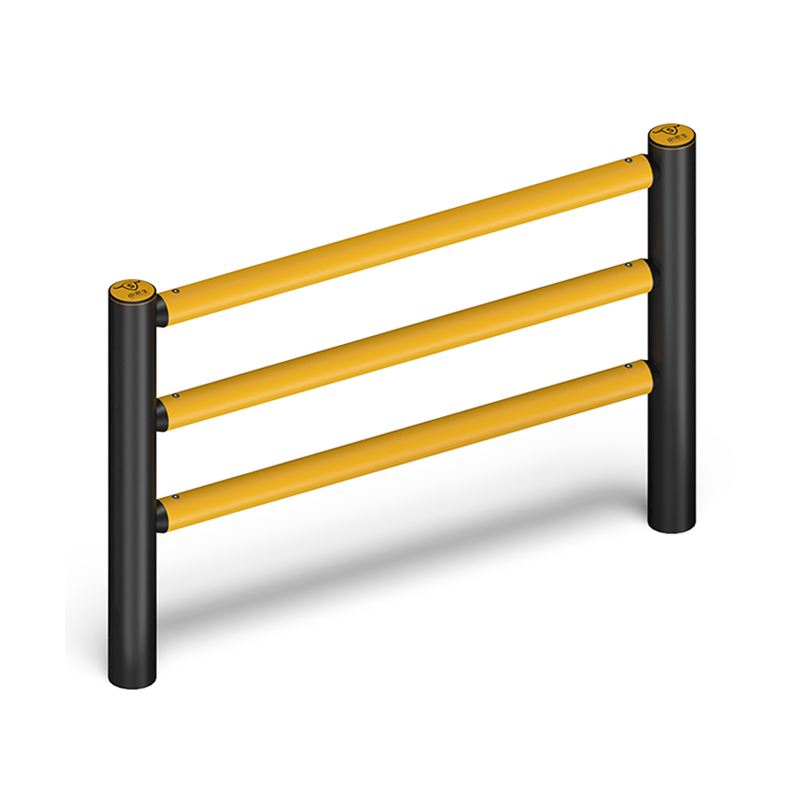
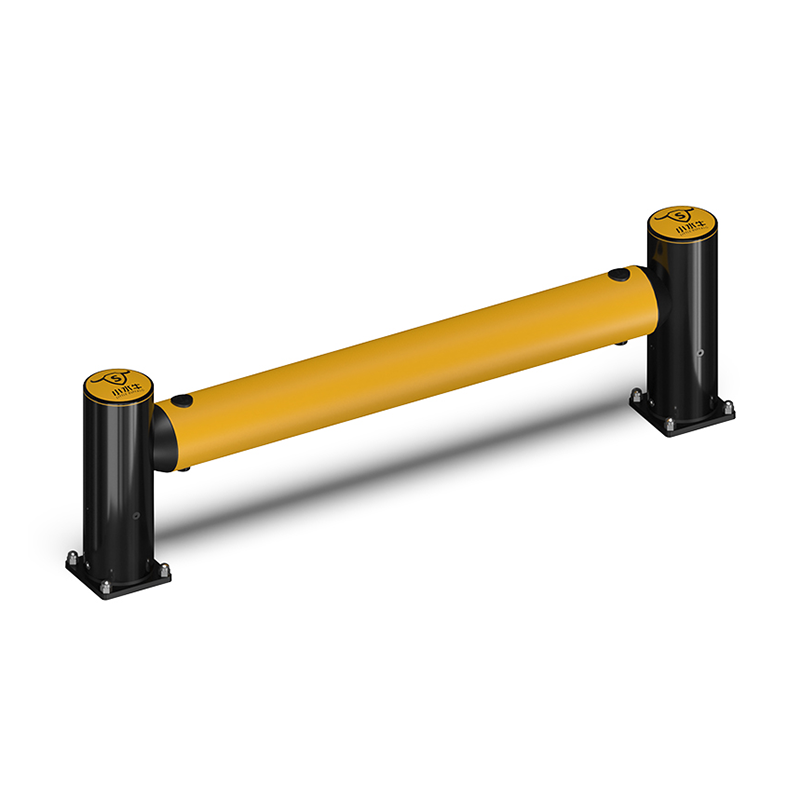
Industrial forklift barriers should be considered according to the job they are intended to support, not only their appearance. A pedestrian edge may need a continuous, easily recognized boundary. A rack end may need protection from a recurring turning path. A loading-area entrance may need a solution that works with authorized access and changing traffic. Any claim about impact behavior should be read with its applicable conditions and evidence.
For each candidate location, ask four questions:
- What movement creates the exposure: straight travel, a turn, reverse travel, or a crossing?
- Who or what needs separation: pedestrians, racking, machinery, doors, utilities, or staging areas?
- What clearance must remain for trucks, workers, emergency egress, cleaning, and maintenance?
- What mounting condition, configuration, and application evidence need verification before specification?
More material is not automatically a better answer if the likely impact path is not addressed. Likewise, a clearly visible boundary still needs to make sense to people using a shared route. In planning discussions, this is often the point where access constraints become clearer.
Plan forklift collision protection around real movement
Forklift collision protection is most useful when it reflects observed behavior rather than a generic layout. Walk the route during more than one operating period if traffic changes by shift. Observe what happens when pallets occupy part of a planned route, when a truck reverses out of a lane, or when a team moves materials during a production changeover.
Then use the findings to prioritize controls. A route with frequent pedestrian shortcuts may need clearer separation and a more intuitive crossing point. An exposed rack end may call for a targeted protective measure plus an adjustment to the turning path. A doorway used by pedestrians and trucks may need operating rules, warning cues, and a review of sight lines. These are decision points for forklift safety solutions, not universal prescriptions.
Installation and review are part of the solution
Installing industrial forklift barriers is not the end of the process. Before installation, confirm dimensions on site, substrate and mounting conditions, access routes, emergency requirements, and the relationship between the proposed boundary and vehicle sweep. Increasing protective coverage can affect service access, so review both on the same plan.
After installation, communicate the route logic to operators, pedestrians, supervisors, and maintenance teams. Inspect for displacement, damage, loose fixings, new obstructions, or changed traffic patterns. When a new rack line, production cell, or staging practice is introduced, revisit the separation plan rather than assuming the original logic still fits. This creates forklift safety solutions that can remain aligned with the facility as it changes.
A practical checklist for the next site review
- Identify where forklift and pedestrian paths overlap or approach each other.
- Record truck types, load conditions, turning needs, visibility constraints, and peak periods.
- Classify each point as a route-separation, asset-protection, access-control, or visibility issue.
- Compare industrial forklift barriers against clearance, mounting, access, and evidence requirements.
- Pair physical controls with markings, procedures, training, and inspection responsibilities.
- Define a review trigger for layout, equipment, traffic, or workflow changes.
The strongest forklift safety solutions are grounded in observed traffic and clear assumptions. Use this framework as a starting point, then confirm route dimensions, application evidence, and local requirements before finalizing a configuration. That approach helps a warehouse or manufacturing plant create more understandable separation without overstating what any one control can deliver.
 Hot News