 EN


Warehouse Safety Upgrades: Where to Install Impact Protection Barriers
Warehouse impact protection works when it follows the way people, forklifts, pallets, and deliveries actually move. A barrier placed only where the floor plan looks busy may miss the real pinch point: the doorway where a truck reverses, the rack end repeatedly clipped during put-away, or the pedestrian route that merges with an equipment lane. Start with observation, then turn that evidence into a barrier plan.
For a facilities manager, warehouse impact protection is not simply a purchase of rails or posts. It is a route-separation decision. The aim is to reduce the chance that a moving vehicle reaches a person, rack, machine, wall, or critical service point. OSHA advises separating forklift traffic from pedestrians where possible; physical barriers can strengthen that separation when markings and rules alone do not control the exposure.
Begin with a traffic-and-exposure walk-through
Before choosing polymer safety barriers or flexible crash barriers, define what warehouse impact protection must prevent at that location. Then, walk each active route during normal work and during the busiest changeover. Mark forklift travel, reversing moves, pedestrian shortcuts, staging locations, doors, crossings, and any place an operator loses a clear view. Include temporary behavior: a route that is clear on a quiet shift may become constrained when inbound pallets wait at the dock.
Use a simple priority question for every location: if a vehicle leaves its intended path here, what can it strike first? Warehouse impact protection should be prioritized where the answer is a person or an asset whose loss would interrupt safe operations. Record the direction of likely travel, the available clearance, sight lines, and whether the risk appears throughout the day or only at defined peaks.
1. Separate pedestrian routes from powered traffic
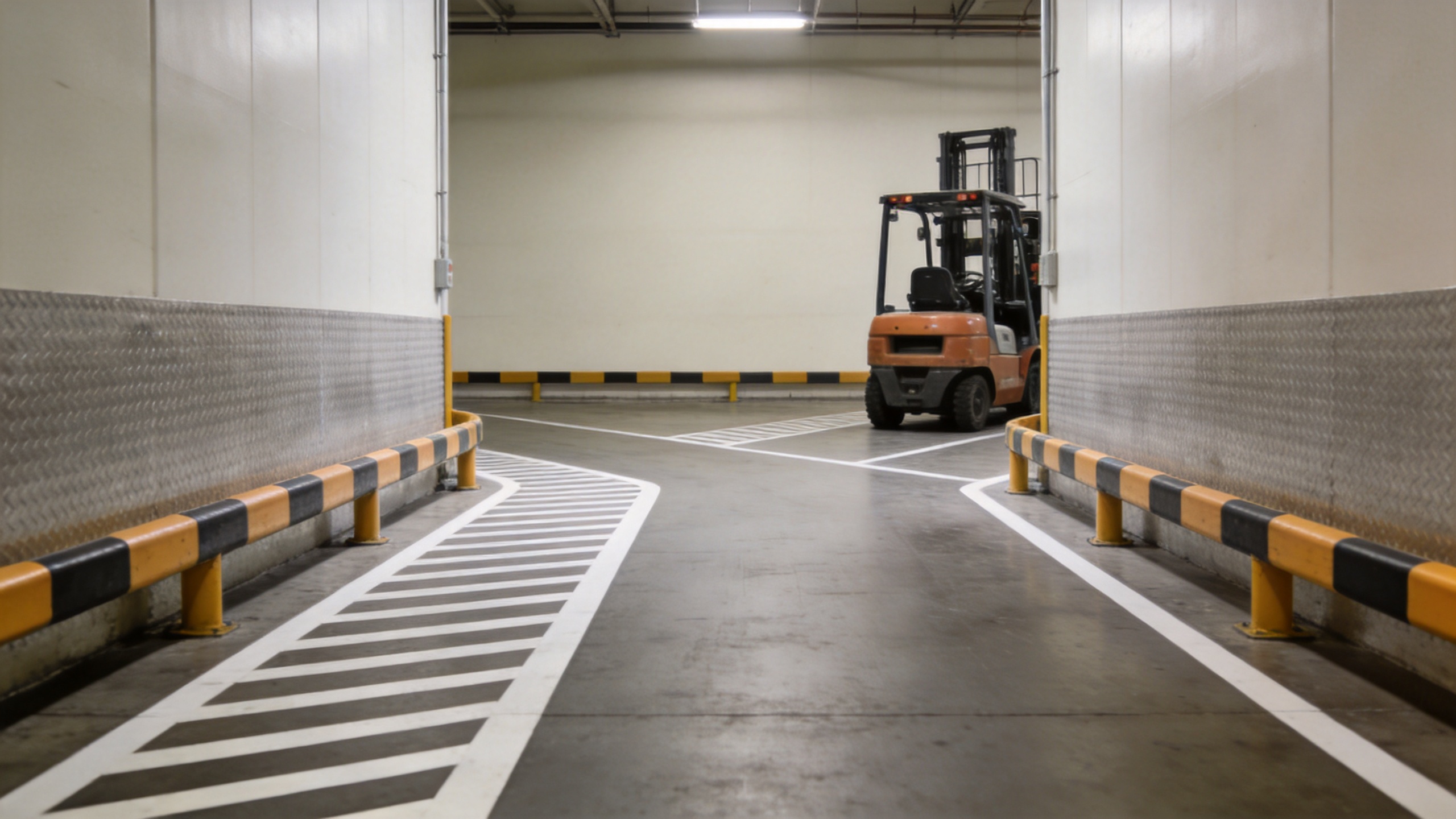
Pedestrian walkways beside forklift aisles are often the first location for warehouse impact protection. Floor paint communicates intent, but it can be crossed easily when a pallet, a queue, or an unfamiliar visitor changes the route. Where people must work alongside mobile equipment, a physical line of protection can make the boundary clearer and reduce unplanned crossing.
Focus on walkways leading to workstations, welfare areas, offices, time clocks, battery rooms, and emergency exits. Check the transitions, not just the straight sections. Doors that open onto a vehicle lane, aisle ends that feed into crossings, and points where people turn around racking deserve special attention. HSE guidance also highlights barriers, markings, and suitable crossing arrangements as tools for keeping pedestrians and vehicles apart.
Warehouse impact protection at a pedestrian route should preserve usable walking space and avoid creating a new trapping point. Review gate locations, access for cleaning, evacuation paths, and visibility at the ends of the barrier. A barrier is part of a route design, not a substitute for a route design.
2. Protect blind corners, intersections, and crossings
Intersections concentrate uncertainty. Operators may approach from different aisles while pedestrians assume a marked crossing gives them automatic protection. Install warehouse impact protection where it guides people toward the intended crossing and discourages short cuts through a vehicle path. Pair it with clear signs, mirrors where appropriate, speed controls, and local operating rules.
Give particular attention to blind corners created by stored goods, tall racking, partitions, or open dock doors. OSHA recommends slowing, stopping, and sounding the horn at corners and wherever visibility is obstructed. Physical protection can add a forgiving boundary around a pedestrian waiting area or around a route edge, but it should not hide a person from an approaching operator.
3. Guard rack ends and vulnerable uprights
Rack ends are exposed during turning, loading, and pallet positioning, especially where travel lanes tighten near staging. Warehouse impact protection here should be based on the approach angle, turning radius, truck type, load overhang, and room available for recovery. Do not assume that a low-level guard suitable for one aisle will protect a high-exposure rack end at a busy cross aisle.
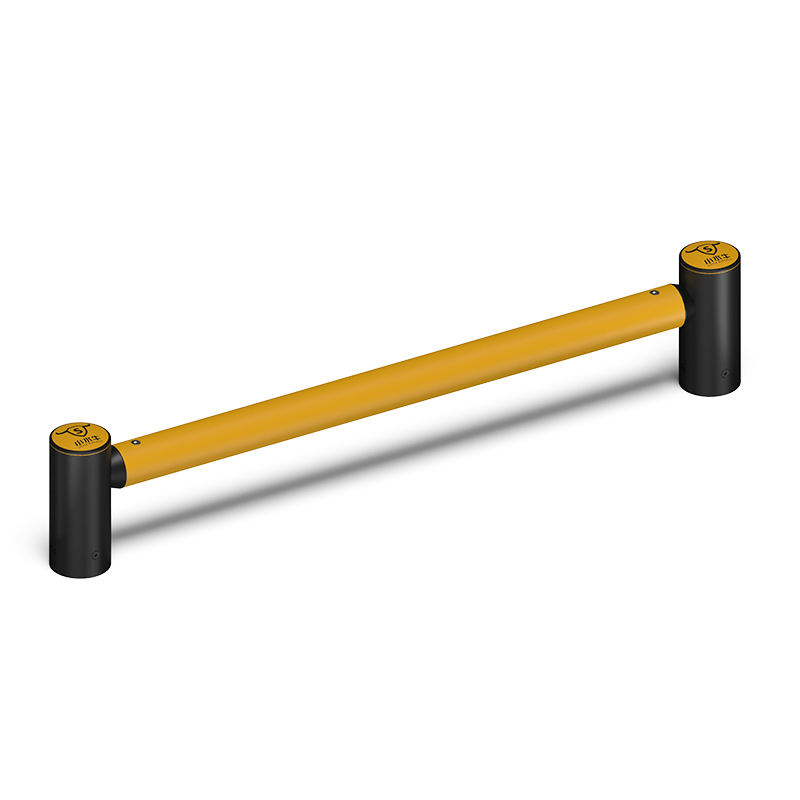
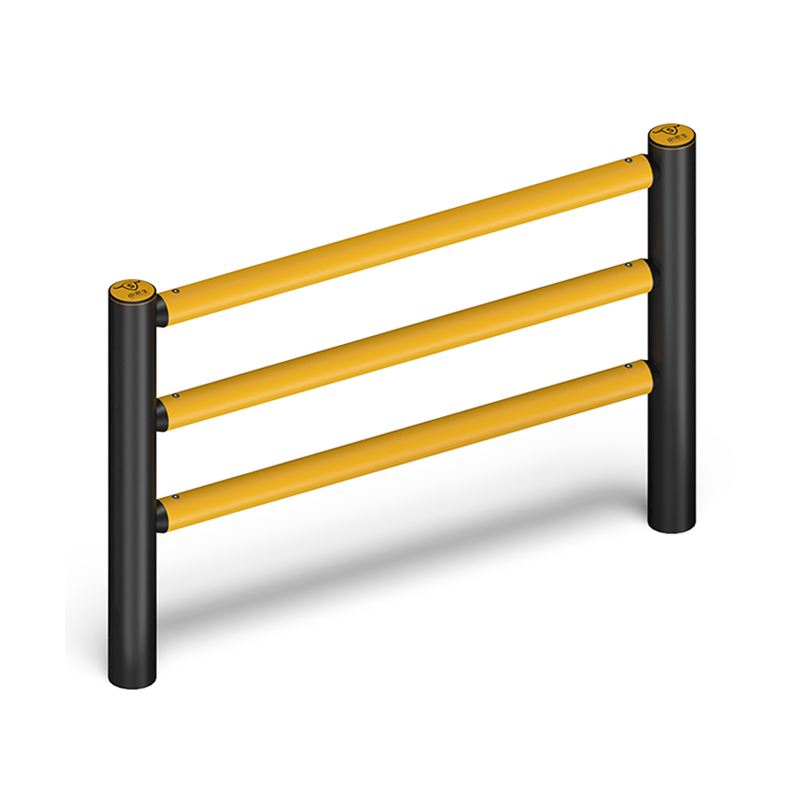
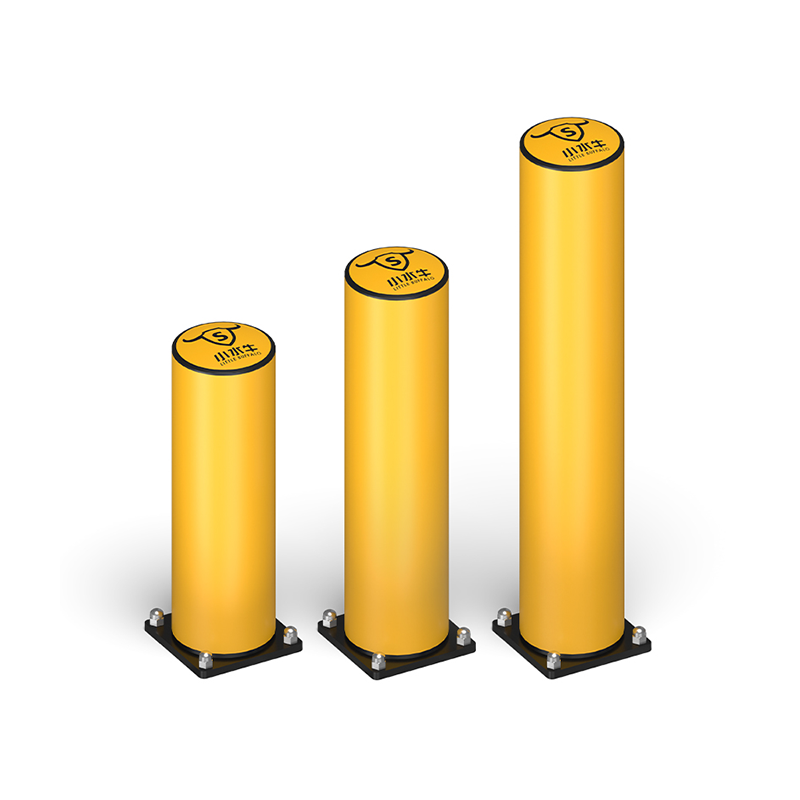
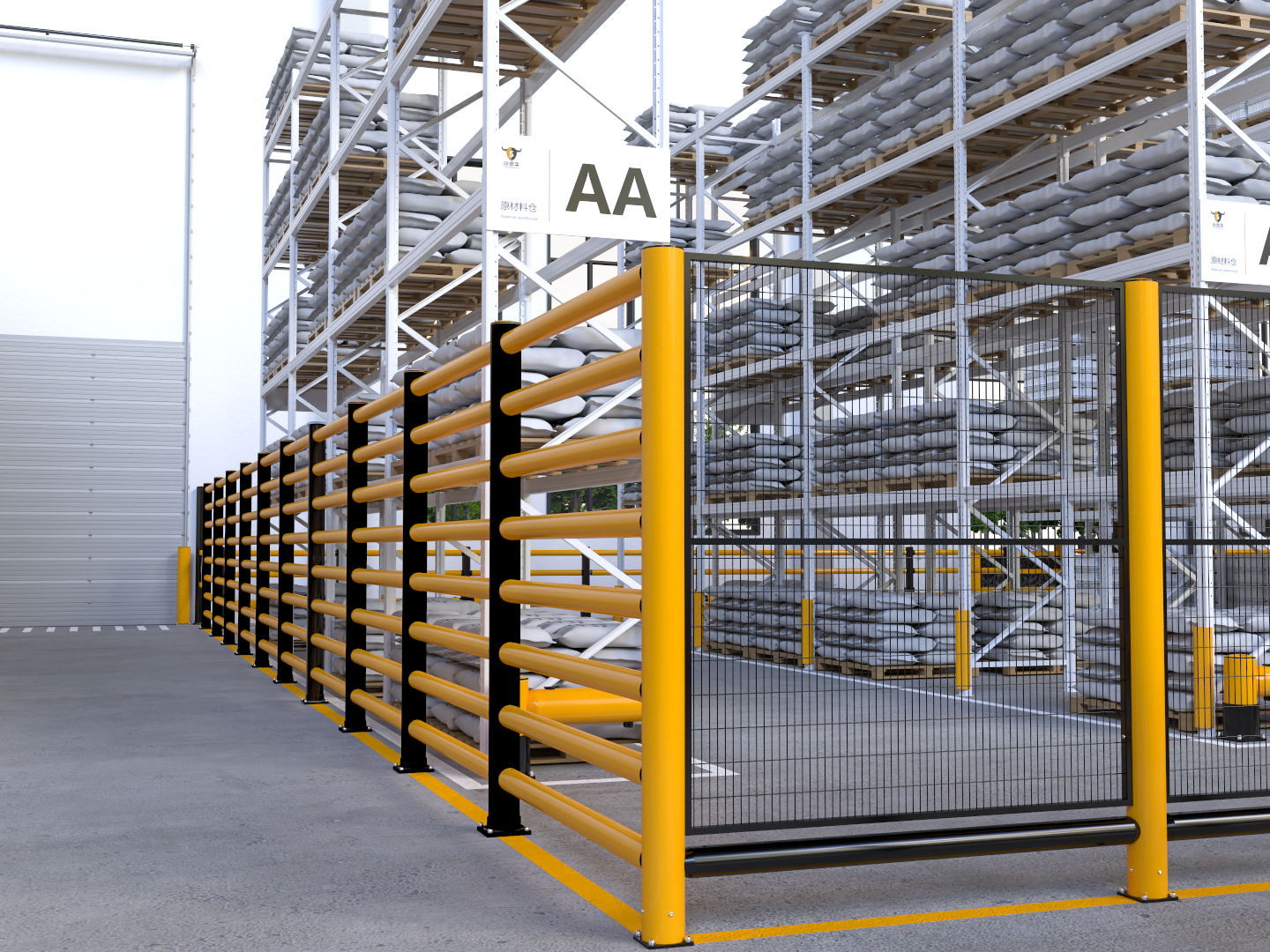
Inspect for repeated scuffing, bent components, damaged floor markings, or operators taking wide turns to avoid nearby stock. These are useful evidence points. Polymer safety barriers may be considered where a resilient, highly visible boundary suits the traffic pattern, while a barrier selection should be checked against the documented site risk and supplier information.
4. Defend columns, building fabric, and fixed equipment
Columns, door frames, walls, conveyors, charging areas, control panels, and utility points can all justify warehouse impact protection. The warehouse impact protection priority rises when damage could stop a process, restrict a safe exit, or expose people to a secondary hazard. A column on the outside of a turn is often more exposed than one positioned inside the same aisle geometry.
Map these assets against actual vehicle paths rather than placing protection around every fixed object. Flexible crash barriers can be useful in a layout that needs a visible edge around equipment zones, but spacing and layout must still allow maintenance access and safe escape. Keep service panels, fire equipment, and emergency controls accessible under the site’s procedures.
5. Control dock approaches and staging edges
Loading docks combine pedestrians, trailers, forklifts, hand pallet trucks, and changing loads. Warehouse impact protection is especially valuable at the edges of staging zones, office doors near dock traffic, pedestrian approaches to trailer areas, and fixed structures exposed during reversing. Observe each dock at dispatch peaks rather than relying on a drawing made before operations changed.
Use barriers to define where people should wait and where equipment should not be staged. Do not use a barrier layout to normalize unsafe reversing; review one-way flow, exclusion areas, spotter practices, lighting, and communication with drivers. Good warehouse impact protection supports those controls instead of masking gaps in them.
Choose locations by consequence, not appearance
A practical ranking method helps when the budget cannot cover every desired upgrade. Score each location for vehicle frequency, likely direction of travel, pedestrian exposure, visibility, available clearance, asset criticality, and evidence of prior contact. The highest combined scores should lead the first installation phase. This makes warehouse impact protection easier to explain to operations, maintenance, and procurement teams.
| Zone | What to observe | Typical protection objective |
|---|---|---|
| Pedestrian route | Crossings, shortcuts, doors, shift changes | Keep people outside vehicle paths |
| Rack end | Turns, load overhang, contact marks | Shield vulnerable storage structure |
| Intersection | Blind approach, traffic mix, stopping behavior | Guide crossings and maintain sight lines |
| Fixed asset | Exposure angle, criticality, maintenance access | Reduce vehicle contact with infrastructure |
Make installation part of a managed change
Before installing warehouse impact protection, confirm route widths, door swing, drainage, cleaning needs, inspection access, emergency egress, and the equipment that will use the area. Discuss the proposed layout with operators and pedestrians who know where congestion occurs. Their feedback often identifies a shortcut or blind spot that is not visible in a static layout.
After installation, observe the area again. Check whether people use the intended route, whether operators retain enough visibility and clearance, and whether a new queue has formed. Inspect barriers after any contact and record recurring events. Warehouse impact protection should evolve with the warehouse, especially after new racking, changed shift patterns, automation, or revised staging practices.
A focused next step
Start with one representative shift and map the highest-consequence interaction points. Then prioritize barriers around pedestrian exposure, rack ends, blind intersections, critical fixed assets, and dock interfaces. A measured warehouse impact protection plan using polymer safety barriers or flexible crash barriers where appropriate can support safer route separation without making claims that have not been verified for the specific site.
A useful warehouse impact protection plan is specific to the traffic pattern in front of you. Use the walk-through, the risk ranking, and feedback from the people using the routes to decide where a physical boundary will make the clearest practical difference.
 Hot News

