EN


Warehouse Aisle Safety: Barrier Solutions for Forklift Traffic
Warehouse aisle safety is not achieved by placing a rail wherever there is open floor space. It starts with understanding how forklifts, pedestrians, pallets, doors, and rack ends use the same corridor over a full operating day. From an EHS planning perspective, the useful question is not “Which barrier looks strongest?” but “Where can a person, vehicle, or asset enter the same conflict point?” That shift helps teams choose controls that support safe movement without making routine work harder.
Forklift traffic changes from shift to shift, especially near picking faces, cross aisles, charging areas, staging zones, and doorways. A layout that appears clear during a walkthrough may behave very differently during replenishment or dispatch. Good warehouse aisle safety planning therefore combines route observation, housekeeping, visibility, operating rules, and physical separation. Forklift collision protection is one part of that system, not a replacement for trained operators or site procedures.
Start With the Aisle as a Working Route
Before selecting industrial forklift barriers, map the route as it is actually used. Note turning points, reversing locations, pedestrian crossings, rack ends, fire-equipment access, doors, columns, and places where temporary storage narrows the lane. Speak with operators and pickers who work the route. They often identify blind corners, shortcuts, or recurring obstructions that a drawing does not show.
OSHA’s materials-handling rule at 29 CFR 1910.176(b) requires sufficient safe clearances where mechanical handling equipment is used and requires aisles and passageways to be kept clear and in good repair. The rule is an important operating baseline, but it does not supply one universal aisle dimension or one universal barrier configuration. Clearance needs depend on the truck, load, turn geometry, travel direction, racking, and local operating conditions.
Identify the Conflict Points Before Choosing Barriers
Aisles rarely have the same risk from end to end. The most useful barrier plan identifies what needs separation or impact protection at each point. In a shared aisle, pedestrian exposure may be the deciding issue. At a rack end, the main concern may be a vehicle striking a structural edge. Near a doorway, sightlines and access can matter more than continuous separation.
- Crossings and shortcuts: use clearly defined pedestrian paths, crossings, and physical controls where people can enter a vehicle route unexpectedly.
- Rack ends and columns: consider localized impact protection where turning or reversing equipment can contact exposed assets.
- Open work areas: use a boundary that helps distinguish a work zone from a travel lane without blocking necessary access.
- Doors and intersections: preserve visibility and the clearance needed for the equipment and load; a poorly located rail can create a new pinch point.
Put simply, the barrier choice follows the route problem rather than the other way around. This is especially important when comparing fixed rails, bollards, flexible systems, and guard fencing. Each can have a role, but only when its position, height, anchoring approach, and access implications match the exposure.
Match the Barrier Approach to the Exposure
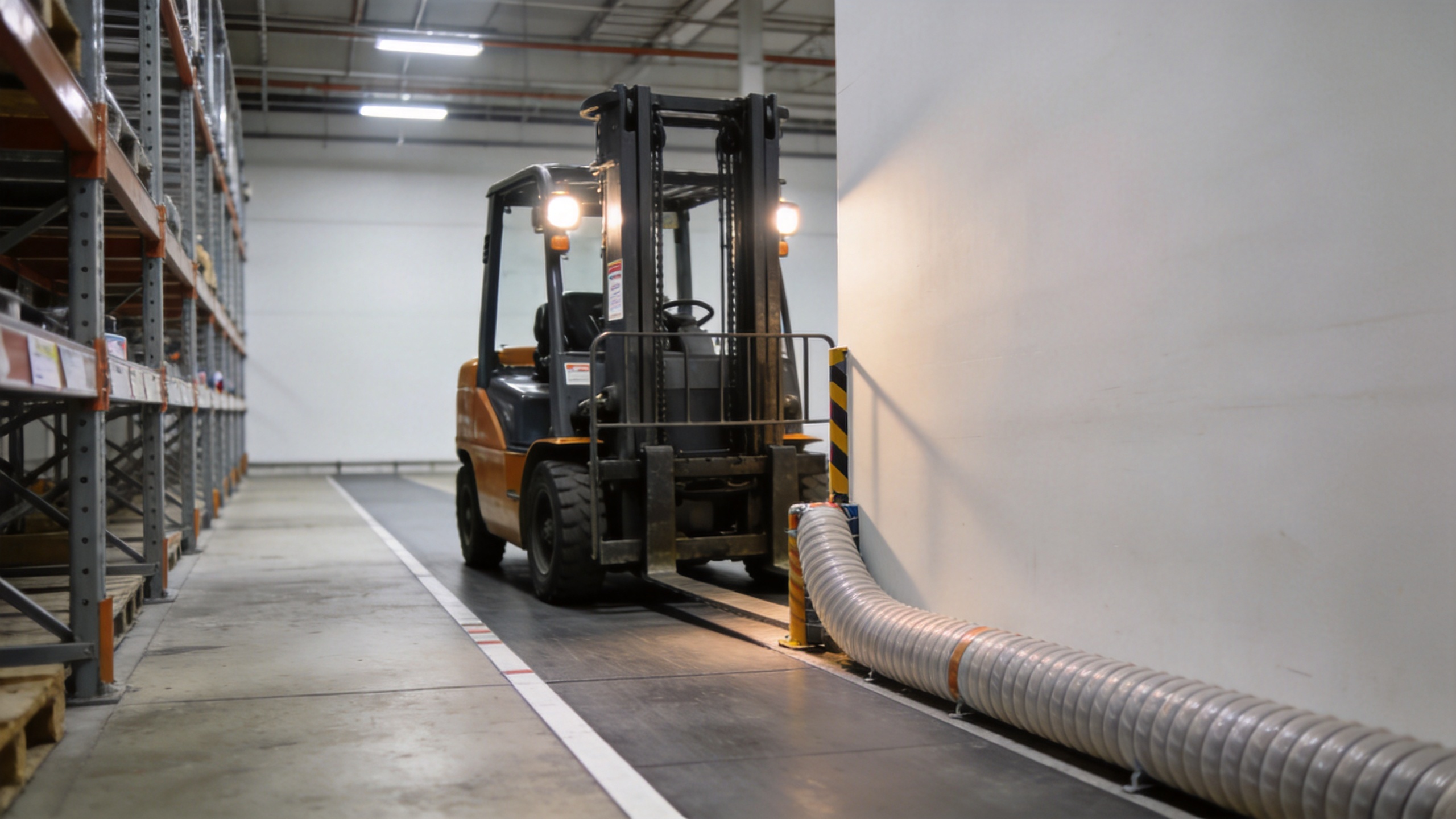
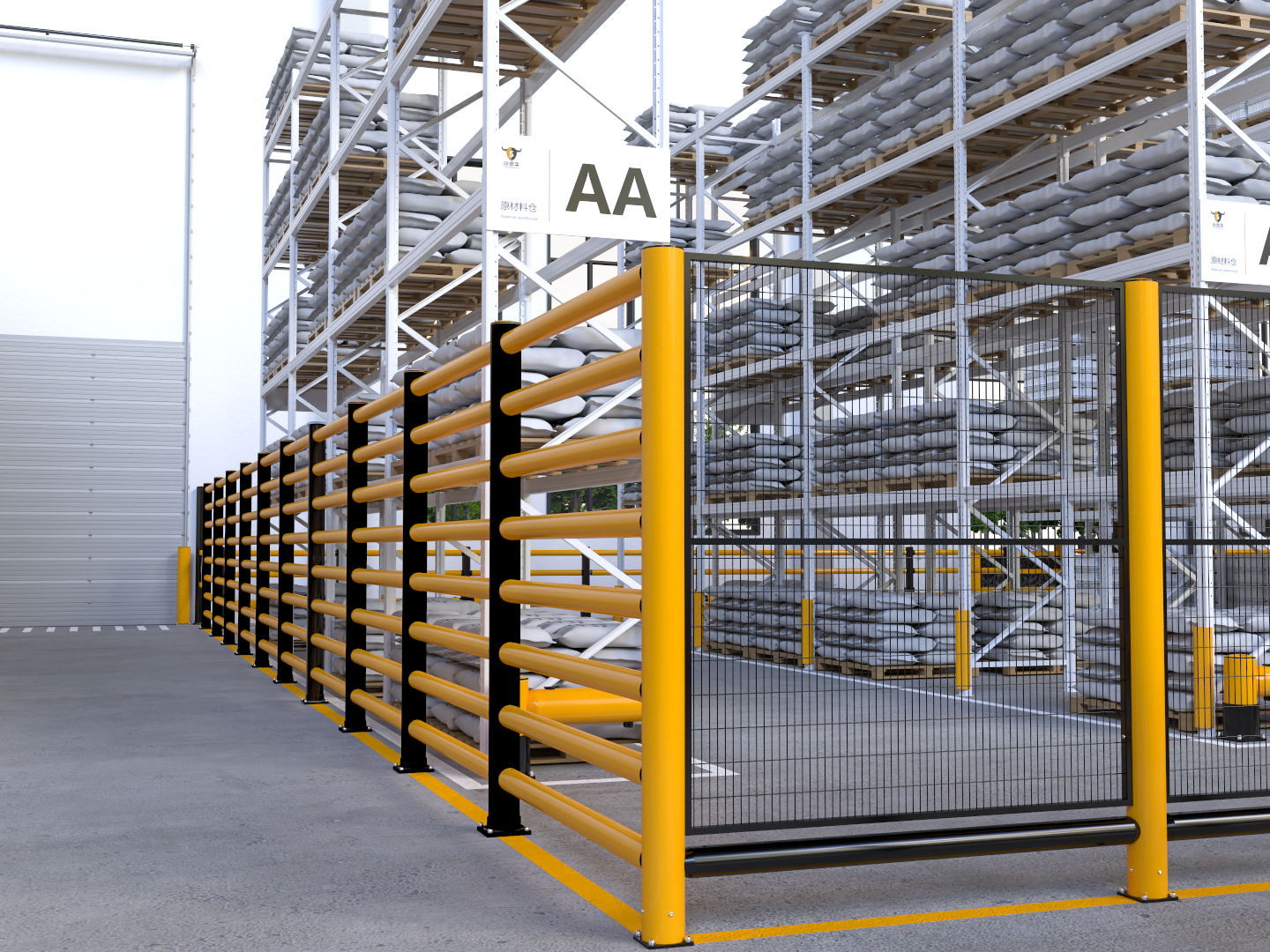
Industrial forklift barriers can help create visible separation between travel lanes and people or assets. A continuous barrier may suit a long pedestrian boundary where access is controlled. Short runs or end protection may be more appropriate around rack corners, equipment, or a doorway approach. Flexible barrier options can be considered where repeated contact is a planning concern, while more localized protective elements may fit specific edges or entrances. The correct choice should be checked against the expected vehicle, load path, speed controls, mounting surface, and manufacturer documentation.
A common mistake is to treat a product rating or material description as a complete layout design. It is not. Vehicle type, impact angle, available clearance, slab condition, and the need for emergency or maintenance access all affect whether a solution is suitable. If the route changes by shift, review traffic at more than one operating period before finalizing a layout.
Protect Access, Visibility, and Housekeeping at the Same Time
Forklift collision protection should not force people to step into a travel lane to reach a workstation or bypass a control. During planning, test the ordinary tasks: opening a door, collecting a pallet, accessing a fire extinguisher, cleaning an aisle, and moving maintenance equipment. A barrier that protects a rack end but blocks a safe pedestrian exit needs adjustment.
Visibility also deserves its own review. At intersections and aisle ends, look at what an operator can see with a typical load and what a pedestrian can see before stepping out. Signs, floor markings, mirrors, lighting, speed management, and operating rules may support the barrier layout, but none of them erase the need to keep the route clear. Temporary pallets, empty packaging, and charging leads can quietly undermine warehouse aisle safety even when the barrier system is well planned.
Use a Practical Installation Checklist
- Observe real movement: review more than one shift and document truck directions, load types, and pedestrian crossings.
- Measure the usable envelope: include the truck, load, turns, doors, rack overhang, and required access—not just the painted aisle line.
- Rank each exposure: distinguish pedestrian conflict, asset impact, restricted visibility, and housekeeping problems.
- Select the control combination: combine route rules and markings with industrial forklift barriers where physical separation or impact protection is justified.
- Confirm installation conditions: verify substrate, anchors, clearances, and product documentation before installation.
- Review after changes: revisit the plan after a rack reconfiguration, equipment change, or recurring near miss.
Keep the System Current After Installation
Warehouse layouts evolve. New SKUs, different truck models, seasonal volume, and revised picking methods can turn a low-conflict aisle into a busy intersection. Include barriers in routine inspections: check for visible damage, loose anchors, altered clearance, unauthorized storage, and new pedestrian desire lines. Operators should have a straightforward way to report a sightline or access problem before it becomes normal practice.
For warehouse aisle safety, the strongest outcome is a route that is understandable at a glance and workable under real conditions. Start with the movement pattern, define the conflict points, use forklift collision protection where it adds meaningful separation or asset protection, and verify that the final layout still supports access, visibility, and housekeeping. That approach gives a safety team a more durable basis for selecting barrier solutions than choosing from a catalog alone.
 Hot News