 EN


Safety Barrier Solutions for Automated Warehouses and AGV Traffic
An automated warehouse can look orderly while still containing difficult safety decisions. AGVs follow programmed routes, but people replenish stations, clear jams, inspect equipment, and move through the same operating areas. From an EHS planning perspective, automated warehouse safety barriers work as one layer in a traffic-separation plan: they should reinforce the routes, crossing rules, and access controls that the site has deliberately designed.
It is tempting to start with rail height or material. The more useful first question is where an AGV, a pedestrian, and a fixed asset can occupy the same space or approach it from conflicting directions. A practical system uses warehouse safety barriers to make the intended movement pattern legible, protect exposed infrastructure, and reduce reliance on uninterrupted human attention during a busy shift.
Why AGV traffic changes the barrier-planning conversation
Automated vehicles do not remove the need for route discipline. Their routes may be guided by tape, markers, wires, laser navigation, or other location methods, yet they still have stopping behavior, turning envelopes, load profiles, and exception states that must be understood in the actual facility. An AGV may slow or stop when it detects an obstruction, but a physical boundary can still be appropriate where a person could enter a travel lane, where a manual vehicle crosses it, or where a sensitive asset sits close to the route.
That is why automated warehouse safety barriers should be planned around exposure rather than appearance. A neat layout is useful, yet likely impact paths, sightlines, and intervention tasks should be checked before a barrier configuration is chosen. The suitable option depends on how the zone operates—not on a single headline feature.
Map the operating zones before selecting barriers
Start with a walk-through that covers more than the normal route. Observe peak periods, maintenance windows, replenishment activity, and the work required when a vehicle pauses unexpectedly. If the route changes by shift, review traffic at more than one operating period before choosing a layout.
- Dedicated AGV lanes: Identify straight runs, turns, merges, and places where a vehicle might swing wider with a load.
- Pedestrian interfaces: Mark doors, workstations, pick faces, rest areas, and any informal shortcuts people use.
- Crossing points: Review whether a crossing can be eliminated, relocated, gated, or made more visible before relying only on signs.
- Manual-vehicle interaction: Check forklifts, pallet jacks, tuggers, and cleaning equipment that may share or intersect the automated route.
- Service and charging areas: Preserve safe access for technicians while keeping nonessential traffic out of the zone.
- Fixed assets: Include rack ends, columns, conveyors, control cabinets, dock doors, and corner conditions.
Rather than evaluating one bollard or rail alone, map how it works with floor markings, gates, warning devices, and pedestrian routes. Put simply, the barrier choice follows the route problem rather than the other way around.

Where physical separation adds the most value
Define travel lanes and keep crossings intentional
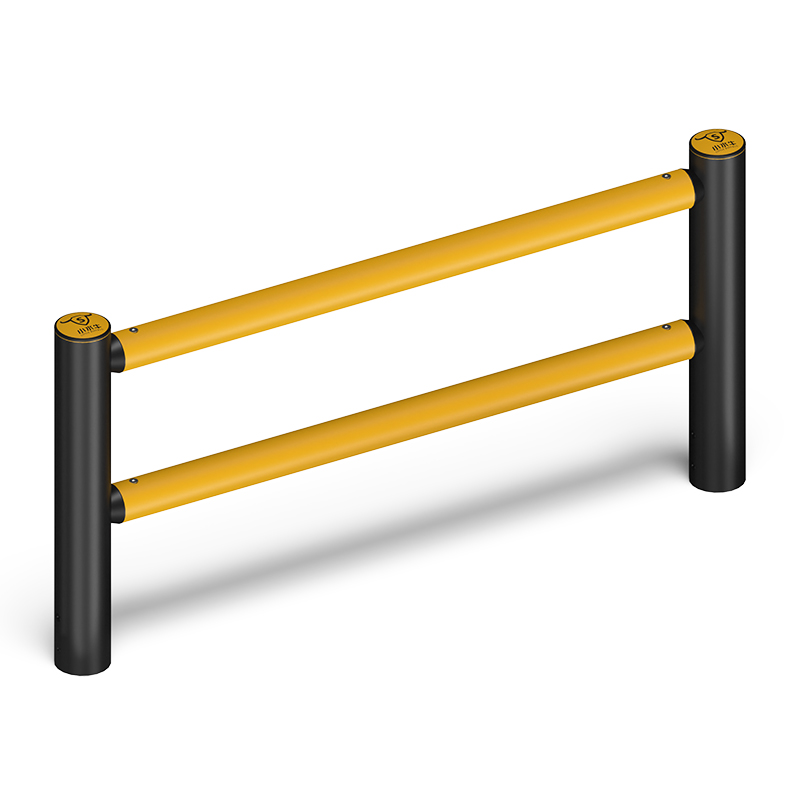
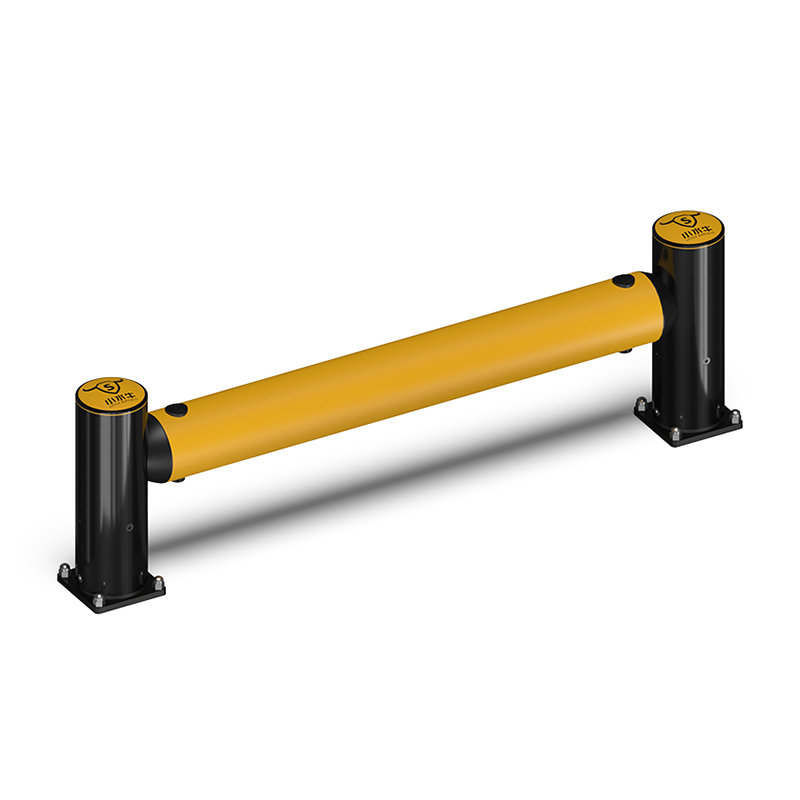
Along predictable AGV travel lanes, continuous warehouse safety barriers can communicate that the lane is not a walking path. The goal is not to fence off every metre of floor. It is to create a clear, durable boundary at locations where pedestrians could drift into traffic or where operational clutter could narrow the usable route. At approved crossings, a gap, gate, or clearly controlled transition should make the change in priority obvious.
General pedestrian-traffic guidance for powered industrial trucks emphasizes waiting for people crossing a planned route and signaling people to stand clear. In an automated setting, that principle supports designing crossings that are visible, controlled, and easy to follow rather than assuming people will interpret an AGV’s movement intent in time.
Protect corners, rack ends, and infrastructure near turns
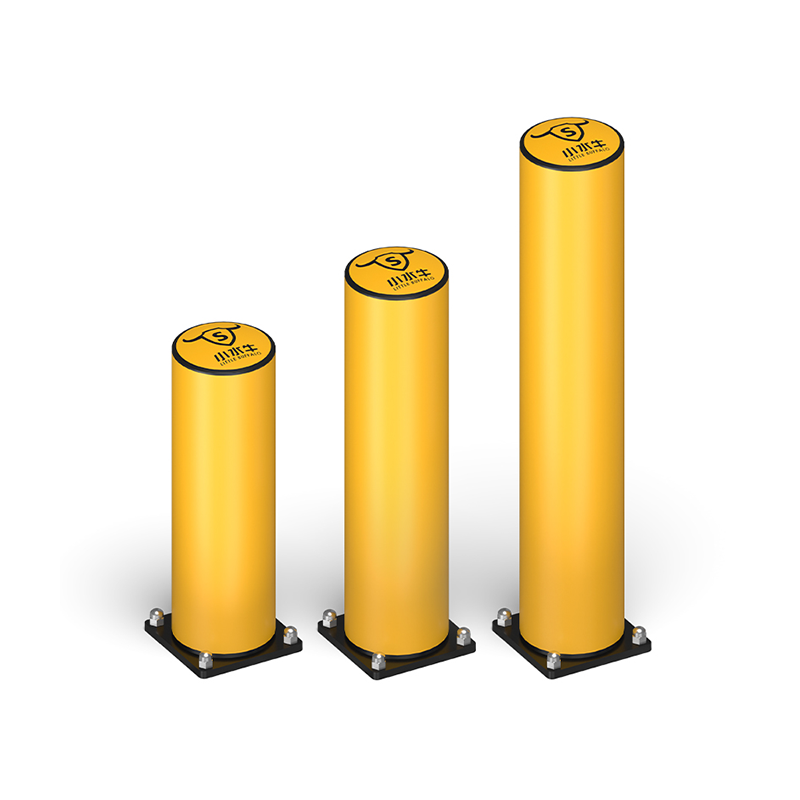
Turns, aisle ends, and loading interfaces deserve separate review because the vehicle path and the line of sight can change quickly. Low-level protection, corner guards, or appropriately configured rail systems may help keep vehicles away from rack uprights, door frames, process equipment, and structural elements. Before treating impact performance as a decision point, confirm what evidence applies to the installation, including mounting surface, vehicle mass, operating speed, load condition, and angle of contact.
Control access to charging and intervention areas
Charging, battery handling, and manual recovery work can bring people into an otherwise automated zone. Automated warehouse safety barriers can define a protected perimeter while still allowing authorized access through a suitable gate or planned opening. This is often where access constraints become clearer: emergency egress, equipment replacement, and maintenance tools all affect the final configuration.
Choose barrier configurations by the hazard, not by product category
Different areas call for different control questions. The table below helps teams convert a route observation into a more useful planning brief.
| Zone condition | Planning question | Potential barrier role |
|---|---|---|
| Long, predictable AGV lane beside workstations | Can a person enter the lane between tasks? | Create a continuous, legible separation line with planned access points. |
| Blind corner or route merge | What can each road user see before entering? | Keep the conflict area clear; protect exposed assets and support a controlled crossing design. |
| Rack end or conveyor near vehicle movement | What is exposed if a vehicle deviates from its route? | Provide targeted asset protection suited to the expected exposure and mounting context. |
| Charging or manual-recovery zone | Who needs access, and under what conditions? | Define the perimeter and use an access arrangement that does not obstruct safe work. |
| Mixed forklift and AGV area | Can the traffic streams be separated or time-managed? | Support a route hierarchy with physical separation where crossing risk remains. |
Flexible and rigid approaches may each have a place. The relevant question is how route geometry, anticipated contact, mounting context, and recovery requirements affect the intended protective function. A lower initial cost does not by itself answer the lifecycle question; teams should also consider inspection, replacement, access disruption, and the effort required when the layout changes.
Make barriers part of a layered AGV safety system
Physical separation is strongest when it supports, rather than duplicates, other controls. Review whether the proposed layout works with route markings, visual notices, gates, sensor-based controls, speed management, operating procedures, training, and housekeeping. For example, a barrier may prevent casual entry into a lane, while a controlled crossing gives workers a recognizable place to pause and assess movement.
Warehouse collision prevention also depends on keeping the designed route usable. Pallets, empty stillages, temporary carts, and maintenance equipment can undermine a good layout if they accumulate near turning points or crossings. Can a pedestrian still understand the intended route when pallets temporarily occupy this area? That question should be tested on the floor, not answered only from a drawing.
A practical review checklist before installation
- Map AGV paths, directions, stops, turns, and expected load conditions.
- Record pedestrian tasks, manual-vehicle routes, doors, and all planned crossings.
- Identify assets whose exposure could create operational or safety consequences.
- Check clearances, emergency access, cleaning needs, and maintenance activities.
- Specify the site conditions that matter for each barrier decision, including mounting and likely contact direction.
- Test the proposal with operations, EHS, engineering, and maintenance before finalizing the layout.
- After implementation, observe real shifts and adjust controls if work patterns or automation routes change.
Plan for change, not only the current layout
Automation projects evolve as throughput, SKU profiles, workstations, and fleet behavior change. Build review points into the safety plan so that automated warehouse safety barriers are reassessed when routes move, new stations are added, or a manual process becomes automated. A configuration that works in one operating phase may need a different access arrangement or additional protection later.
The most effective approach is systematic: define the route, identify the exposure, confirm what people must still do in the area, and then select warehouse safety barriers that support that design. With that sequence, physical protection becomes a clear part of AGV traffic management rather than a last-minute obstacle placed around the floor.
 Hot News

