 EN


Questions to Ask an Industrial Safety Barrier Manufacturer Before Ordering
Before an RFQ becomes a purchase order, a good set of safety barrier manufacturer questions helps a facility team compare proposals on evidence and fit rather than on catalog language. From a warehouse-buyer perspective, the purpose is not to find a universally suitable barrier. It is to give EHS, operations, engineering, and procurement the same site facts before they evaluate a proposed solution.
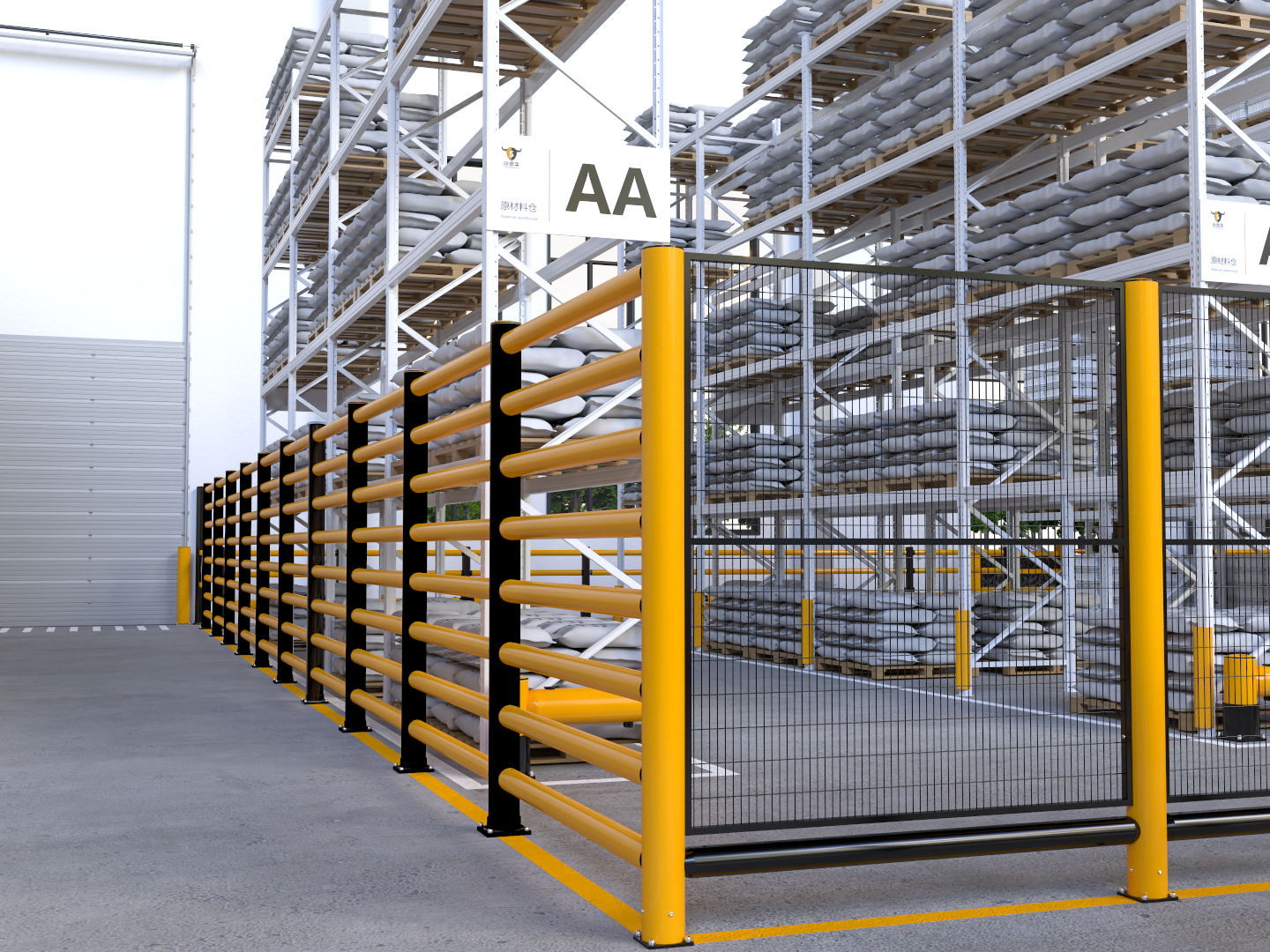
Start with the route problem, not the rail profile. A neat layout can look reassuring, yet the likely vehicle approach, pedestrian movement, and access requirements need review before appearance drives the choice. The following safety barrier manufacturer questions form a practical brief for a loading area, warehouse aisle, production floor, rack end, or doorway.
Begin with the operating area
1. What hazard and traffic pattern is this barrier intended to address?
The first of the safety barrier manufacturer questions is deliberately broad: ask the supplier what information it needs about vehicle type, travel direction, turning activity, pedestrians, loads, and peak-shift conditions. A route observed at one time may not represent dispatch activity or changeovers. Put simply, the barrier choice follows the route problem rather than the other way around.
OSHA’s forklift-pedestrian guidance says forklift traffic should be separated from workers and pedestrians where possible, including with walkways, permanent railings, or other protective barriers. That principle does not specify a product for a particular facility. It does explain why a supplier needs a clear route sketch and a description of how people use the space.
2. Which site measurements and photographs do you need before you recommend a configuration?
Among the most useful safety barrier manufacturer questions is a request for a complete input list. Ask about clear width, turning radius, ceiling or door constraints, floor condition, drainage, wall interfaces, rack location, utility access, and emergency routes. A flexible safety barrier manufacturer should be able to distinguish preliminary discussion from a final configuration review.
Do not treat the floor or substrate as a minor detail. Mounting conditions can affect what must be reviewed, and a credible supplier should state the assumptions it is making. Ask whether a drawing, site survey, or installer review is needed before it confirms a layout.

Ask how the supplier connects evidence to your application
3. What test evidence applies, and under what conditions?
Testing is central to safety barrier manufacturer questions, but a headline impact figure is not enough. Ask what was tested, the vehicle or impact condition involved, the installation arrangement, the measured outcome, and the limits of the evidence. ANSI MH31.2-2021 is described as a test method for evaluating performance characteristics of industrial guardrail barriers and barrier posts. Its existence is a reason to ask precise questions, not a basis for assuming that every barrier or installation has the same performance.
A supplier should be prepared to provide applicable documentation or explain where verification is still required. Ask whether its evidence addresses deflection or penetration, attachment conditions, and the specific zone you are protecting. These safety barrier manufacturer questions help separate a relevant technical record from a generic marketing claim.
4. How do you assess flexible and rigid approaches for this route?
Ask a flexible safety barrier manufacturer to explain comparison criteria rather than declare superiority. The suitable option depends on the impact direction, route geometry, access needs, mounting context, maintenance expectations, and verified evidence. The aim is not to make every area look enclosed; it is to make high-exposure interactions easier to control.
Good safety barrier manufacturer questions also ask what the proposal does not address. A physical barrier can support separation, but it should be considered alongside markings, traffic rules, training, visibility, and supervision. No supplier should imply that a barrier alone guarantees an incident-free area.
Check configuration, installation, and access
5. What clearances must remain available?
Add access to the list of safety barrier manufacturer questions. Confirm forklift maneuvering space, pedestrian egress, door swing, cleaning, inspection, maintenance, fire equipment, and control-panel access. Increasing protective coverage can affect service access, so review both on the same drawing. Can a pedestrian still understand the intended route when temporary pallets occupy the area?
6. Who is responsible for installation planning and what must be verified on site?
Ask the supplier to define the handoff: who confirms dimensions, anchors, substrate suitability, interfaces, installation sequence, and acceptance checks? An industrial safety barrier supplier should make these responsibilities visible instead of assuming that a catalog drawing solves them. This is one of the safety barrier manufacturer questions that prevents unclear scope from becoming a late project issue.
7. How will installation affect normal operations?
Ask about access restrictions, staging, shutdown assumptions, temporary traffic controls, and the information needed to coordinate with site teams. A strong answer recognizes that operations may need a phased plan. More technical detail can improve decision quality, but only after the site inputs are reliable.
Compare lifecycle support, not just the initial quote
8. What inspection, maintenance, replacement, and change-review support is available?
Lifecycle questions belong in safety barrier manufacturer questions because layouts and traffic patterns can change. Ask how the supplier recommends documenting inspections, what signs should trigger review, what replacement information is available, and how modifications are handled after a route or production line changes. If the route changes by shift, review traffic at more than one operating period before choosing a layout.
9. What is included in the quotation, and what evidence will accompany it?
Ask an industrial safety barrier supplier for an itemized scope covering product, installation assumptions, drawings, anchors or interfaces, freight, commissioning support, documentation, and exclusions. Then ask which documents are specific to the proposed configuration and which are general background materials. These safety barrier manufacturer questions keep comparison discussions traceable across departments.
Use a shared pre-order checklist
Before you request final pricing, send every candidate supplier the same brief:
- zone purpose, route sketch, photographs, and current operating conditions;
- vehicle types, direction of travel, pedestrian movement, and peak-period observations;
- measurements, clearance requirements, substrate and mounting details;
- access, maintenance, emergency, cleaning, and future-change constraints;
- a request for applicable test evidence, scope boundaries, assumptions, and installation responsibilities.
Use the same safety barrier manufacturer questions with every bidder. This makes it easier to compare an answer from a flexible safety barrier manufacturer or another industrial safety barrier supplier on its relevance to the site, not on the confidence of its wording.
Final thought
The most productive safety barrier manufacturer questions are evidence-first and site-specific. They clarify what the supplier knows, what it assumes, what it can document, and what your team still needs to validate. Use this as a starting framework, then confirm dimensions, operating conditions, and applicable evidence before specification. That process supports a more useful procurement conversation without treating any barrier as a substitute for a broader traffic-management plan.
 Hot News

