EN


Low-Maintenance Industrial Guardrails and Their Lifecycle Cost Benefits
For an operations team, the purchase price of a barrier is only the first number in the file. The more useful question is what the system will cost to inspect, repair, replace, and work around over its service life. Low maintenance industrial guardrails can help control those downstream costs when their design matches the traffic pattern, impact exposure, and access needs of the facility.
This is not a claim that any barrier is maintenance-free. Forklift traffic changes, anchors loosen, layouts evolve, and a damaged component still needs attention. The practical advantage is a system that makes routine checks clearer and reduces avoidable repair work after the impacts it was selected to manage.
Why lifecycle cost matters more than the installed price
Teams often compare quotes line by line, then discover that the installed price did not include the disruption caused by future repairs. A realistic comparison of industrial safety barriers should consider five cost areas:
- Initial scope: survey, layout work, floor preparation, hardware, installation, and commissioning.
- Impact response: labor to inspect an event, isolate a damaged area, replace parts, and document the repair.
- Operational interruption: rerouted trucks, blocked pedestrian paths, restricted bays, or delayed work while repairs are made.
- Planned upkeep: cleaning, visual inspections, torque checks where applicable, and condition records.
- Change cost: the effort required when racks, machines, walkways, or traffic routes are altered.
That framework shifts the conversation from “which rail costs less today?” to “which protection approach is easier to keep effective in this location?” It also helps procurement, EHS, and maintenance teams use the same decision criteria. When reviewing low maintenance industrial guardrails, ask the team to document the likely repair sequence rather than accepting a general claim about durability. The same discipline applies when comparing industrial safety barriers at dock approaches, aisle corners, and production entrances.
What low maintenance actually means for industrial guardrails
In a warehouse or production area, low maintenance usually describes fewer recurring interventions—not an absence of inspection. A design may reduce repainting, limit the number of parts that need replacement after minor contact, or make damage more visible during a walk-through. Whether those benefits occur depends on the actual impact energy, vehicle type, mounting surface, and operating behavior.
For low maintenance industrial guardrails, look for a straightforward route from inspection to action. Supervisors should be able to see whether a rail, post, connector, or anchor needs review without dismantling adjacent equipment. Maintenance staff should be able to identify what part is affected and restore the area using a documented process. These characteristics reduce uncertainty as much as they reduce labor. In high-traffic zones, coordinate forklift collision protection with route markings and local work rules so that the barrier is not the only control carrying the risk.
Separate traffic barriers from fall-protection guardrails
“Guardrail” can describe different controls, so the intended hazard must be clear before cost comparisons begin. A barrier intended to separate forklifts from people or protect equipment is not automatically a fall-protection guardrail, and it should not be specified as one. For walking-working surfaces, OSHA 29 CFR 1910.29(b) describes a typical top-rail height of 42 inches, plus or minus 3 inches; project-specific requirements must still be verified for the site and jurisdiction.
Likewise, machine safeguarding has a different purpose. OSHA 29 CFR 1910.212 addresses hazards such as points of operation, nip points, rotating parts, and flying chips or sparks. Physical separation may support a broader safety plan, but it does not replace application-specific safeguarding. Defining the control objective early avoids buying a low-maintenance solution for the wrong risk.
Where forklift collision protection can reduce recurring work
Forklift collision protection is often evaluated only after a damaged rack upright, doorway, or machine enclosure exposes the cost of a strike. A better approach is to map repeated conflict points before selecting a barrier: blind aisle ends, staging zones, charging areas, pedestrian crossings, corners, and door approaches. For each point, note the likely vehicle, travel direction, speed controls, turning room, and the asset or person being protected.
When an installation reflects that map, it is easier to set inspection priorities. High-contact locations can receive more frequent checks, while quieter perimeter runs can be included in a scheduled facility walk. The result is a maintainable program rather than a collection of barriers installed after isolated incidents. This is where low maintenance industrial guardrails can offer a lifecycle advantage: planned checks focus on known exposure points instead of creating broad, reactive repair campaigns.
A practical lifecycle-cost comparison
Use a consistent worksheet for every option. Start with the installed cost, then estimate the likely actions after a minor, moderate, and severe event. Ask the supplier or installer to clarify which components are intended to be inspected, reset, repaired, or replaced. If those answers are vague, the future cost is vague too.
| Question | Why it affects lifecycle cost |
|---|---|
| Can a damaged section be identified quickly? | Shorter diagnosis can reduce labor and area downtime. |
| What access is needed for inspection or repair? | Access constraints may require moving stock, equipment, or traffic controls. |
| Which parts are consumable after impact? | Known replacement paths make budgets and spares planning more reliable. |
| How will the system accommodate a layout change? | Modular or clearly documented changes may avoid unnecessary replacement. |
| What evidence supports the proposed application? | Site-specific verification helps prevent under- or over-specification. |
A low lifecycle cost is not necessarily tied to the lowest rate of part replacement. It may come from a design that limits disruption, simplifies inspection, and fits the way people and vehicles move through the facility.
Build an inspection plan into the specification
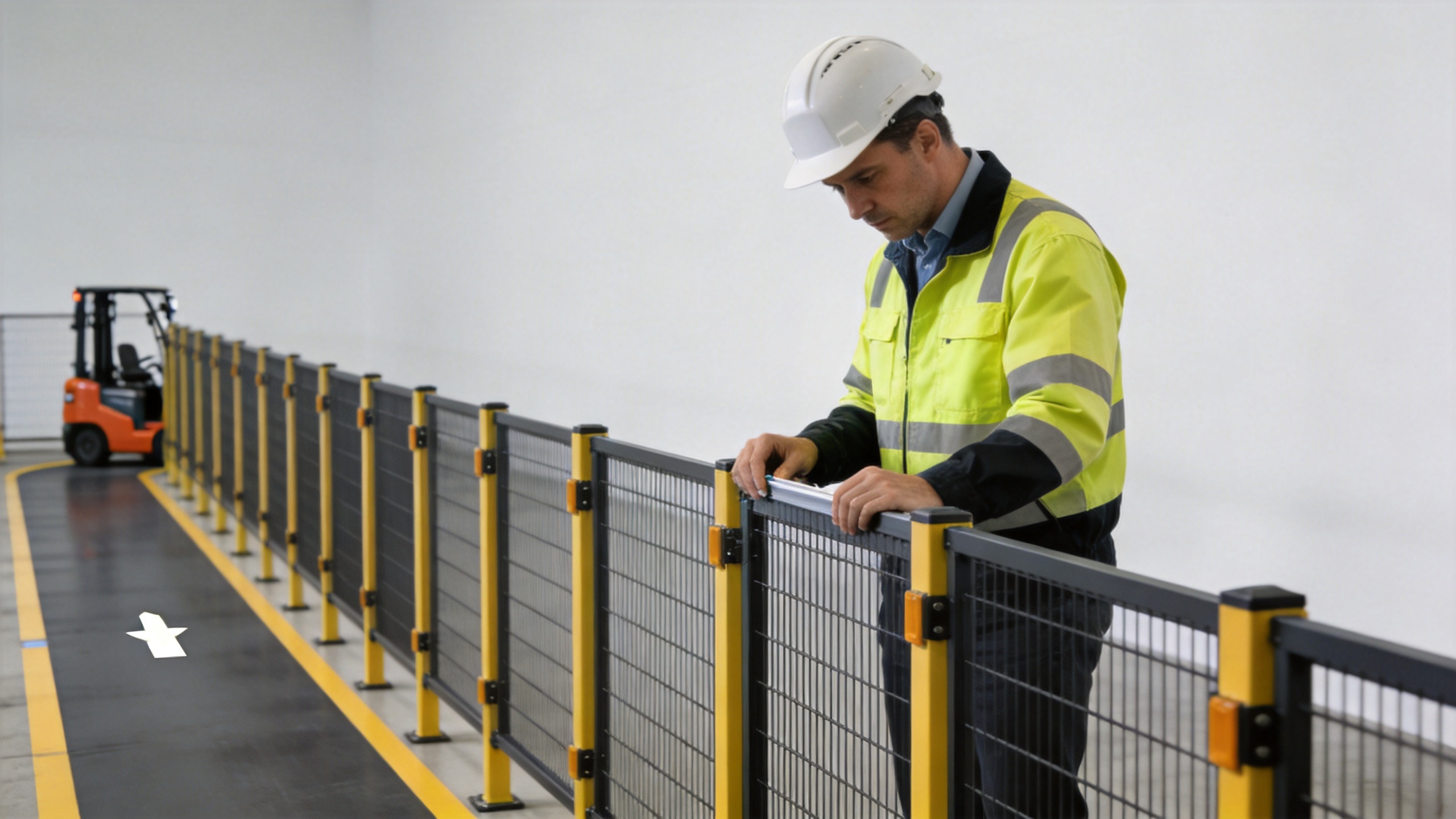
Specify the maintenance process at the same time as the barrier. Establish who inspects, what conditions trigger escalation, where observations are recorded, and who can authorize a return to service. A simple visual routine can include checking for visible deformation, loose or damaged anchors, missing components, compromised markings, and changes in the surrounding traffic route.
For industrial safety barriers, the inspection frequency should be risk-based. A busy transfer lane deserves a different cadence than a protected utility corridor. After a reported impact, isolate the area as needed and follow the manufacturer’s instructions and site procedure rather than assuming that a barrier that looks intact is fit to remain in service.
Selection checklist for a lower-maintenance outcome
- Define whether the primary risk is vehicle contact, pedestrian separation, asset protection, fall protection, or machine safeguarding.
- Measure the route, turning area, floor condition, and available clearance before choosing a profile.
- Document the vehicles, load types, operating hours, and known impact history.
- Compare repair workflow, access requirements, and replacement-part availability—not only barrier material.
- Confirm how forklift collision protection will work alongside markings, speed management, training, and traffic rules.
- Review applicable codes, manufacturer instructions, and the site’s engineering requirements before final approval.
Make the lifecycle decision with the whole operating team
Low-maintenance performance is a property of the installed system and the operating routine around it. Bring maintenance, EHS, operations, and facilities stakeholders into the assessment. Their combined view can reveal where access is difficult, where a repair would interrupt production, and where a more visible inspection point would help. A comparison of industrial safety barriers should therefore include the people who will inspect, clean, access, and work beside the installation—not just the people approving the purchase.
Low maintenance industrial guardrails are most valuable when they support a disciplined safety program: clear separation of hazards, evidence-based selection, planned inspection, and prompt response to damage. By treating maintenance and disruption as design inputs—not surprises after installation—facilities can make a more credible lifecycle-cost decision.
 Hot News