 EN


How to Evaluate Industrial Safety Barrier Impact Test Results
Impact-test paperwork can look reassuring: a vehicle weight, a speed, a graph, and a pass statement. Yet safety barrier impact testing is only useful when the reported conditions resemble the risk in your facility. As an industrial safety engineer, I recommend treating every result as evidence with a boundary, not as a universal promise. The practical question is not simply whether a barrier survived a test. It is whether the tested system, mounting condition, and impact scenario are relevant to the route you need to protect.
This matters when evaluating polymer safety barriers and flexible crash barriers around forklifts, pallet trucks, loading lanes, machine areas, or pedestrian crossings. A credible report can support a selection decision, but it does not replace a traffic review, a layout check, or the supplier’s confirmation that the proposed configuration fits the exposure.
Start With the Test Scenario, Not the Headline Rating
Begin by identifying exactly what was tested. In safety barrier impact testing, the vehicle or surrogate mass, travel speed, impact angle, point of contact, barrier length, post spacing, and anchoring arrangement can all influence the outcome. A report that says “tested to X” is a starting point; the useful evidence is in the test setup and measured response.
For example, public descriptions of ANSI MH31.2-2021 identify it as a test method for evaluating industrial guardrail barriers and barrier posts. Public explanatory material also describes selected scenarios using surrogate vehicle weights from 9,000 to 20,000 lb and speeds of 3, 5, or 7 mph. Those figures illustrate why a single energy number should not be compared in isolation. They are not universal site-design requirements, and a buyer should confirm the exact method and configuration used in the supplier’s report.
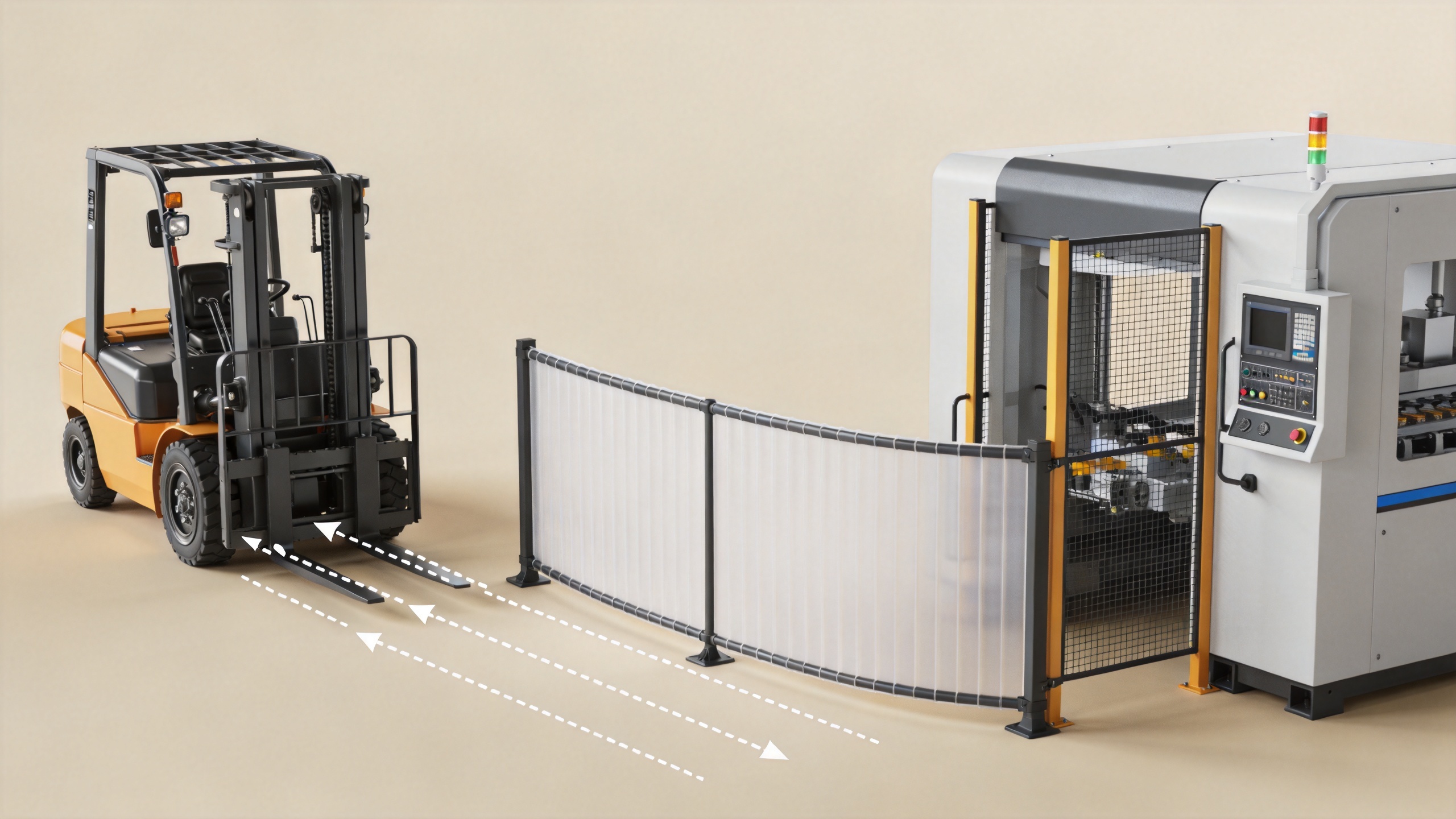
A useful review starts with how forklifts move today, not how a drawing assumes they move. A low-speed truck with a heavy load, a tight turning approach, or an oblique strike may create a different decision context from a straight-on laboratory impact.
Read the Result as a System Result
A barrier test is usually evidence about a system, not just a rail or post. Ask whether the report identifies the tested components and their relationships:
- Barrier geometry: rail height, span, post layout, and any corner or end treatment.
- Fixing method: anchors, base plates, fasteners, and the substrate condition used for the test.
- Vehicle condition: mass, speed, approach direction, and contact height.
- Outcome measures: deflection, residual deformation, damage, detachment, or other stated acceptance criteria.
- Scope limits: whether the test applies to that exact configuration or to a defined family of configurations.
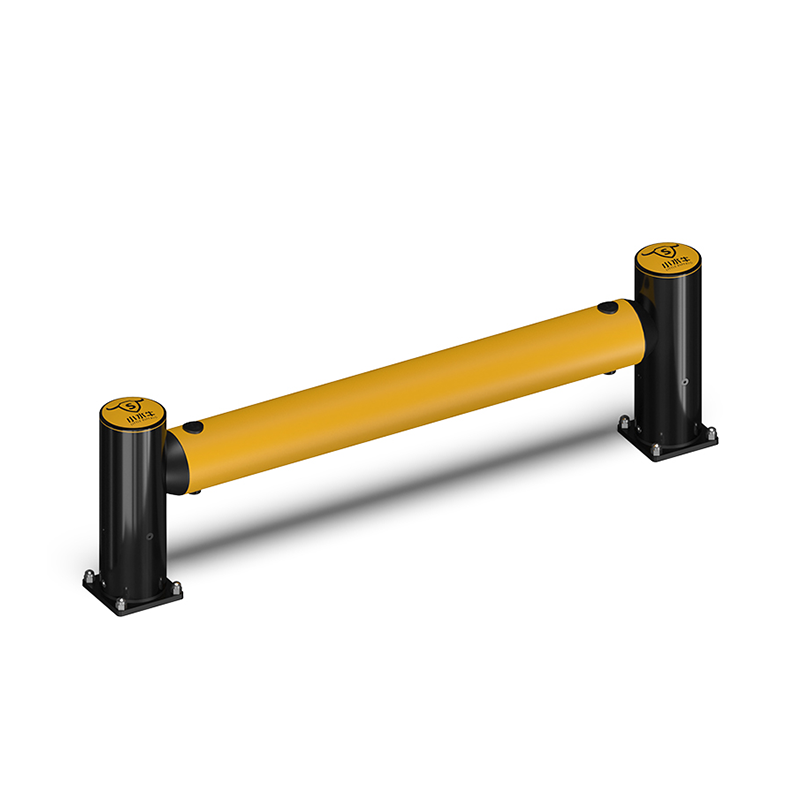
This system view is especially important for polymer safety barriers. Controlled movement or energy management may be part of a design approach, but the amount of movement that is acceptable depends on the clearance behind the barrier. A result can be technically strong and still be unsuitable where a protected machine, rack upright, doorway, or walking route sits inside the possible deflection zone.
Translate Test Conditions Into Your Site Exposure
The most valuable part of safety barrier impact testing is the comparison between the documented scenario and your actual exposure. Build a short comparison sheet before accepting a proposal. Record the vehicle types, typical and worst credible loads, route speeds, turning behavior, approach angles, available stopping distance, and the people or assets behind the barrier.
| Test-report question | Site comparison question | Why it matters |
|---|---|---|
| What mass and speed were used? | Which truck, attachment, or loaded condition creates the credible exposure? | Impact conditions need to be comparable, not merely impressive. |
| Where did the vehicle strike? | Could a truck hit a post, rail, end, or corner in the same way? | Different contact points can produce different responses. |
| How far did the barrier move? | Is there enough clear space behind the installed barrier? | Deflection can affect clearance to people, equipment, and structure. |
| What substrate and anchors were tested? | Does the installation surface match the documented condition? | Mounting is part of the protective system. |
| What does the report call a pass? | Does that acceptance condition protect the intended person or asset? | A pass result should be interpreted against the protection objective. |
Do not convert a test speed directly into a site speed limit or assume that a barrier tested in one orientation will perform identically at a corner. The report may still be highly relevant, but the decision needs documented assumptions and, where needed, an engineering or supplier review.
Check Method, Independence, and Traceability
Good evidence is traceable. Ask for the complete test report or a controlled summary that identifies the laboratory or test party, report date, test method, configuration, instruments or measurements, photographs or diagrams, and any exclusions. If the documentation references a standard, distinguish between three different statements: tested using a method, assessed by a third party, and certified for a particular scope. They do not mean the same thing.
PAS 13 is commonly described as workplace traffic-management guidance that addresses barrier resistance, dimensions, and placement. That context is useful because placement and route management help determine whether a technically tested barrier is being used in an appropriate location. It should not be used as shorthand for a product-specific approval unless the supplier provides applicable documentation.
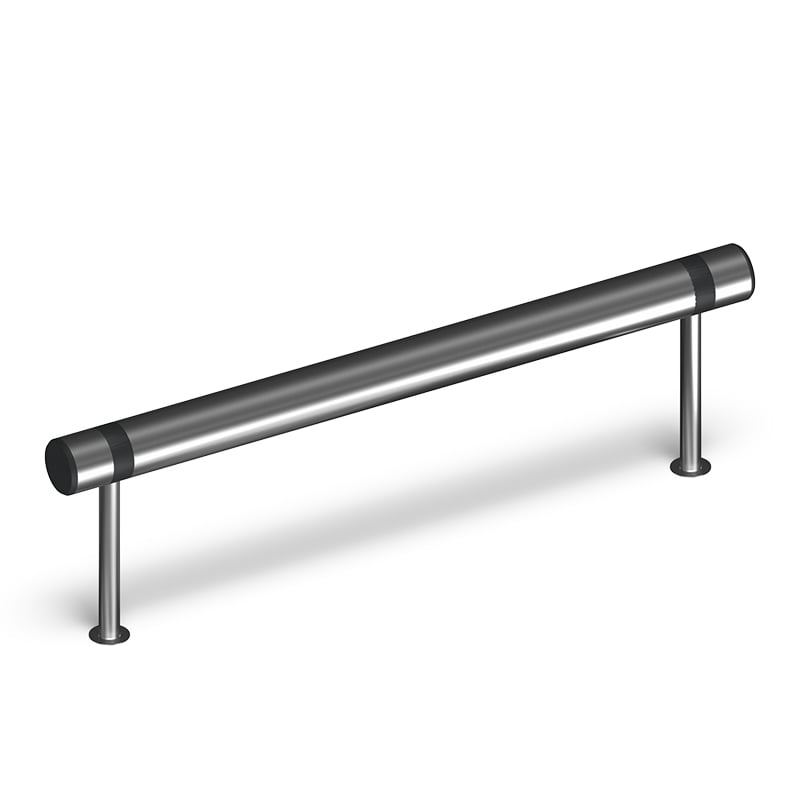
For flexible crash barriers, request evidence for the exact post spacing, rail level, base detail, and impact direction you are considering. For a rigid alternative, ask the same questions. The goal is a fair comparison of applicable evidence, not a contest between marketing labels.
Look Beyond “No Failure”
A report that shows no collapse is not automatically enough. The receiving decision team should understand what happened after impact. Did the barrier remain attached? Was its movement within the clear zone? Did the protected object remain outside the impact path? Was replacement or inspection required before the system could return to service? Those questions help EHS, operations, maintenance, and procurement align on the actual control objective.
In active facilities, the most revealing locations are often where forklifts and pedestrians converge: a rack-end crossing, a doorway beside a travel lane, or a machine edge near staging. A single rating does not design that layout. Combine safety barrier impact testing with route observation, visibility checks, operating rules, signage, and training.
A Procurement Checklist for Test Evidence
- Define the protected people, assets, and route conflict before reviewing product literature.
- Request the full test scope for the proposed configuration, not only a brochure claim.
- Compare vehicle mass, speed, approach, contact point, and installation detail with site conditions.
- Confirm the required clearance behind the barrier, including any documented deflection.
- Verify what the pass criteria measured and what the report does not cover.
- Check how damaged components are inspected, repaired, or replaced after an event.
- Record assumptions and have the supplier or a qualified reviewer confirm unresolved application questions.
Use Test Results to Ask Better Questions
Safety barrier impact testing is valuable because it turns broad claims into questions that can be checked: What was hit? Under which conditions? What moved? What remained protected? Where does the evidence apply? This evidence-first approach is useful whether you are considering polymer safety barriers for a busy internal route or flexible crash barriers around a changing production area.
Little Buffalo Technology can support a structured conversation about industrial facility protection requirements. Provide a route sketch, vehicle information, mounting details, clearance constraints, and the protection objective so the proposed configuration and available documentation can be reviewed in the right context. No barrier should be treated as a substitute for safe traffic management, operator training, or site-specific risk assessment.
 Hot News

