EN
EN

ABOUT US
- Shounan Street URban Industrial Park,YinZhou District,NingBo City, ZheJiang, CHINA.
- +86-15381988180
- [email protected]

A flexible barrier is an impact-protection product molded from a deformable polymer instead of steel, aluminium or concrete. Where a steel guardrail stands rigid and passes the force of a collision into its anchors, the floor and the vehicle that hit it, a flexible barrier bends, takes the energy into the material and returns to its original shape. Most contacts leave nothing behind to repair.
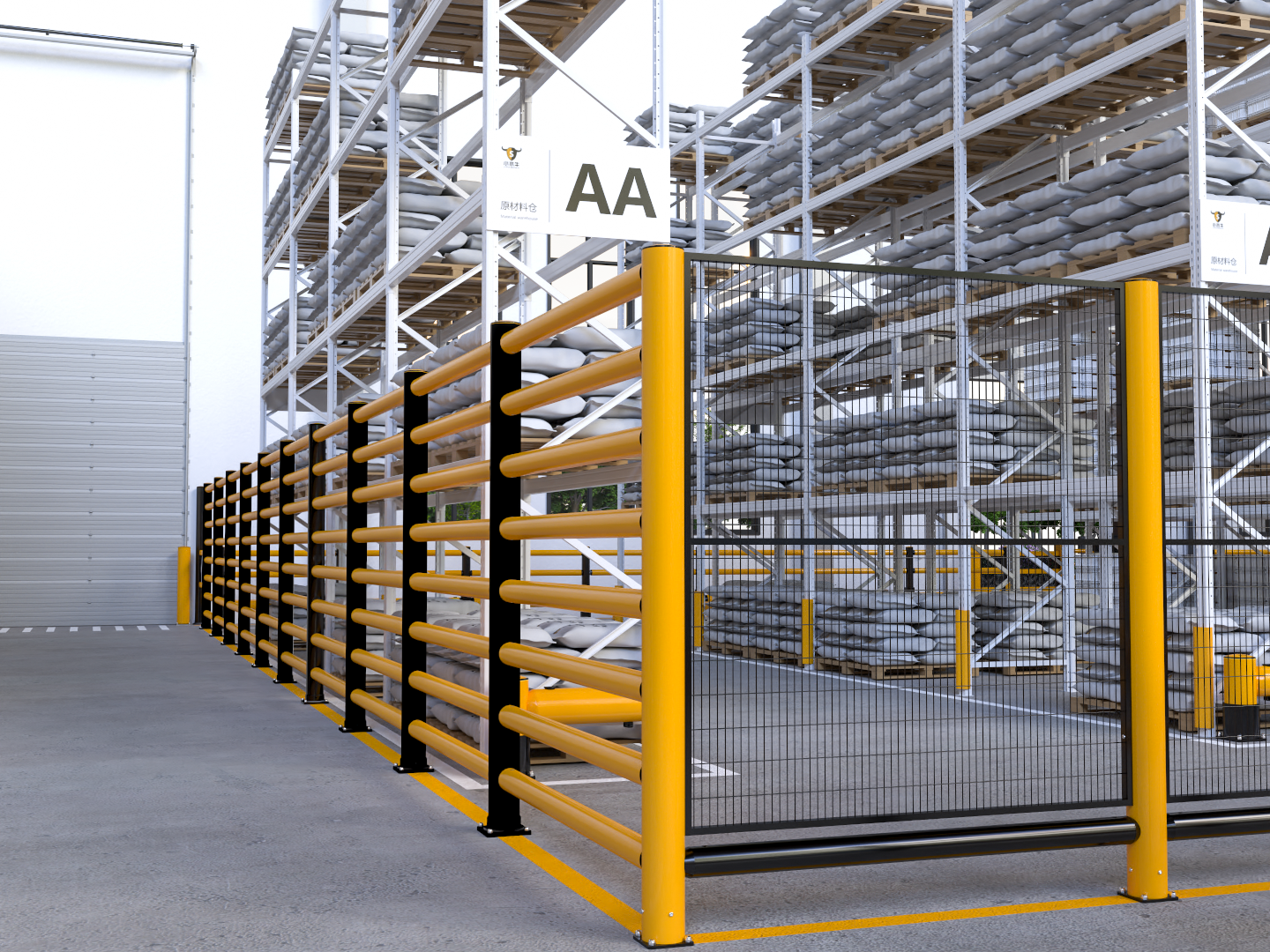
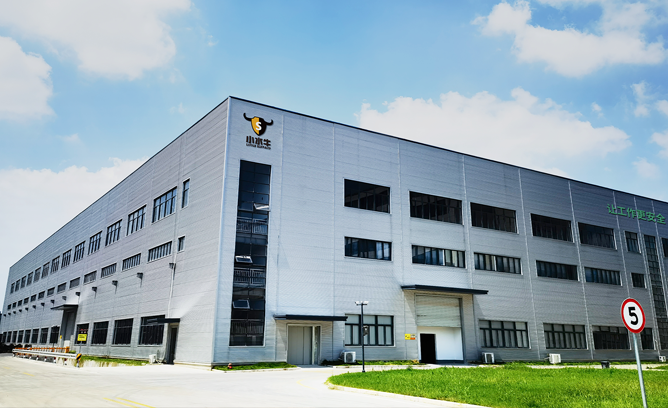
Little Buffalo Technology (Ningbo) Co., Ltd. designs and molds this class of product in Ningbo, Zhejiang, China, for warehouses, factories, cold stores and logistics hubs. The range covers upright guardrails, bollards, rack end protection, floor-level ground barriers, zoning fencing and height-limit warning columns, all molded from imported high-molecular polymer. Because the material does not corrode and holds its UV resistance to ISO 4892-3, the same flexible barrier suits a freezer aisle, a dusty outdoor yard, a wash-down food plant and a busy dock face, at working temperatures from -40°C to 80°C. A flexible barrier can be specified in different duty classes, from light ground rails through medium-duty rails to heavy-duty guardrails, so the protection matches the traffic rather than the other way round. TÜV testing, UV verification and salt spray testing on the metal components back up the range. What follows is what these products do, how they are produced, and why polymer has become a default choice in high-traffic facilities.
Six characteristics decide whether a flexible barrier earns its money back over a ten-year service life.
Impact energy stays in the barrier, not in the floor. The first thing a flexible barrier changes is where the energy goes. Every collision contains a fixed amount of energy that has to go somewhere. In a rigid system that is the post, the anchors and the concrete around them. A flexible barrier is designed to take the hit inside the polymer body and spread the load through the structure. Very little energy is directed through the floor screwing, so the barrier does not break out of the ground and teams stop paying for slab repairs and downtime. The floor under a busy rack end is usually the most expensive thing in the aisle to fix — the biggest saving a flexible barrier delivers.
Self-recovery in seconds. After impact the polymer returns to its original form and the protection is re-established immediately: no straightening, no welding, no repainting, no waiting for a replacement section. In a 24-hour operation this matters more than the purchase price. A bent steel barrier can sit out of service for weeks: taking an aisle out of production to repair it often costs more than the barrier did. A flexible barrier is back at work before the shift is over.
No damage to forklifts or pallet trucks. Steel barriers damage the equipment that hits them. Scratches, dents and cracked panels on forklifts and pallet trucks are routine costs that rarely appear in a safety budget until someone totals them. The deformable polymer and the rounded forms of a flexible barrier mean the vehicle bounces off instead of being cut, crushed or stopped dead. It is one of the least obvious reasons buyers move to a flexible barrier.
Weather, chemicals and temperature. The polymer body does not rust, does not fade and never needs repainting, and it resists the chemicals used for wash-down in food plants and cold stores. UV resistance verified to ISO 4892-3 keeps outdoor installations at full strength and colour rather than chalking in the sun. One flexible barrier specification therefore covers a -40°C freezer aisle, an ambient warehouse and an open loading yard, which simplifies purchasing and spares holding. Whatever the climate, the flexible barrier specification does not change.
Modular routes and custom lengths. A flexible barrier system is modular by design. Sections join, angle pieces turn corners, door sections break the line at openings, and lengths can be customized. A guardrail can follow the building and the traffic flow rather than the other way around. When racking is rearranged or a route changes, sections are re-laid instead of scrapped, so the investment survives the next layout change. A new flexible barrier route can often be assembled from what is already on site.
Visibility, certification and low maintenance. The yellow and black finish reads clearly from a distance, which matters to drivers as much as to auditors and visiting customers. Certification may include TÜV testing, UV verification to ISO 4892-3, neutral salt spray testing to 1,000 hours on dacromet-finished metal parts, and IP50 sealing on powered warning columns. Day-to-day maintenance is an occasional wipe-down, not a painting programme.
Every flexible barrier passes through the same four production stages. None is complicated on its own; the difficulty is holding all four to the same standard on every batch.
Multi-layer extrusion forms the body. The flexible barrier rail is not a single homogeneous extrusion. It is produced in layers that do different jobs. The outer layer carries the UV resistance verified to ISO 4892-3 and is formulated to be scratch and dirt resistant, so the barrier keeps its colour and legibility in dusty, wet and outdoor locations. The inner layer reinforces a flexible network structure, which is where the flexibility and the impact resistance come from. Getting the two to work together is the core of the process — too stiff transfers force into the floor, too soft will not return to shape.
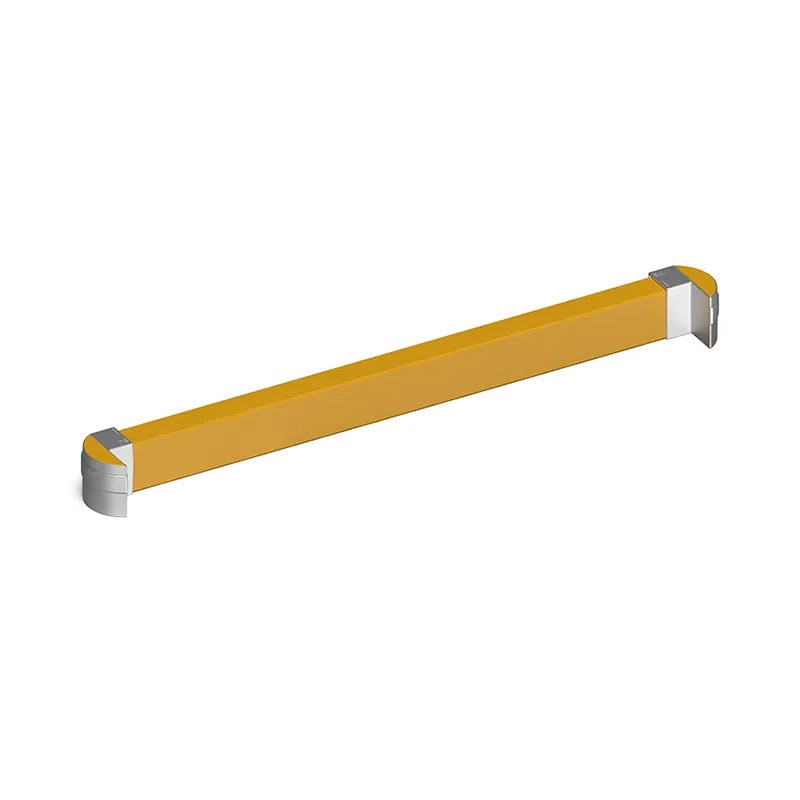
Metal ends are cast in one piece. The rail alone cannot take a concentrated hit, so each end of a flexible barrier is a one-piece casting of high-strength metal. Casting in one piece removes the welds and joints that would otherwise become the failure point. The casting is then dacromet finished and tested to 1,000 hours of neutral salt spray with no rust — the number that decides whether the product survives a cold store, a wash-down zone or a coastal site.
Bases and anchors are treated to the same standard. On products with a combined base, metal and rubber components are assembled into one unit, and the metal is electrophoretically treated and tested to 72 hours of neutral salt spray without rust. The barrier is fixed with inverted-cone chemical anchor bolts, also dacromet finished and tested to 1,000 hours of neutral salt spray, so the fixing does not quietly corrode away beneath a flexible barrier that looks fine.
Mesh boards are welded, then coated. Where a flexible barrier uses a mesh panel, the mesh is made from Q235 steel welded on an intermediate-frequency welding machine. The result is a joint that does not detach easily and a panel with high tensile strength. In the frame-to-mesh welding step, the wires are welded flat onto the frame rather than left protruding, removing the sharp ends that catch clothing and scratch workers, vehicles and goods. The assembled panel is then spray molded and put through a 500-hour neutral salt spray test with no rusting.
Suspension variants and testing. Not every flexible barrier is anchored to the floor. The height-limit warning column hangs on stainless steel 304 wire rope so nothing has to be drilled in the traffic route, and its sealed housing is rated IP50. Across the range, materials are checked before molding and finished goods ship with UV, salt spray and TÜV test results, so a buyer can hand an auditor a test report rather than a promise.
If you are planning aisle protection, rack end guarding, pedestrian separation or height-limit warning, the fastest route to a specification is a conversation. Send your aisle layout, rack drawing or site photos, and we will recommend the flexible barrier products, heights and lengths that fit, confirm certification for your market and quote. Tell us where traffic is heaviest and we will say which flexible barrier duty class would serve you better. Samples are available before a bulk order, and OEM/ODM customisation covers height, length, colour, logo and packaging. Email [email protected] or message us on WhatsApp at +86-15381988180 — a short reply with a clear next step, no obligation.
 Hot News
2024-06-01
2024-06-25
2024-06-28
2024-09-09