EN


Factory Collision Prevention Solutions: From Risk Assessment to Installation
Choosing collision prevention solutions for a factory is not a matter of placing a guardrail wherever a forklift has passed too close to a rack. Effective planning starts with the way people, vehicles, loads, doors, and workstations actually interact during a shift. The aim is practical separation: reduce exposure at the points where a person, a truck, or an asset can enter the same space at the wrong time.
For EHS teams, operations managers, and engineers, collision prevention solutions are most reliable when treated as part of a layered plan. OSHA advises separating forklift traffic from workers and pedestrians where possible. HSE guidance similarly favors separate vehicle and pedestrian routes whenever practical. Physical factory collision protection can support that separation, but it does not replace route rules, training, visibility, housekeeping, or supervision.
Start with a risk assessment that follows the work
A useful assessment for collision prevention solutions begins on the floor, not with a catalog. Walk each route at normal and peak activity times. Observe loaded and unloaded truck travel, reversing, pedestrian shortcuts, delivery arrivals, shift handovers, and temporary pallet storage. A route that looks clear at 10 a.m. may become constrained during dispatch or changeover.
Map the conflict points first. Common examples include blind corners, rack ends, doorways, crossings, charging areas, staging lanes, and entrances to production cells. Note the direction of travel, vehicle type, speed expectations, sightlines, surface condition, and any fixed object that reduces clearance. These details make collision prevention solutions more relevant than a generic layout sketch.
Ask five questions at every exposure point
- Who can enter this space: operators, pedestrians, visitors, contractors, or automated equipment?
- What moves through it, and from which direction?
- When does the route become busiest or least visible?
- Can people and vehicles be separated completely rather than merely warned?
- What access must remain open for service, cleaning, emergency response, or material flow?
The answers help distinguish a marking-only issue from a location that needs more robust factory collision protection. They also expose cases where no barrier alone will solve the problem, such as an uncontrolled shortcut across a busy aisle or a reversing task with poor visibility.
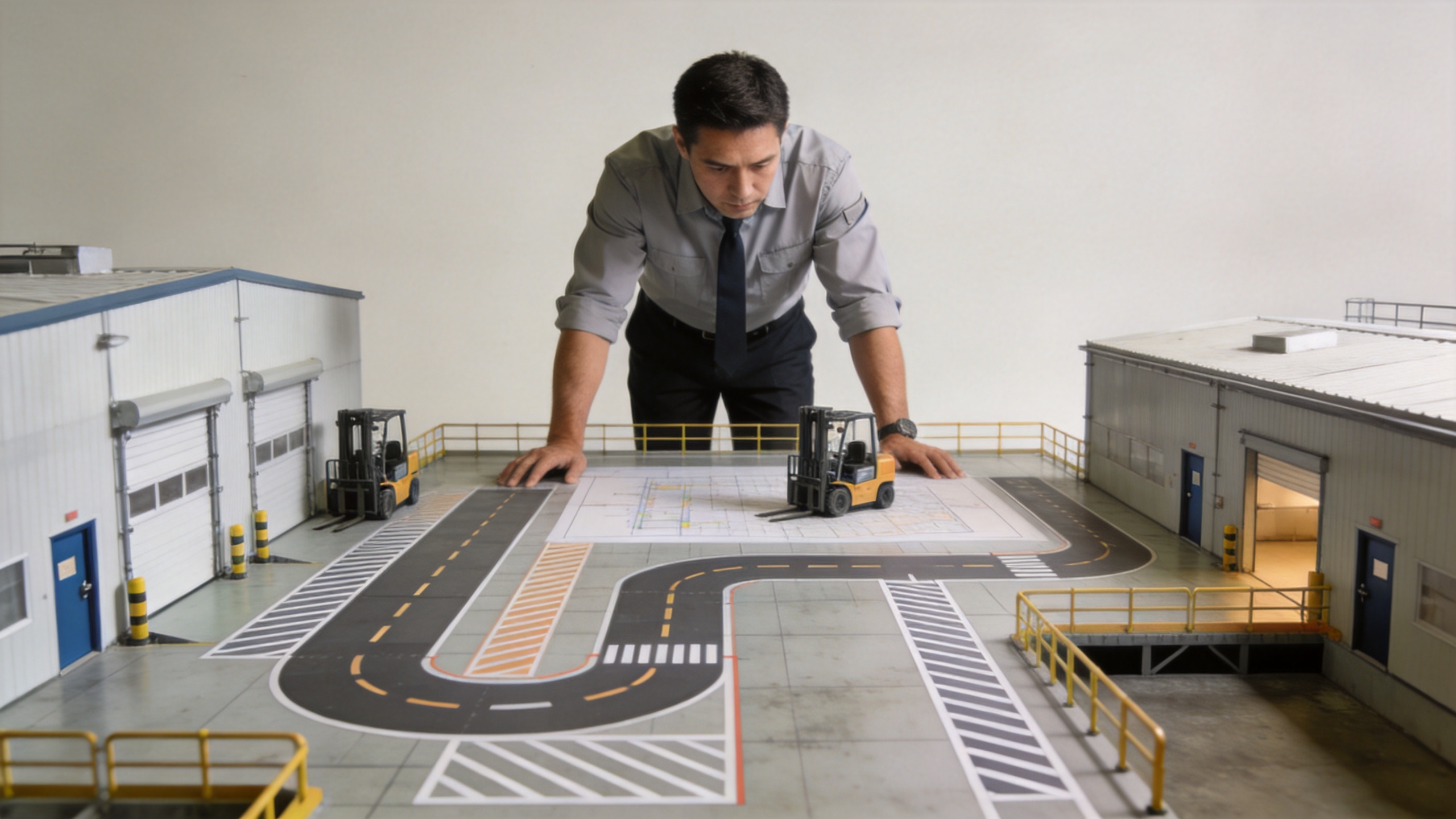
Rank hazards before selecting collision prevention solutions
Do not try to install every control at once. Rank each conflict by likelihood, potential consequence, frequency of exposure, and the feasibility of eliminating or separating the route. A low-frequency crossing beside a high-energy vehicle path may deserve earlier attention than a visibly untidy but lower-exposure area. This ranking gives your collision prevention solutions a defensible sequence.
Then define the control objective for each zone. The objective may be to keep pedestrians out of a truck lane, protect a rack end from approach traffic, create a protected walkway, guide vehicles away from a doorway, or make a crossing easier to see. Naming the objective prevents industrial guardrails from being treated as a one-size-fits-all answer.
Match the control to the route and the mounting context
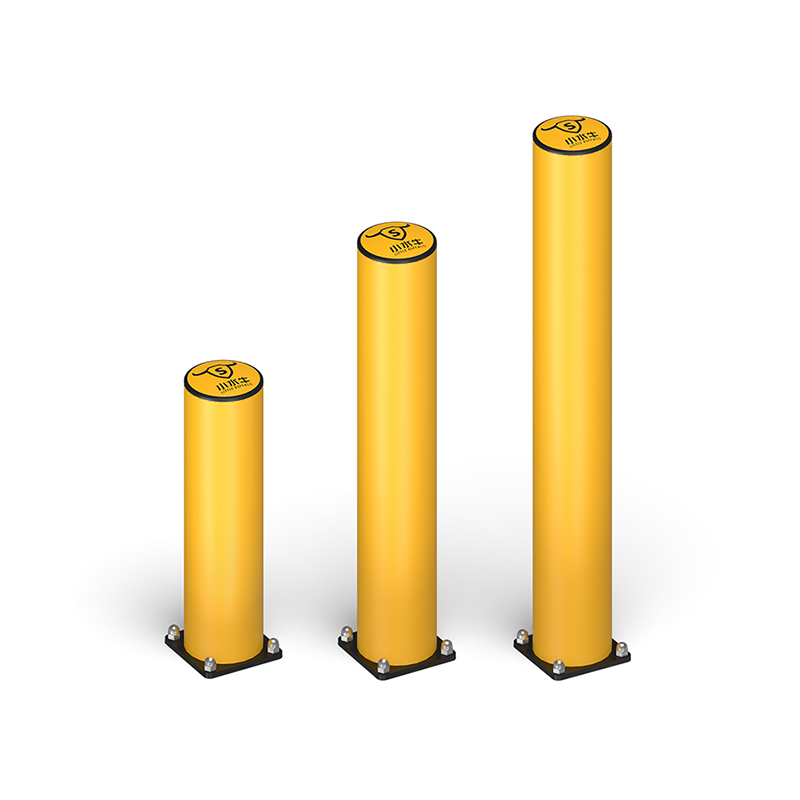
Selection should follow the exposure, not a preferred material or appearance. Collision prevention solutions may combine walkways, markings, signs, mirrors, gates, bollards, guard fencing, and barriers. The correct mix depends on whether the priority is people protection, asset protection, access control, or a combination of these goals.
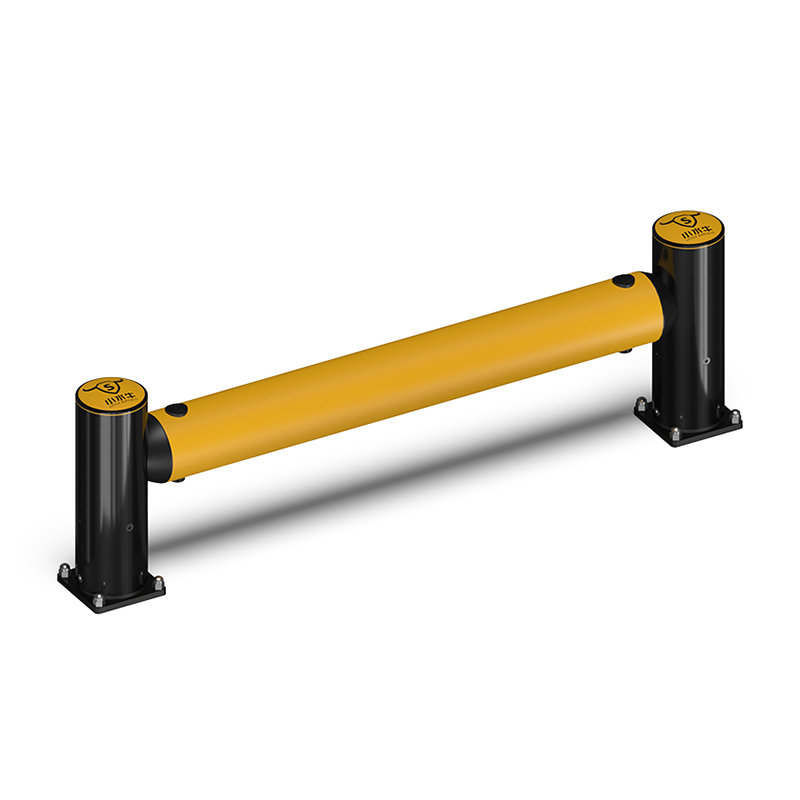
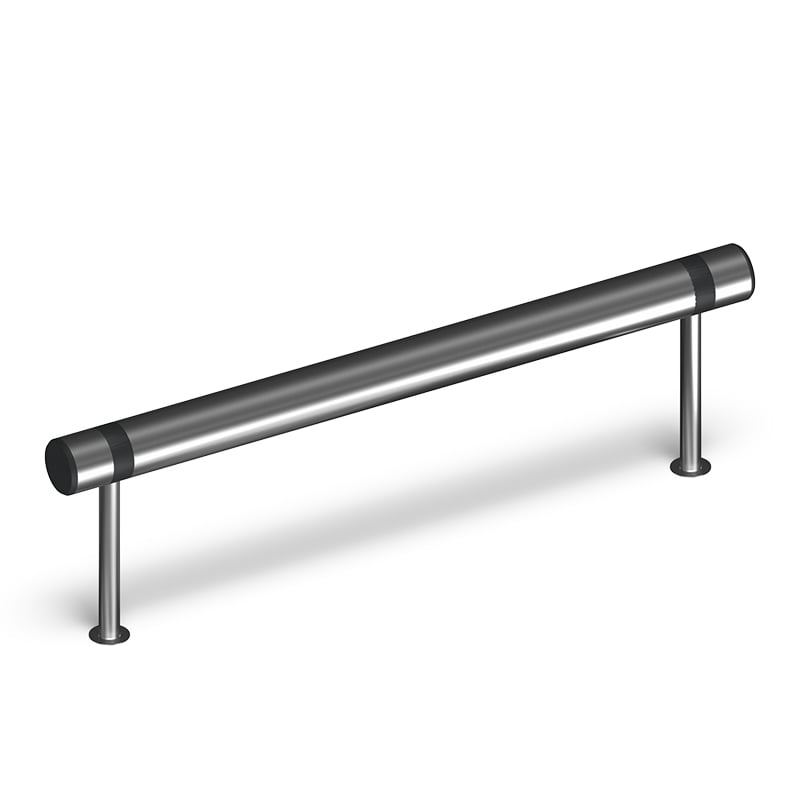
When evaluating industrial guardrails or other physical barriers, document the vehicle approach direction, expected contact location, available clearance, floor condition, anchor or mounting requirements, drainage, cleaning needs, and nearby doors or controls. Confirm that the selected arrangement does not create a trapping point or force a pedestrian into another vehicle route. This is where a supplier discussion should be based on site data rather than broad performance assumptions.
| Zone | Planning focus | Typical layered controls |
|---|---|---|
| Forklift-pedestrian aisle | Continuous separation and crossing discipline | Protected walkway, markings, signs, industrial guardrails where appropriate |
| Blind corner | Visibility and speed management | Clearance, mirror, warning process, route redesign |
| Rack end or doorway | Vehicle approach and access | Targeted factory collision protection, clearance review, operational rules |
Turn the assessment into an installation plan
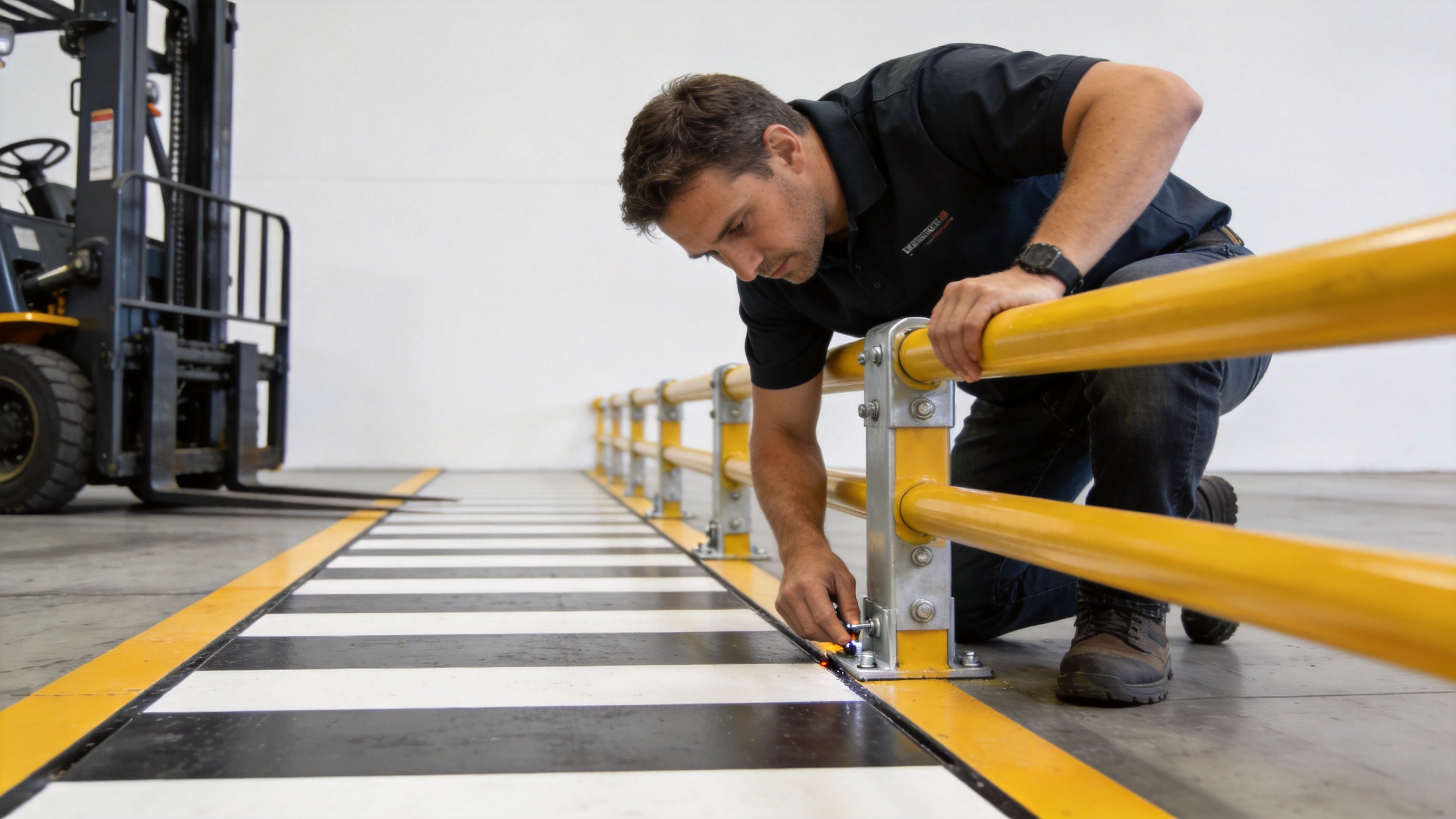
Good collision prevention solutions can fail in practice if installation interrupts the workflow they were intended to protect. Before work begins, agree on a drawing or marked-up route plan, dimensions, mounting locations, temporary traffic controls, isolation areas, delivery access, and responsibility for communicating changes. If the facility cannot pause fully, phase the work by zone and keep a safe temporary route in service.
Installation planning should also clarify what must be verified on site. Recheck measurements before drilling or placing equipment. Identify hidden services or floor conditions that affect mounting. Confirm swing paths for doors, clearance for loads, turning room for trucks, and access to fire equipment, panels, and maintenance points. Practical collision prevention solutions preserve routine work instead of making routine work harder.
Installation-day checklist
- Brief operators, pedestrians, visitors, and contractors on temporary route changes.
- Mark the work area and keep delivery or forklift movements away from it.
- Verify final locations against the risk-assessment objective, not only the drawing.
- Check that industrial guardrails and other controls leave intended pedestrian clearance.
- Document installation assumptions and any approved field changes.
Verify performance after installation
The last step is not the handover; it is an operational review. Walk the new arrangement with forklift operators and people who use the area on foot. Watch a normal shift, including any busy period. Ask whether the control changes behavior as intended, whether visibility remains adequate, and whether pallets or temporary equipment are starting to narrow the protected route.
Review collision prevention solutions after an incident, near miss, layout change, new vehicle type, or revised production flow. Inspect physical factory collision protection at a defined interval and follow the applicable product documentation for maintenance and replacement decisions. A barrier can reduce a particular exposure, but it should remain connected to training, markings, operating rules, and supervision.
Build a specification brief before requesting a solution
A concise brief makes supplier conversations more productive. Include site photos, plan dimensions, vehicle types, route directions, pedestrian volumes, peak-period observations, mounting information, required clearances, access constraints, and the exact risk objective. With that information, collision prevention solutions can be discussed as a site-specific configuration rather than a generic purchase.
For a changing facility, prioritize the highest-exposure zones first and set review dates for the next phase. That approach lets collision prevention solutions evolve with the operation while keeping the decision grounded in observed risk. The practical test is simple: can people understand the route, can vehicles move predictably, and does the installed control support safer separation without creating a new bottleneck?
 Hot News