EN

ABOUT US
- Shounan Street URban Industrial Park,YinZhou District,NingBo City, ZheJiang, CHINA.
- +86-15381988180
- [email protected]

Procurement teams face a recurring sourcing decision when outfitting a warehouse or production floor. A safety barrier manufacturer vs trading company represents two fundamentally different supply paths, each with distinct trade-offs in control, transparency, and accountability. The right choice depends on order volume, customization needs, and how much visibility the buyer requires into production and quality systems.
Consider a third-party logistics provider in East Asia operating a high-throughput distribution center. Forklift traffic repeatedly struck fixed steel guards, leaving bent posts and cracked floor slabs that shut aisles for repair. Sourcing through a trading company meant waiting on a middleman to explain each defect and arrange replacements, with no visibility into the producing workshop. Switching to direct factory supply brought engineers on a call to specify a self-recovering polymer barrier matched to the slab and traffic pattern. After installation, impacts bent the rail and sprang it back, restoring aisles within minutes and removing recurring repair downtime.
Deciding between a safety barrier manufacturer vs trading company begins with who controls the physical product. Ownership of design and process determines how quickly a specification can change.
When weighing a safety barrier manufacturer vs trading company, ownership of tooling and mold becomes the first practical divider. A factory invests in dedicated molds for polymer molding and holds the tooling that defines rail profile, wall thickness, and base geometry. That control lets engineering adjust a curve or fixing pattern without renegotiating with a third party. A trading company typically sources from whichever workshop offers stock, so the mold is someone else's asset and changes depend on that supplier's capacity.
A manufacturer runs an audited quality management system, often certified to ISO 9001, which documents incoming material checks, in-process controls, and final inspection. Traceability links each batch to raw polymer lot, machine setting, and operator record, and third-party validation such as TÜV certified testing adds independent assurance. Trading companies resell goods they did not make, so traceability stops at the carton label unless the underlying factory exposes its data. For barriers guarding forklift lanes, that gap matters when an audit demands proof of material grade and test history.
On scheduling, a safety barrier manufacturer vs trading company comparison shows up first in how lead time is quoted and verified.
Direct factory supply removes a layer of scheduling guesswork. Production status can be confirmed against the actual molding and assembly line, so quoted windows reflect real capacity rather than a trader's buffer. Supply chain control stays with the buyer when purchase orders sit directly with the workshop. Trading companies must relay timelines through their own supplier, which lengthens the chain and invites optimistic estimates that slip as orders queue behind other clients.
Manufacturers experienced in export handle container loading, palletizing, and freight consolidation, giving visibility from dock to destination. Buyers can request photographs of loaded containers and packing lists tied to the production batch. A trader may consolidate mixed goods from several factories, which complicates customs paperwork and raises the risk of one delayed line holding the whole shipment. Clear INCOTERMS and a single accountable shipper reduce that exposure.
For project-specific work, a safety barrier manufacturer vs trading company split appears most clearly in engineering response and tooling flexibility.
Custom engineering separates a factory from a reseller when a site presents unusual conditions. Floor slab type, anchor bolt pattern, and traffic flow analysis determine barrier height, spacing, and color coding, and layouts should respect ANSI/ASSE A1264.1 for walking-working surface safety. A manufacturer's engineers translate those constraints into modified tooling or a new mold, then validate the result. Trading companies rarely hold that capability and instead match a catalog item, which can leave protection gaps at rack ends or pedestrian crossings.
For distributors building a branded line, OEM production and private label programs let them specify polymer formulation, fixing hardware, and packaging under their own mark. Minimum order quantity, or MOQ, sets the economic threshold for such runs. A factory prices tooling as a one-time cost and spreads it across volume, while a trader passes along someone else's MOQ without visibility into how it was derived. That opacity makes per-unit cost planning harder.
On accountability, a safety barrier manufacturer vs trading company differ in where responsibility finally rests.
Communication latency rises with every hand between buyer and builder. Buying direct means questions about Shore hardness, UV resistance, or dimensional tolerance reach the people who set the machine. After-sales support then rests with a single responsible party. A trading company sits in the middle, forwarding queries and often lacking authority to approve a replacement or rework, which slows resolution when a shipment arrives with defects.
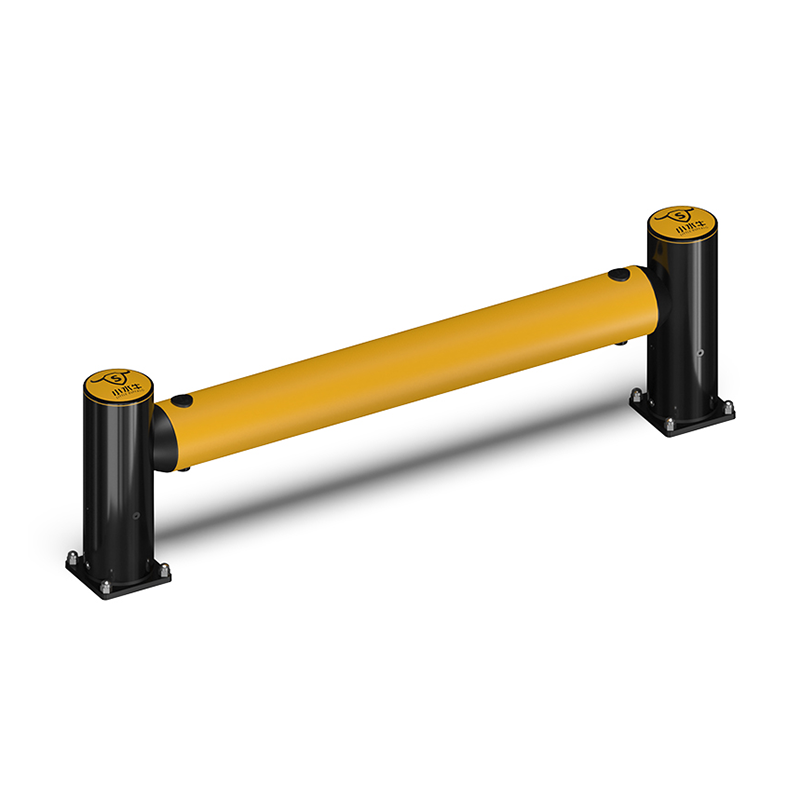
Trustworthy sourcing includes practical buy, inspect, use, and maintain guidance. Request a pre-production sample and a third-party inspection against an agreed AQL before full production. On arrival, verify SS304 fixings, Q235 mesh board grade, and powder-coated base finish. In use, the self-recovering polymer rail absorbs impact and springs back, so routine care means clearing debris and checking anchor torque rather than replacing bent posts.
Selecting between a safety barrier manufacturer vs trading company is less about price and more about where responsibility lives. Direct factory supply delivers supply chain control, transparent lead times, and custom engineering backed by a quality management system and ISO 9001 discipline. Trading companies add breadth but dilute accountability. Match the sourcing model to project complexity, and the barrier system will perform as specified throughout its service life.
What factors determine whether a manufacturer or trader suits a project?
Answer: Order volume, customization depth, and required transparency guide the choice. High-MOQ or engineered layouts favor direct factory supply, while small mixed buys may suit a trader. The decision between a safety barrier manufacturer vs trading company hinges on where accountability must sit and how much visibility into tooling and quality systems the buyer needs.
How does direct factory supply affect lead time transparency?
Answer: Buying direct ties the quoted window to the actual molding and assembly line, so status reflects real capacity. Supply chain control stays with the buyer through direct purchase orders. A trader relays timelines from its supplier, adding buffer and delay. Requesting production photos and packing lists exposes true progress and reduces the risk of optimistic estimates slipping as orders queue behind other clients.
Which quality documents should a buyer request before full production?
Answer: Request a pre-production sample, the quality management system record, and a third-party inspection report against an agreed AQL. Verify traceability from raw polymer lot through machine setting to operator record. Confirm ISO 9001 certification and any TÜV certified test results. These documents let an auditor prove material grade and test history, which matters when barriers guard forklift lanes in a regulated facility.
Can a trading company handle custom engineering for unusual sites?
Answer: Most trading companies match catalog items rather than engineer new solutions, so unusual floor slabs, anchor patterns, or traffic flows may exceed their capability. Custom engineering requires modified tooling or a new mold owned by the factory. A trader can pass a request to its supplier but lacks authority to set machine parameters or validate the result, which leaves protection gaps at rack ends or pedestrian crossings.
Why does communication latency matter for after-sales support?
Answer: Every intermediary between buyer and builder adds a handoff that slows answers about Shore hardness, UV resistance, or dimensional tolerance. Direct sourcing places after-sales support with the party that set the machine, enabling fast rework approval. A trading company forwards queries and often cannot authorize a replacement, prolonging resolution when defects appear. Lower latency means problems reach the responsible engineer before small issues escalate into line stoppages.
 Hot News
2024-06-01
2024-06-25
2024-06-28
2024-09-09