EN

ABOUT US
- Shounan Street URban Industrial Park,YinZhou District,NingBo City, ZheJiang, CHINA.
- +86-15381988180
- [email protected]

Structural columns carry the load of every warehouse and manufacturing plant, yet they sit directly in the path of forklifts, pallet trucks, and trailers. Column protection barriers are the simplest way to keep those columns intact when vehicles stray off the planned route. A single glancing hit can crack a concrete column or bend a steel upright, triggering expensive structural repair and unplanned downtime. Facility managers who overlook this hazard often discover the cost only after a column needs shoring.
In a typical distribution operation, building columns near aisles and rack ends absorb dozens of minor contacts each week. Column protection barriers change that equation by placing a forgiving buffer between the vehicle and the structure. One Midwestern distribution center reported patching the same three columns every month until flexible guards were fitted; the recurring repair cycle stopped within the first quarter after installation. Beyond the visible patchwork, hidden costs accumulate: scaffold rental, curing time for concrete, and the lost labor hours spent on non-value work that could have maintained equipment instead.
Forklift operators move fast during peak shifts, and sightlines shrink near intersections and pallet positions. A mast, load, or wheel can strike a column corner with surprising force. Repeated low-energy knocks spall the concrete cover and expose rebar, while a single high-speed impact can shift the column plumb and compromise the connection to the roof truss. Steel encasements and mesh boards help, but they still transfer load to the structure unless a flexible buffer first absorbs the hit and redirects the vehicle away from the hazard. Many facilities paint columns with warning stripes and assume the marking is enough, but paint offers zero physical defense. When a column leans, adjacent spans take extra load and the entire bay can require shoring.
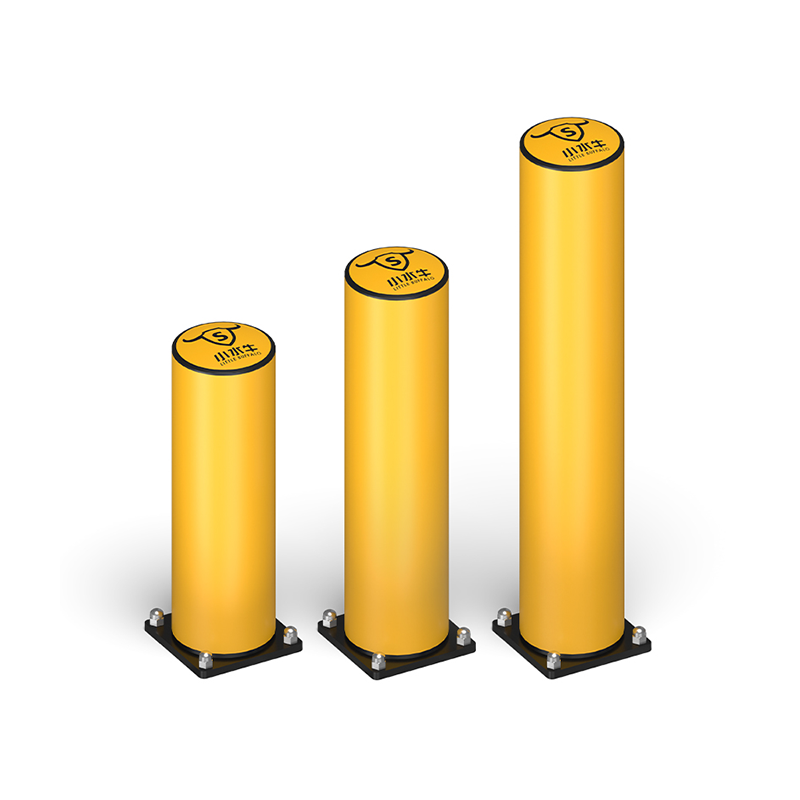
Little Buffalo column guards are built from engineering polymer with a self-recovering property. The material bends under forklift impact and springs back to shape instead of denting or cracking. Unlike rigid steel post protectors, the flexible barrier deforms to dissipate energy and then recovers, so the same unit survives repeated contacts. Cast metal ends and powder-coated bases keep the guard stable on the floor, while SS304 fixings resist rust in cold storage and wash-down areas. The modular profile clamps around the column without core drilling. These column protection barriers pair the flexible wrap with cast metal ends for lasting floor stability.
Column protection barriers apply this principle by wrapping the member so energy reaches the structure last. The core principle is energy absorption. A polymer guard wraps the column and captures up to 90% of forklift impact energy before it reaches the structure. The curved profile spreads the remaining force around the column rather than into a single corner. Pedestrian segregation and traffic management improve too, because the visible barrier guides vehicle routes and reminds operators of the hazard zone. The result is less equipment damage, fewer injuries, and noticeably lower repair frequency across the busiest aisles of the plant. Because the guards are modular, facilities can re-zone aisles during layout changes without removing the protection, preserving safety as operations evolve.
Column protection barriers that match the column profile prevent gaps where vehicles can still strike. Selecting the right guard starts with the column profile and the traffic around it. Square concrete columns need a full-wrap guard; steel rack uprights suit a slim bollard-style protector. High-traffic aisles call for taller, highly visible guards, while low-speed zones may use compact rings. Modular designs clamp around existing columns without weakening the structure, which speeds installation and avoids dust in clean-room and food areas. Always map the forklift turning radius and the trailer path before fixing guard positions near loading docks.
Specified column protection barriers that carry TÜV certification give procurement teams documented confidence. Procurement teams should look for ISO 9001 and ISO 14001 manufacturing discipline, plus TÜV-certified products where specified. OSHA 29 CFR 1910.178 and ANSI/ITSDF B56.1 frame the forklift safety expectations that column protection supports. Inspection is simple: walk the aisles monthly, check fixings for looseness, and confirm the polymer shows no deep scoring. Because the material self-recovers, upkeep is limited to tightening anchors and replacing only a damaged end cap, not the whole unit. This low-maintenance approach keeps the workplace safer year after year. Keeping a simple log of inspections supports ISO 45001 occupational health goals and helps demonstrate due care during audits.
Returning to the distribution center mentioned earlier, the facility fitted flexible column protection barriers at every aisle intersection and rack-end column. Within two quarters, documented column repairs dropped from roughly twelve per year to none, and forklift-related downtime on those lines fell sharply. The maintenance lead noted that operators now steer more confidently because the guards define clear lanes and protect the structural frame. The investment paid back through avoided concrete work and uninterrupted receiving schedules, while insurance and audit reports reflected fewer workplace incidents.
Structural columns are too costly to leave exposed in active industrial facilities. Column protection barriers deliver a low-maintenance, high-return layer of defense that protects both the building and the people inside it. By absorbing impact, guiding traffic, and surviving repeated contact, these guards turn a recurring repair headache into a solved problem. Specifying flexible polymer guards during layout planning is the smartest moment to act, long before the first forklift ever clips a column.
Frequently Asked Questions about column protection barriers, structural column guards, building column protection, warehouse columns and post protectors
Question
What types of warehouse columns need building column protection?
Answer: Concrete and steel warehouse columns along aisles, near rack ends, and beside loading docks face the highest strike risk. Any warehouse columns inside a forklift travel path should receive a guard, including mezzanine supports and freight-elevator frames. Square and round profiles both need structural column guards and post protectors. Facilities with automated guided vehicles and dense pallet traffic benefit most, because column protection barriers prevent minor contacts from becoming costly structural repairs.
Question
How do flexible column protection barriers differ from rigid steel protectors?
Answer: Column protection barriers built from engineering polymer bend on impact and spring back, while rigid steel structural column guards dent and pass force into the structure. The flexible building column protection design survives repeated forklift contacts without replacement, cutting noise and repaint work. Modular clamp fittings on post protectors avoid core drilling, so installation stays fast and clean. For busy plants, this lowers lifetime cost and reduces shutdown periods needed to fix damaged warehouse columns.
Question
Where should structural column guards be installed in a facility?
Answer: Place column protection barriers at every aisle intersection, rack-end column, and anywhere forklifts turn or reverse. Loading docks, freight-lift doors, and gate openings need building column protection where trailer and pallet movement concentrates. Map the vehicle route first, then fit post protectors on both sides of narrow passages. Cold storage and clean-room zones require rust-free fixings on warehouse columns. A clear hazard map ensures no blind-corner column stays exposed to daily traffic without structural column guards.
Question
Can building column protection reduce workplace injuries?
Answer: Yes. By absorbing forklift energy and defining clear vehicle lanes, column protection barriers lower the chance of a strike that could topple racking or trap workers. The visible structural column guards also improve pedestrian segregation near busy aisles. Fewer impacts on warehouse columns mean less flying debris and fewer equipment failures that endanger staff. Combined with operator training and traffic management, post protectors form a practical layer of everyday workplace safety.
Question
Do structural column guards require much maintenance?
Answer: Maintenance of column protection barriers stays minimal because the polymer self-recovers after each hit. A monthly walk-through checks anchor tightness and looks for deep scoring on the building column protection surface. Loose fixings get tightened, and only a damaged end cap on the post protectors is swapped rather than the whole unit. No repainting or welding is needed on warehouse columns. This simple routine keeps structural column guards effective for years and avoids the downtime that structural column repairs would otherwise demand.
 Hot News
2024-06-01
2024-06-25
2024-06-28
2024-09-09