EN

ABOUT US
- Shounan Street URban Industrial Park,YinZhou District,NingBo City, ZheJiang, CHINA.
- +86-15381988180
- [email protected]

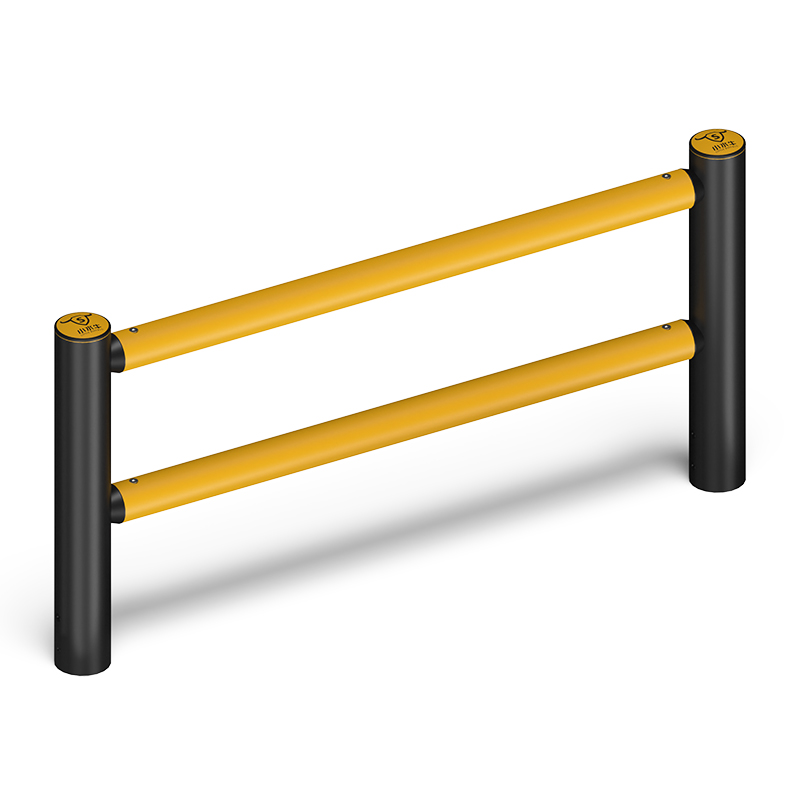
Warehouses and factories move people and powered trucks through the same footprint, and that shared space creates daily danger. Installing pedestrian forklift separation barriers converts a chaotic floor into predictable lanes where walkers and forklifts stop crossing paths. A clear physical divide lowers collision risk and helps a facility protect workers without slowing throughput, which is why more plants now treat segregation as core layout work.
Shared aisles feel efficient until a loaded truck rounds a blind corner into a walking employee. The true price of mixed traffic shows up as lost workdays, bent equipment, and the downtime that follows every incident. Well-planned pedestrian forklift separation barriers remove that ambiguity by giving each group a defined corridor, so a forklift and a worker no longer argue over the same square meter. Segregation costs less than the aftermath.
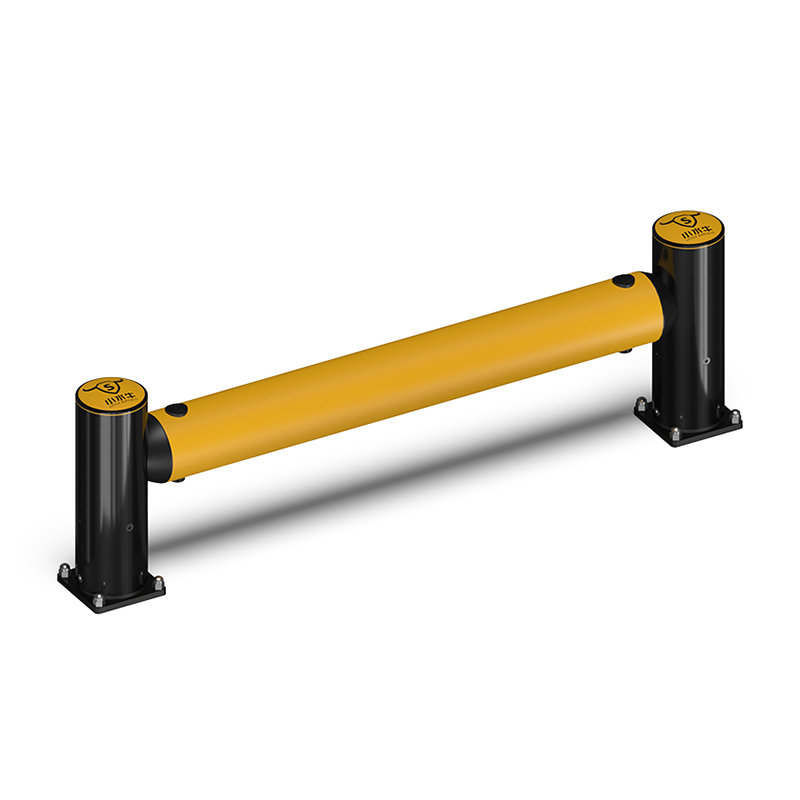
Barriers change behavior, not just block paths. A visible guardrail tells an operator where the vehicle lane ends and where people walk, while the physical edge stops a drifting load before it reaches a worker. Flexible polymer units bend under impact and springs back, so a minor contact does not become a shutdown. The result is fewer surprises and a calmer, more predictable floor for everyone nearby.
Effective segregation starts with a traffic study: map where pedestrians walk, where forklifts turn, and where sightlines fail. Hazard points such as rack ends, column lines, and loading dock mouths deserve priority. A facility should mark one-way routes and confirm that emergency egress stays clear. Cold storage and clean-room zones add slipperiness and visibility limits, so segregation there needs brighter markings and wider buffer lanes. An automated AGV path should be treated like a forklift route and fenced from foot traffic. Zoning is not decoration; it is traffic management built into the layout from the first draft, reinforced by training.
Good industrial guardrails make pedestrian forklift separation barriers simple to deploy once the zoning plan is set. A protective system also earns trust when it survives the first collision without a repair call. Buyers should weigh impact frequency, anchor strength, and the cost of repair before specifying a product for a busy intersection, and should request proof of energy absorption performance.
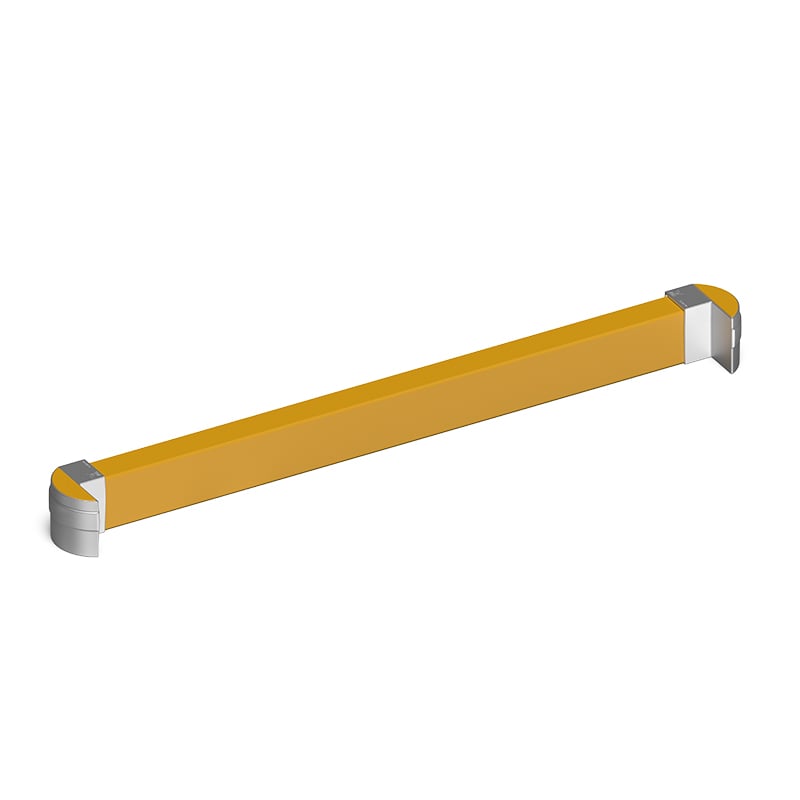
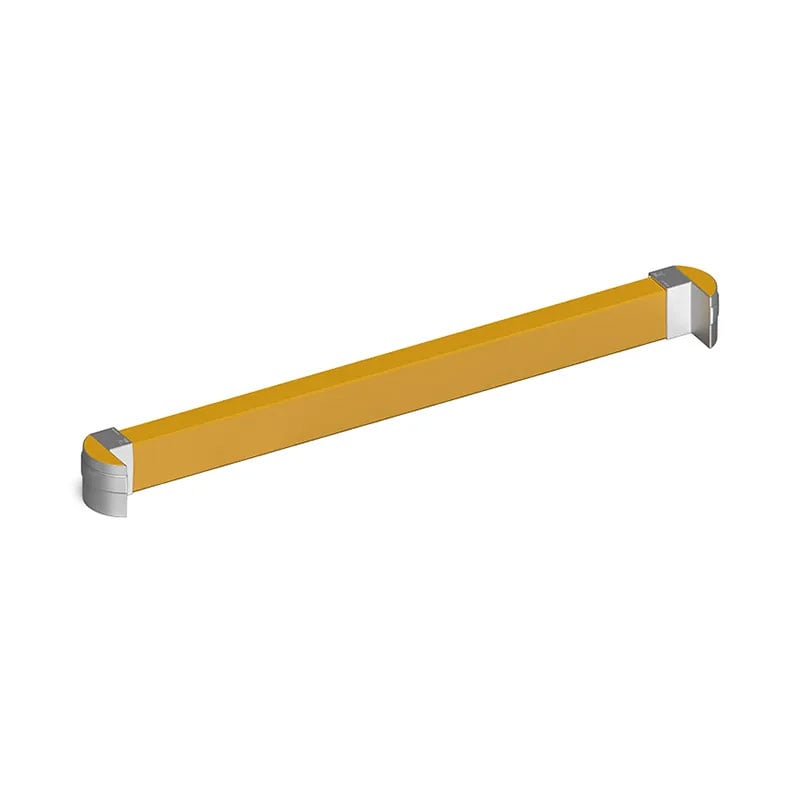
Rigid steel rails stop a truck but transfer the force into the frame and the floor anchor, often needing replacement after a hit. Flexible polymer barriers deliver energy absorption on contact and recover their shape, cutting repair cost and downtime. For busy intersections and rack lines, self-recovering units keep the lane intact after routine nudges. Some polymer units use cast metal ends and mesh boards for added structure, while SS304 fixings resist rust in wash-down areas. Choose the material by impact frequency, not by habit or legacy preference, and by the cost of a single downtime hour on a busy dock.
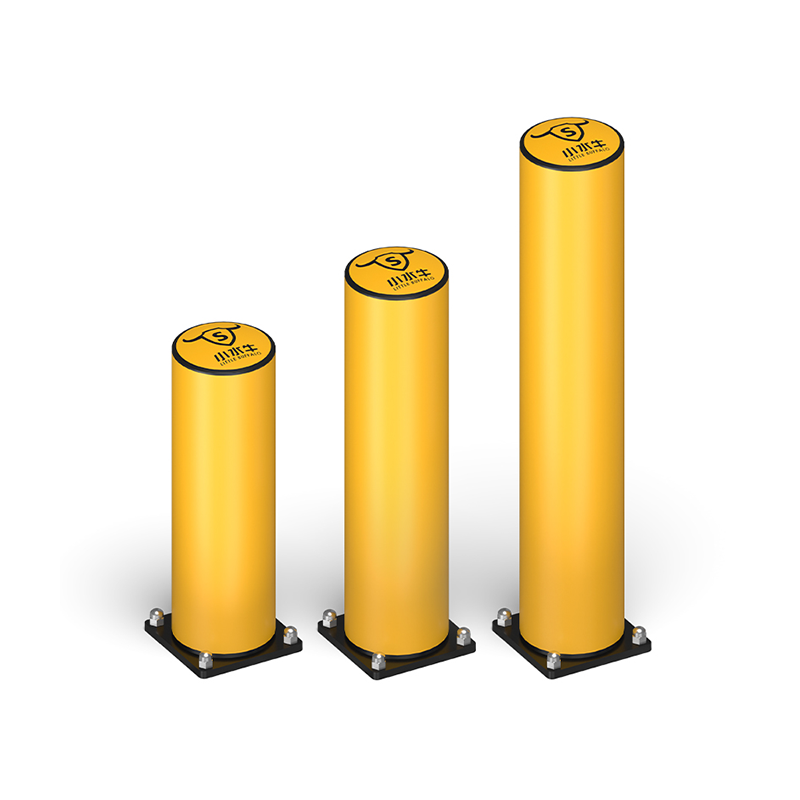
Installation should follow the risk map. Put industrial guardrails along the pedestrian side of every forklift lane, around rack ends, and at the mouths of staging areas. Flexible polymer pedestrian forklift separation barriers work well where trucks pass often, because they absorb a strike and return to form. Bollards protect columns and machine corners that a truck can clip during a tight turn near storage.
Rack-end protectors and upright guards do for storage what barriers do for routes: they isolate the hazard from the traffic. Pairing pedestrian lanes with rack protection creates a continuous protective line, so a forklift that strays meets a flexible barrier instead of a person or a steel upright. Little Buffalo Technology supplies polymer guardrails and rack-end units certified to TÜV for this layered, standards-aware approach to workplace safety. This is where structural protection meets route control: a stray truck meets flexible resistance instead of a person, a rack upright, or a machine guard, and the approach scales from one dock door to an entire distribution center.
When crews install pedestrian forklift separation barriers at rack ends and lane edges, the protective line starts earning its keep on day one. Keeping that line honest requires a small routine, not a large program, and the payback shows in fewer near-miss reports and lower equipment repair bills across the facility.
Most flexible barriers bolt to the floor with powder-coated bases and SS304 fixings, so a maintenance team can relocate them during a re-layout. Daily checks look for impact damage, loose anchors, and faded markings. A short inspection routine catches a worn guardrail before it fails, keeping the segregation line honest and the worker safe. Routine care of pedestrian forklift separation barriers protects the investment over years of use.
OSHA 29 CFR 1910.178 governs powered industrial truck operation, and ANSI/ITSDF B56.1 sets forklift safety expectations that include traffic control and operator visibility. While the standards do not name a product, they expect an employer to manage pedestrian exposure. Physical segregation with guardrails is a recognized control that supports compliance and removes the daily argument about who had the right of way on a shared aisle.
Separating people from powered trucks is one of the highest-return safety moves a plant can make. Durable pedestrian forklift separation barriers turn good intentions into a fixed layout that drivers and walkers both respect, lowering near-misses and protecting equipment day after day. Start with a traffic study, choose flexible polymer where impacts repeat, and inspect the line on a schedule.
What height should industrial guardrails be for pedestrian safety?
Answer: Most facilities set guardrails between 42 and 48 inches so a rail sits above a worker's center of mass and clearly marks the pedestrian edge. Height alone is not enough; the barrier must be visible, continuous, and placed on the worker side of the forklift lane. A traffic study should confirm sightlines at corners and loading dock mouths before final placement and daily use.
Why are flexible polymer barriers preferred over rigid steel in busy aisles?
Answer: Flexible polymer barriers absorb impact energy and springs back after a forklift nudge, so the lane stays intact and downtime drops. Rigid steel transfers force to the anchor and often needs replacement after a hit. Where trucks pass frequently, self-recovering units protect both the equipment and the worker while keeping maintenance simple and predictable for the facility team managing the floor.
How often should industrial guardrails be inspected?
Answer: pedestrian forklift separation barriers should be checked during daily walkthroughs and given a formal inspection weekly. Crews look for loose anchors, cracked polymer, faded markings, and shifted bollards. A short routine catches wear before a guardrail fails and keeps the segregation line effective. Records help a facility prove the protective system is maintained and functioning as designed across shifts.
Can guardrails be relocated when a warehouse layout changes?
Answer: Yes. Modular industrial guardrails bolt to the floor with SS304 fixings and powder-coated bases, so a maintenance crew can unbolt and move them during a re-layout. This flexibility protects the investment and lets a facility adapt segregation as traffic patterns shift. Relocating barriers costs far less than rebuilding rigid concrete or welded steel lines after every operational change.
Where should barriers be placed first in a high-traffic plant?
Answer: Priority goes to hazard points: rack ends, column lines, blind corners, and loading dock mouths where forklifts and pedestrians meet. Place industrial guardrails along the worker side of every forklift route, then add bollards at machine corners. A layered approach isolates people from vehicle paths and reduces collision risk at the spots where incidents actually happen during normal shifts.
 Hot News
2024-06-01
2024-06-25
2024-06-28
2024-09-09